When Pooling Water Near a Slab Means the Drainage Plan Needs to Change

Last updated: November 20, 2026
Quick Answer: In most cases, pooling water near a slab means the drainage plan needs to change when the same wet spot returns after a 20-minute rain and the ground still slopes toward the concrete slab. That is a drainage problem, not just a wet spot. The sections below show how to tell the difference, what to look for in runoff, and when grading, not slab work, is the right fix. This article covers when pooling water near a slab means the drainage plan needs to change.
Key Takeaways
- The yard can look flat, yet runoff still follows the same low line.
- The slope may be the real issue, not the slab.
- The key question is where the water goes after rain.
Pooling water near a slab: what the water is telling you
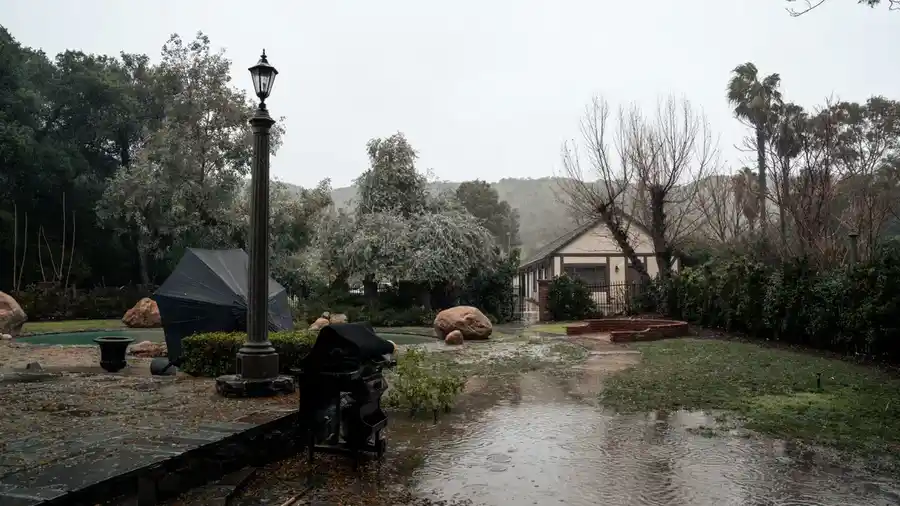
When pooling water near a slab keeps returning after rain, the yard is usually holding water, sending it toward the slab, or both. Picture this: you step outside after a 20-minute rain, and the same corner of the concrete slab is still ringed by water an hour later. The yard slope looks flat to the eye, but the runoff keeps choosing the same low line. That pattern is the clue.
Pooling water near a concrete slab usually means the yard is holding water, sending it toward the slab, or both. A slab can look fine and still sit in the wrong drainage pattern. The question is not “is there water?” It is where the water goes in the first 10 to 30 minutes after rain.
A quick check tells you a lot:
- Water that sheets across the surface and misses the slab usually points to surface runoff that is working.
- Water that hangs around a slab edge, stays muddy, or leaves a dark strip along the concrete suggests poor grading.
- Water that appears only after long rain or heavy irrigation can mean the ground has poor water retention.
The drainage plan changes when the slab is acting like a dam, a basin, or a catch point for runoff. That is when the fix usually moves from “watch it” to reworking slope, swales, or yard drainage.
The catch is simple: a slab can be blamed for water that the yard is actually causing. If the soil pitches toward the slab by even a small amount, runoff will find that path every time.
- Look for the line where water stops.
- Watch the first rain after a dry spell.
- Check both the slab edge and the yard 5 to 10 feet out.
- Mark the low spot with a stake or chalk line.
For a broader view of slab-side water problems, this sits under the hub on drainage and water management for slab performance.
How to tell slab trouble from grading trouble
When the slab edge is wet, the slab is not always the problem. Picture this: you are standing at the edge of a slab and thinking the concrete must be wrong because the puddle sits right against it. The real issue may be the yard slope, not the slab itself. That distinction matters because the fix is different.
A slab problem shows up when the concrete surface itself traps water in a bowl shape, a crack channels water in one direction, or an attached feature blocks drainage. A grading problem shows up when the surrounding soil sends water toward the slab, even if the slab is perfectly level or slightly pitched away.
Use these checks before you change anything:
- Check the yard slope with a level, string line, or laser level. A small slope away from the slab is better than a flat edge.
- Watch runoff during a rain and note the path for 10 to 15 minutes. Water should move away, not linger.
- Inspect the soil line around the slab. Soil higher than the slab edge can trap water at the joint.
- Look for roof or downspout discharge dumping water within a few feet of the slab.
- Check low points 6 to 12 feet out. A dip there can send water back toward the concrete after the first flush.
Here’s the catch: a slab that looks fine from the patio can still be part of a bad drainage layout. The surface may be harmless; the grade around it may not be.
Regrading becomes the right move when the problem follows the land, not the concrete.
- The puddle returns in the same place after each storm.
- Water runs toward the slab from the yard side.
- The soil stays soft or muddy near the edge.
- The slab edge is dry during rain, but the ground around it is not.
When does the drainage plan need to change?
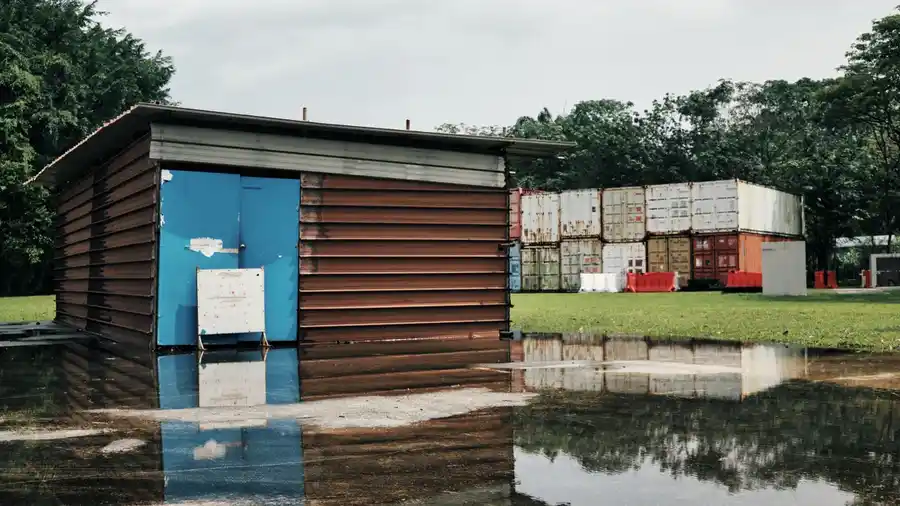
When pooling water keeps coming back, the drainage plan needs to change. Picture this: you have tried the usual fixes—cleaning gutters, moving a hose, and waiting for the ground to dry—but the same puddle comes back after a 1-inch rain. That is the point where the drainage plan needs a new shape, not another patch.
The plan needs to change when pooling water is part of a repeatable runoff pattern. A one-off puddle after a storm is noise. Water that shows up after normal rain, in the same spot, with the same path, is a design problem. If the situation is unclear, consult a drainage professional before changing the grade.
A better drainage plan often starts with one of three moves:
- Redirect runoff so roof or yard water does not feed the slab edge.
- Change the surface slope so water leaves the slab zone.
- Add yard drainage fixes such as a swale, trench drain, or gravel path where water can move without collecting.
The key is matching the fix to the cause. A trench drain helps when water crosses a narrow path and needs a defined capture line. A swale helps when you need to guide surface runoff across a broader area. Regrading helps when the yard slope itself is wrong.
Do not assume every wet edge means a slab failure. The soil may be compacted, the downspout may be short, or the lawn may be holding water because it has nowhere to go. If the cause is not clear, consult a drainage professional before making changes.
Change the drainage plan when:
- water lingers longer than the rest of the yard,
- runoff moves toward the slab from uphill,
- the same puddle returns after each moderate rain,
- or the area stays wet even when the slab itself is not cracked.
That is the line between a surface nuisance and a drainage layout that needs to be redrawn.
What to change first: grading, runoff, or a yard drain?
When the water path is still the same, start with the smallest change that breaks it. Picture this: you know the water is wrong, but you do not want to dig up the whole yard if a 3-foot swale would solve it. That is the right instinct. Start with the smallest change that breaks the runoff path.
A good order is usually: source first, slope second, drain third. If roof water is falling beside the slab, move it. If the land slopes toward the slab, correct that. If water still collects at a low point, add a drain or a channel.
Use this sequence:
- Move discharge points at least several feet from the slab when possible. A downspout extension often fixes a lot of false “slab water” problems.
- Restore surface slope around the slab edge. The goal is to stop water from resting against the concrete.
- Shape a shallow swale if runoff needs a path around the slab zone.
- Add a yard drain where the site has a low basin and water has nowhere else to go.
- Recheck after the next rain and see whether the water path changed, not just the puddle size.
The truth is, a drain added too early can hide the real problem. If the yard still slopes toward the slab, the drain may just become a permanent cleanup tool instead of a fix.
A few common trade-offs:
- Regrading can disturb turf and planting beds.
- A swale needs space and a place for water to exit.
- A drain needs maintenance so debris does not block it.
- Moving water away from one spot can create a new low point somewhere else.
Best first move: fix the source of the runoff before you cut a new drainage line. That keeps the job smaller and the result cleaner.
Common mistakes that make pooling worse
When the symptom gets treated but the water path stays the same, the puddle usually comes back. Picture this: you add gravel at the slab edge, the puddle shrinks for a week, and then the same wet patch comes back after the next rain. That is what happens when the symptom gets treated, but the water path stays the same.
The most common mistake is building up soil right against the slab without fixing the slope outside it. That can trap water at the joint and make the edge stay wet longer. Another mistake is aiming downspouts at the yard and hoping the soil will absorb the extra flow.
Here are the mistakes that cost the most:
- Filling only the edge: it can hide the low spot for a while, but it does not change runoff patterns.
- Ignoring roof water: a single downspout can dump a surprising amount of water near a slab.
- Adding a drain without an outlet: water has to go somewhere, or the fix just stores the problem.
- Trusting eye level alone: a yard can look flat and still hold a subtle slope toward the slab.
What to do instead:
- Map the wet area after rain.
- Trace every water source that reaches the slab zone.
- Check whether the soil has settled by 1/2 inch or more near the edge.
- Make sure water can leave the area, not just collect in a new basin.
A small note on standards: drainage and grading work often gets checked against local code or site standards, so the final layout should match the lot’s conditions, not just the puddle you can see today.
For guidance on site water control, see drainage and grading basics and downspout extensions, which can help trace the runoff path before bigger work starts.
A simple way to decide if grading needs to change
When the wet spot keeps repeating, the grade is worth checking first. Picture this: you want a fast yes-or-no answer before you spend money on a bigger fix. The question is not whether the slab is wet. The question is whether the land is sending water to it on purpose, every time it rains.
Use this checklist:
- If water disappears in a few minutes, the plan may not need a change.
- If water lingers 30 minutes or more at the same edge, the grade is suspect.
- If the wet area grows after each storm, the runoff path is repeating.
- If the slab stays dry but the soil around it stays muddy, the yard slope is the issue.
- If the same area gets wet after irrigation and rain, water retention is part of the problem.
You do not need fancy gear to make the first call. A 4-foot level, a string line, and a rain event will tell you more than guesswork.
For readers who want the larger picture, the hub on drainage and water management for slab performance ties these checks to the rest of the slab zone. For more detail, see slab performance and drainage management and yard runoff fixes.
Change the grading plan when the wet spot is tied to the land shape, not a one-time splash.
FAQ
Is pooling always a slab problem?
Is pooling always a slab problem? No. A concrete slab can be fine while the surrounding yard slope sends water toward it. If the same puddle returns after rain, the drainage plan is often the real issue, not the slab surface.
What water issues require regrading?
Regrading is needed when the yard slope sends runoff toward the slab, when water sits at the edge after normal rain, or when the ground keeps a wet band beside the concrete. If the soil line is wrong by even a small amount, reshaping the grade is often the cleaner fix. See grading and slope correction for the basic approach.
How do I know if the drainage plan is wrong?
The drainage plan is wrong if water keeps following the same path to the slab after you move obvious sources like downspouts or hoses. If the wet spot comes back in the same place, and the slope still points that way, the plan needs to change, not just the surface. For site checks, start with drainage and grading basics and downspout extensions.
Drafted with AI; not yet reviewed by a person.