Last updated: November 20, 2026
Quick Answer: Nearby concrete should usually be lifted together when the slabs share a joint, match each other poorly in height, or are tied to the same access path. If one driveway slab, sidewalk panel, patio section, or garage slab is moving, the other one often needs to be included too. The steps below show how to spot that before you call for a one-trip repair in How to Tell If Nearby Concrete Should Be Lifted at the Same Time.
Key Takeaways
- Treat adjacent slabs as one scope when the height change, crack line, or joint movement crosses from one panel to the next; if the pattern is unclear, consult a concrete repair professional.
- Separate patches make less sense when the repair truck already has access to both areas in one visit.
- A concrete joint that opens, shifts, or pins two slabs together is a strong sign the lift should be planned as a pair; if you are unsure, consult a concrete repair professional.
- One bad call is leaving a neighboring panel half-managed, then paying again for a return trip.
Start With the joint, not just the low spot
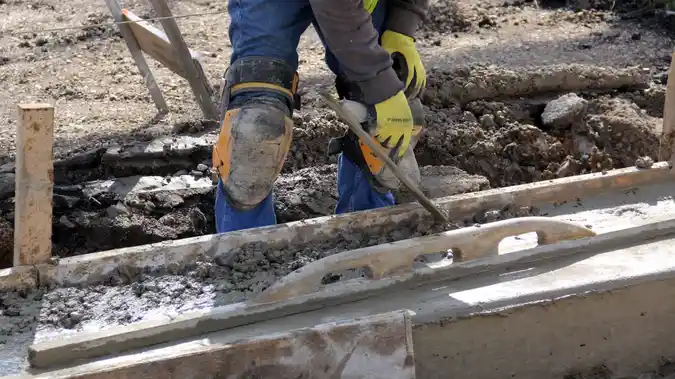
Picture this: you’re standing in the driveway, and one slab looks low while the next panel seems fine at first glance. The concrete joint between them is the real clue, because that joint tells you whether the movement is isolated or shared in How to Tell If Nearby Concrete Should Be Lifted at the Same Time.
Use a tape measure and a straightedge to check the edge on both sides of the joint. If the height difference runs across the joint instead of stopping cleanly at one slab, that nearby panel may belong in the same lift plan.
- Look for a joint that has opened wider than the others.
- Check for one slab sitting 1/4 inch or more above the next.
- Notice whether the gap changes along the same joint line.
- Watch for caulk or sand that keeps breaking out after rain or traffic.
How should I check neighboring slabs before I call?
You should check the neighbor slab with a straightedge, a tape measure, and a chalk line before you assume the problem stops at one panel. The goal is to see whether the adjacent panel shares the same drop, tilt, or break line.
Start at the worst low point and, if the layout allows, move one slab outward in each direction. On a sidewalk panel, that may mean checking the next 4-foot section; on a driveway slab, it may mean the next bay that shares the same pour line. If the next panel has the same slope change or a matching crack, that is a strong sign the lift scope should expand.
- Measure the edge with a tape measure so you know the height gap at the joint.
- Span both slabs with a straightedge so you can see if the drop continues.
- Mark the crack or joint with chalk to track whether it lines up on both sides.
- Compare the surface slope over the next 3 to 6 feet to see if the movement repeats.
- Record the results before you ask for a repair visit.
Which nearby areas are most likely to belong together?
The most likely matches are slabs that share a load path or a joint line, especially a driveway slab next to a garage slab or a patio section beside a sidewalk panel. These pairs often move together because the soil under them behaves as one zone.
Here’s the catch: a slab can look separate and still act connected. A garage slab and the driveway apron, for example, often meet at a joint that carries wheel loads every day. If that joint has settled unevenly, lifting only one side can leave the other side sticking up or pulling away.
Common pairings that deserve a closer look:
- driveway slab plus garage slab
- sidewalk panel plus driveway edge
- patio section plus the first panel beside the house
- two sidewalk panels with the same control joint line
- apron concrete plus the slab that meets it at the curb
What movement means the slabs should be lifted together?
The slabs should be lifted together when the movement crosses a joint, the edges no longer match, or one slab is likely to push the other after the lift. A matching elevation is the target, and the more the adjacent slab misses it now, the more likely both belong in one scope.
You may see one slab tilted toward the house and the next one still level, but that alone does not prove the problems are separate. If the first slab is trying to rise into the second, or the second slab is still carrying the same dip at its edge, a single-panel fix can leave a ridge or a new step.
Signs the neighboring slab is part of the same repair:
- the crack continues through both panels
- the joint is no longer straight
- one edge is already rubbing or chipping the other
- water, dirt, or grass fills the same line on both slabs
- the lift would change the slope of the next panel by a visible amount
When is a one-trip opportunity worth using?
A one-trip opportunity is worth using when access is already set up and the nearby slab is close enough that leaving it for later would likely create a second mobilization. If the crew is already on site with lifting equipment, the extra slab can be cheaper to include than to schedule alone.
The truth is, access matters as much as damage. A narrow side yard, parked cars, a gate, or a shared walkway can make a second visit annoying and costly even when the slab issue is small. If the adjacent concrete can be reached now and it shows the same movement pattern, bundling the work is usually the cleaner scope.
This is especially true when:
- the repair truck needs the same access path for both slabs
- the joint between slabs is already exposed and easy to work on
- the neighboring section has a visible step of 1/4 inch or more
- the crew can address both areas without changing setup
What a bad scope looks like
A bad scope leaves one slab lifted and the neighbor still out of line, which can create a fresh lip at the joint. That kind of result is easy to spot from 10 feet away and hard to ignore every time you walk or back out of the driveway.
A poor plan usually shows up in three ways. First, the repaired slab meets a still-settled one and the edge now catches a tire or shoe. Second, the joint opens wider after the repair because the adjoining panel was left behind. Third, the finish looks patched in one area and unfinished in the next because the work stopped at an artificial line instead of the real movement zone.
Avoid these mistakes:
- treating a shared joint as if it were a hard boundary
- ignoring the next panel because it is “not as bad”
- fixing the visible low spot without checking the edge height
- leaving two repair dates on the same short run of concrete
How should I talk to a contractor about adjacent concrete?
You should ask the contractor to inspect the nearby slab as part of the same scope, then ask what would change if both sections were lifted together. Bring a photo, a tape-measure reading, and the exact spots where the joint shifts so the conversation stays concrete, not vague.
Ask three plain questions:
- Does the next slab share the same movement zone?
- Will lifting only one panel leave a lip at the joint?
- Can both areas be done in one visit without creating a mismatch?
That kind of question fits the planning stage, not a full estimate comparison. For broader project sequencing, the hub on repair sequencing and contractor planning for slab lifting projects is the right next stop.
A quick rule for deciding the scope
The right call is to include nearby concrete when the joint, height, and access all point to one repair zone. If only one of those signs is present, the neighboring slab may not need the same treatment, but it is smart to have a concrete repair professional verify the scope.
A simple field rule helps: if the slab next door would still look wrong after the lift is finished, it probably belongs in the same project. If the next panel can stay where it is without creating a step, a joint problem, or a second setup, it can likely wait.
That rule is not perfect, but it keeps you from paying twice for the same access. It also helps you avoid the most common mistake: fixing the most obvious low spot while leaving the next panel to argue with it.
Should nearby panels be done together?
Nearby panels should be done together when they share the same joint, the same access, or the same edge mismatch. If one panel is lifted and the neighbor stays low, the joint can become the new problem spot. That is especially true on driveway slabs and sidewalk panels where the edge gets daily traffic. If the layout is hard to read, consult a concrete repair professional before you commit.
Can one repair affect the next section?
One repair can affect the next section if the slabs are connected by a joint or by the same settled base. Lifting one side changes how the edge meets the next panel, and a 1/4-inch shift can be enough to create a new trip point. That is why neighboring concrete should be checked before the work starts, and a contractor can confirm whether the next section should be included.
When is it smarter to treat connected slabs as one project?
It is smarter to treat connected slabs as one project when the panels move together, the joint is shared, or the crew already has one access setup. The best case is when the driveway slab, garage slab, or patio section all show the same pattern within the same run. In that case, one visit usually makes more sense than two, though a concrete repair professional should confirm the scope when the movement is hard to read.
Drafted with AI; not yet reviewed by a person.