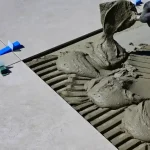
How to Tell If Polyurethane Foam Is the Better Choice for Thin Slabs

Last updated: November 20, 2026
Key Takeaways
- Polyurethane foam fits thin, lightly loaded slabs with voids or soft spots.
- It also works well when added weight must stay low.
- Injection usually begins with a small drill-hole pattern that reaches the void.
- Fast curing can make foam a strong option when quick return to use matters.
Thin slab problems often point to polyurethane foam injection, and it is usually the better choice when the slab is thin, the load is light to moderate, and you need fast void filling without adding much weight. In this guide to How to Tell If Polyurethane Foam Is the Better Choice for Thin Slabs, I focus on cases where the slab is only a few inches thick and the repair window is short. The steps below will help you judge the slab, the access, and the risk before you spend money.
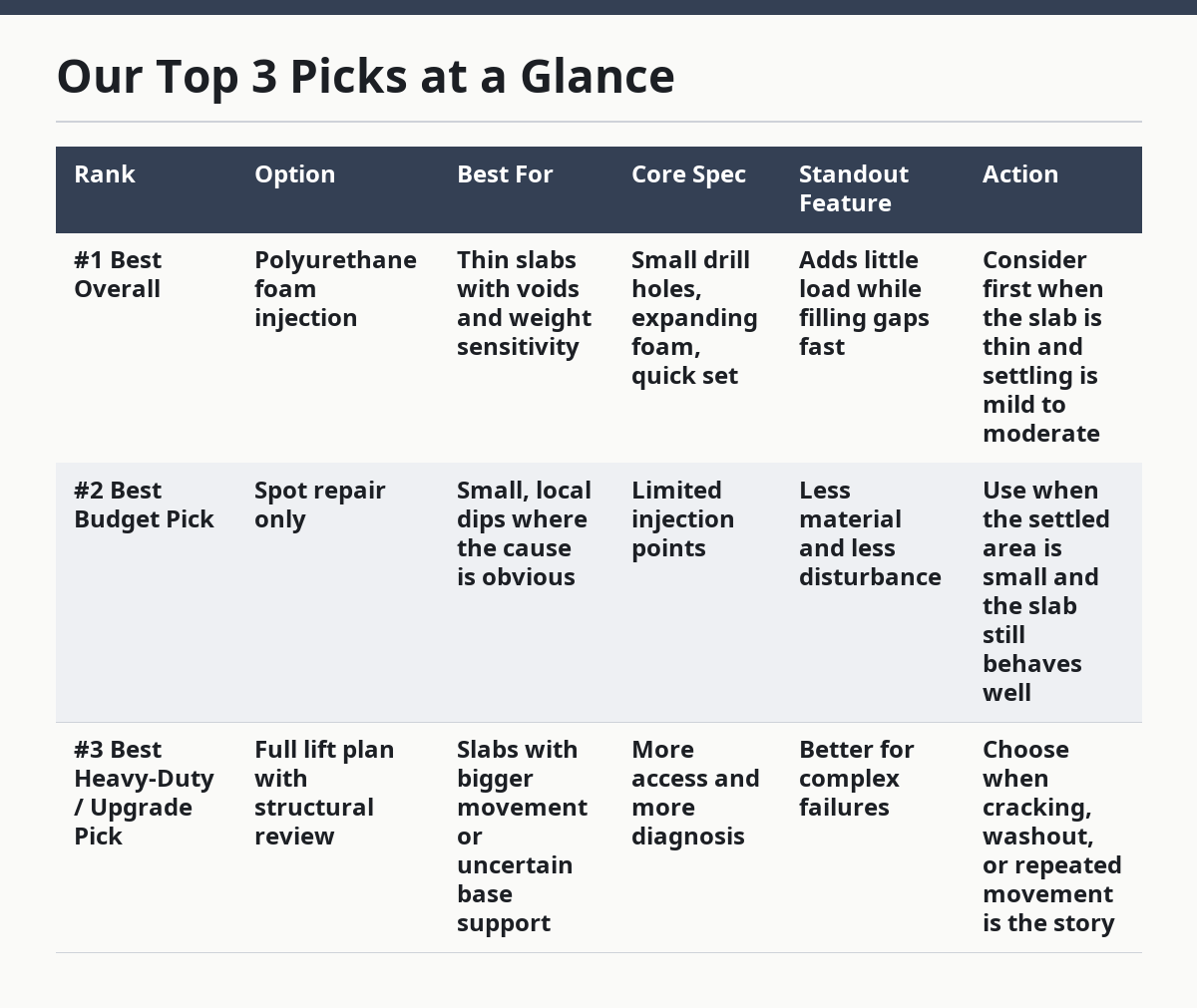
Our Top 3 Picks at a Glance
| Rank | Option | Best For | Core Spec | Standout Feature | Action |
|---|---|---|---|---|---|
| #1 Best Overall | Polyurethane foam injection | Thin slabs with voids and weight sensitivity | Small drill holes, expanding foam, quick set | Adds little load while filling gaps fast | Consider first when the slab is thin and settling is mild to moderate |
| #2 Best Budget Pick | Spot repair only | Small, local dips where the cause is obvious | Limited injection points | Less material and less disturbance | Use when the settled area is small and the slab still behaves well |
| #3 Best Heavy-Duty / Upgrade Pick | Full lift plan with structural review | Slabs with bigger movement or uncertain base support | More access and more diagnosis | Better for complex failures | Choose when cracking, washout, or repeated movement is the story |
| Product / Option | Best For | Core Spec | Standout Feature | Action |
|---|---|---|---|---|
| Polyurethane foam injection | Thin concrete slabs over weak or empty support | Small drill holes, injection ports, expanding foam | Low added weight and fast curing | Use when you need void filling with minimal disturbance |
| Spot repair only | Small settled zones that do not show broad movement | Limited injection points | Least invasive on a sound slab | Use when the problem is local and the slab is otherwise stable |
| Full lift plan with structural review | Wider failure patterns or repeat settlement | More diagnosis before drilling | Better for uncertain subgrade conditions | Use when the slab may have deeper structural issues |
What thin slab conditions point to polyurethane foam?
Polyurethane foam is a strong fit when the slab is thin, lightly loaded, and sitting over a void or soft spot. If the concrete is only a few inches thick and the problem is settlement rather than a broken panel, foam often makes more sense than a heavier fill because it adds very little dead weight.
Picture this: you’re standing on a patio edge, a garage apron, or a walkway panel that has settled near one side, and the slab still looks intact. That scene usually points to void filling first, not replacement. The question is whether the slab is thin enough that extra material would make the problem worse.
Use this quick check:
- The slab is thin and already vulnerable to extra load.
- The settlement looks local, not across the whole slab field.
- The surface is still usable, even if it is uneven.
- The issue seems tied to support loss under the slab, not crushed concrete.
A void matters because foam can expand into empty space without dumping a lot of weight onto the base. A thick, broken, or badly cracked slab may need a different fix. That’s the line.
How do I judge weight sensitivity before choosing foam?

Polyurethane foam is the better choice when the slab or the ground below it should not take much added weight. That matters most on thin slabs, soft subgrades, and areas where prior repairs already left the base weak.
Here’s the catch: a repair method can be technically “strong” and still be the wrong fit if it loads the slab too much. Dense fill materials can add stress where the concrete is already thin. Foam is favored because it expands, fills, and supports without acting like a heavy bedding layer.
Look for these weight-sensitive clues
- The slab is over fill dirt, clay, or another soft base.
- The panel has a hollow sound in places, which suggests a void.
- Previous repair attempts made the area feel less stable.
- You can see small cracks near the settled edge, but not full breakage.
If the slab is a driveway panel carrying repeated vehicle loads, the decision gets stricter. A thin slab under tire traffic can still take foam in many cases, but only if the slab itself is not shattered and the settlement pattern is limited.
A good rule: if adding more dead load sounds like the wrong kind of help, foam deserves a close look.
Drill holes and injection ports: what should I expect?
Polyurethane foam injection usually starts with drill holes placed in a pattern that reaches the void without turning the slab into Swiss cheese. The holes are then fitted with injection ports, and foam is pumped through them until the slab is supported or lifted.
Picture this: you’re looking at a sidewalk panel or a thin garage slab, and the repair team marks several small points instead of cutting out a large section. That is the normal sign that the method is aimed at support restoration, not demolition.
The exact pattern depends on the slab, but the goal is usually the same: reach the empty space, not the whole slab. On thin concrete, smaller holes matter because large openings can weaken an already light panel.
What a sensible drilling plan tries to do
- Mark the settled zone so the repair stays local.
- Place ports near the low area to reach the void.
- Limit hole size and count to what the slab needs.
- Watch for foam response as the slab begins to take support.
The result should be a repair that leaves little surface disturbance. If the plan needs a wide grid of holes just to make the slab respond, that is a warning sign that the slab may not be a clean foam job.
On the flip side, a neat port layout with a clear low spot usually means the repair is a good candidate for foam.
When is quick curing the deciding factor?
Polyurethane foam is often the better choice when the job needs quick curing and fast return to use. That matters for walkways, stoops, entry slabs, and service areas where long downtime causes more trouble than the repair itself.
The practical edge is simple: the material sets fast enough that the slab can often be put back in service sooner than with slower, heavier methods. That speed is one reason foam is popular for thin slabs where traffic or access matters.
Now, you might be wondering if fast always means better, and the answer is no. Fast curing helps only when the slab condition already matches the method. If the concrete is badly broken, speed won’t fix the wrong base problem.
Fast curing helps most when:
- The slab must reopen quickly.
- The settled area is narrow and defined.
- You need support without a long cure window.
- The repair zone is small enough to control.
Fast curing is not the main reason to choose foam when:
- The slab is cracked through in many places.
- The ground keeps moving from drainage problems.
- The panel needs more than support, such as structural rebuilding.
That’s the trade-off. Foam saves time, but it does not excuse a bad match.
What slab conditions make foam practical?
Polyurethane foam is practical when the slab is thin, the settlement is tied to a void, and the concrete still has enough integrity to respond to lifting. If the slab is crumbling, badly fractured, or moving because the site keeps washing out, foam may only be a short-term patch.
Picture this: you’re looking at a patio slab with one corner dropped, but the rest of the panel is stable and the base problem looks localized. That is the kind of case where foam can work well because the repair has something solid to support.
A practical slab usually shows some of these traits:
- Thin concrete slab with limited cracking.
- A visible low spot rather than widespread failure.
- Signs of a void or soft support under one section.
- Access that allows drilling and injection without major tear-out.
- No obvious need for full replacement.
The best part is that you do not need a perfect slab for foam to make sense. You need a slab that is still worth supporting.
Foam is a poor fit when you see:
- Large, jagged cracks across the panel.
- Repeated settlement after earlier repairs.
- Severe edge breakup or spalling.
- Soil loss from drainage or washout that is still active.
Those are not small problems with the same solution. They are different problems.
How do I compare foam against heavier repair methods?
Polyurethane foam wins when the slab is thin enough that extra weight is a liability and the main issue is support loss, not slab failure. If the question is “Can this panel be stabilized with minimal disturbance?”, foam often comes out ahead.
The truth is that many generic guides treat every sunken slab the same, so it is worth consulting a qualified concrete repair professional for the details. That misses the point. A thin slab has less tolerance for heavy repair material, larger surface disruption, and slow cure times. Foam answers those limits directly. For broader method guidance, see the Concrete slab lifting methods and applications — The Complete Guide, and for product use limits, the U.S. EPA notes foam should be used and handled according to label directions.
Use this quick decision guide:
| If you see this | Foam is probably a fit | Foam is probably not a fit |
|---|---|---|
| Thin slab with local settlement | Yes | No |
| Void under the slab | Yes | No |
| Need for quick return to use | Yes | No |
| Wide cracking or breakup | No | Yes, look at a broader repair plan |
| Ongoing washout | No | Yes, fix the cause first |
For a wider overview of slab methods, the hub article on Concrete slab lifting methods and applications — The Complete Guide can help you place this choice in context. That page belongs to the bigger method map; this one stays with thin slabs.
What mistakes make foam the wrong choice?
Polyurethane foam goes wrong when people use it to cover a structural problem that really needs diagnosis first. The common mistakes are easy to name, and each one costs time or leaves the slab unstable.
Picture this: you’re tempted to treat a sunken slab just because it is low, not because you understand why it moved. That shortcut is where bad repairs start.
Common mistakes to avoid
- Treating a broken slab like a support issue. The cost is a repair that may not hold.
- Ignoring drainage or washout. The cost is repeat settlement after the foam job.
- Using foam on a slab with major breakup. The cost is poor lift quality and weak edges.
- Choosing foam only because it is fast. The cost is a mismatch between method and condition.
Do this instead:
- Identify whether the slab is thin, intact, and locally settled.
- Check for a void or soft support under the low area.
- Look for signs of ongoing soil loss.
- Match the repair to the cause, not just the symptom.
If the slab is thin but the base keeps failing, foam alone is not the answer. It is support, not a cure for bad drainage.
How do I decide yes or no on polyurethane foam injection?
Polyurethane foam injection is the better choice when the slab is thin, the problem is support loss, and the concrete still has enough structure to benefit from lifting. If the slab is cracked apart, washing out, or carrying too much damage, the answer shifts away from foam.
Picture this: you need a plain yes-or-no call before a repair quote comes in. The right call usually depends on four questions, not one.
Use this short checklist
- Is the slab thin enough that added weight is a concern?
- Is the settlement local instead of widespread?
- Is there a void or soft spot under the concrete?
- Can the slab still accept a controlled repair?
If the answer is yes to most of those, foam deserves serious consideration. If the answer is no on the first two and yes on the last two, you may be looking at a different repair class.
The cleanest way to think about it is this: foam fits a slab that is still worth saving and too delicate for heavy-handed repair. That is the whole test.
When does foam work better than mudjacking?
Foam works better than mudjacking when the slab is thin, weight sensitive, and needs fast curing with minimal added load. It also makes more sense when the support void is the main issue and the slab surface is still in decent shape. If the slab is thick enough to tolerate heavier fill and the repair can wait longer, another method may fit better.
Are thin slabs a better fit for foam?
Thin slabs are often a better fit for foam because they cannot take much extra weight from the repair process. Foam supports without acting like a heavy layer under the slab, which matters when the concrete is already delicate. If the slab is thin and intact, foam is usually worth a look.
What slab conditions make foam injection practical?
Foam injection is practical when the slab has a local low spot, a void or soft support beneath it, and enough structural integrity to respond to lifting. Small drill holes and injection ports can reach the problem without major tear-out. If the slab is badly broken or the ground keeps moving, foam is less practical.
Drafted with AI; not yet reviewed by a person.