Last updated: November 05, 2026
What Gaps Under Concrete Mean: Signs of Voids Beneath a Slab
Quick answer: gaps under concrete usually mean the slab has lost support, and in many cases the opening is a void beneath the slab that should be checked by a qualified professional. A void under a concrete slab is an empty space between the slab and the subgrade, and it often points to erosion, soil washout, or settlement. For background on soil settlement and slab movement, see the U.S. Geological Survey’s overview of ground subsidence and the Portland Cement Association’s guidance on slab performance. https://www.usgs.gov/programs/landsubsidence/science/what-subsidence and https://www.cement.org/learn/concrete-technology/concrete-construction/joints-in-concrete-construction
Key takeaways
- A gap at the edge of concrete is not the same thing as a surface crack; it can mean the ground below has moved or washed out.
- A hollow sound, rocking, or a visible open seam near joints often suggests a void, but none of those signs alone prove how large it is.
- Water is the usual suspect because it can carry fine soil out from under a slab and leave the concrete bridging empty space.
- Small gaps can stay stable for a while, but a changing gap, sloping slab, or widening crack is a stronger sign that support is being lost.
- A void can also be confused with normal joint movement, shrinkage cracking, or edge chipping, so the pattern matters more than any single mark.
Who this applies to, and what you need to know first
This applies to a homeowner or property manager who sees a gap under a driveway, patio, garage floor, sidewalk, or basement slab and wants to know what it means. The topic is What Do Gaps Under Concrete Mean? Signs of Voids Beneath a Slab, and the first question is whether the slab is losing support. If you can safely inspect from the surface, you can look, listen, and measure; if the slab is carrying a vehicle or showing movement, consult a qualified concrete or geotechnical professional before treating it as cosmetic.
A gap under concrete is not always an emergency, but it is not the same as ordinary concrete behavior either. The key question is whether the slab is still fully supported. If the gap is at an edge, at a control joint, or near a crack that is growing, the slab may be spanning a void rather than resting on firm subgrade. That is the condition that changes the risk.
This is a visual and listening check, not a structural assessment. If the slab is carrying a vehicle, if the gap is getting wider over days or weeks, or if you can see one side of the slab dropping relative to the other, speak to a qualified concrete or geotechnical professional about your situation before treating it as cosmetic. That advice matters more than any checklist because the same void can be minor in one place and serious in another.
The field term you will see is subgrade, which means the soil or fill directly under the slab. If that layer erodes, settles, or compacts unevenly, the slab can lose contact and start to bridge over empty space. The empty space itself is the void.
What a void under a concrete slab actually is
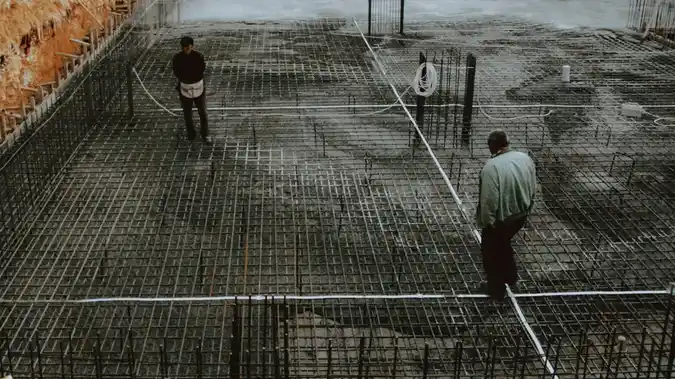
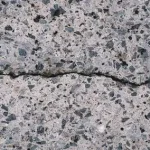
A void under a concrete slab is an open space where the slab should be bearing on soil, compacted fill, or another prepared base. It can be thin, like a wedge near an edge, or larger and hidden in the middle of the slab. The size matters, but the pattern matters more.
Concrete is strong in compression, not in bending over unsupported spans. When a slab loses contact with the subgrade, it may still look intact from above for a while. That is why a hollow sound can show up before a crack becomes obvious. A slab can also be sitting on uneven support: firm in one area, empty in another. That mixed support often produces the first visible clue, such as a narrow gap at one corner or a lip where one section sits higher than the adjacent section.
People often confuse a void with normal joint spacing or shrinkage cracks. Control joints are intentionally cut lines in the slab, usually straight and regular. A void is not a line in the concrete itself; it is a loss of support beneath it. If you see a clean joint with no change in height and no hollow sound nearby, that is less suggestive than an irregular gap with edge movement or flaking soil.
A simple way to think about it is this: the concrete is the shell, but the soil below is the foundation. If the shell is intact but the support under part of it disappears, the concrete can stay in place for a time while the problem spreads below.
What signs point to a gap under concrete?
A gap under concrete is most suspicious when it appears with more than one sign at the same time. One clue by itself can mislead you, but a cluster of clues usually means the slab has lost support.
The most common sign is a hollow sound. Lightly tapping the slab with a hard object often produces a sharper, drumlike sound over supported concrete and a duller, hollow sound where the slab is bridging a void. That comparison only helps if you have a nearby area you believe is sound. Hollow sound alone is not proof, because thickness changes, rebar, and nearby edges can alter the sound.
Edge gaps matter too. If you can see daylight under a slab edge, a patio corner, or the side of a sidewalk panel, that visible opening can mean soil has eroded away from the perimeter. Edge gaps are especially meaningful when they are paired with crumbs of soil, a little drop-off, or a slab edge that appears to hang in space.
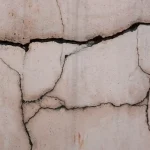
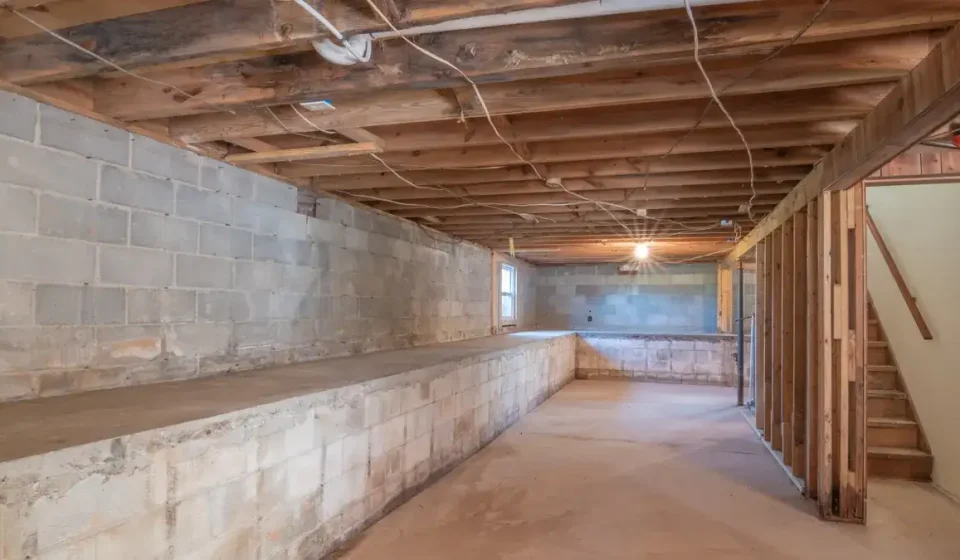
Other settlement signs include a crack that widens toward one side, a step between adjoining slabs, a low spot that collects water, or a panel that rocks slightly when walked on. In garages or basements, a sloped floor or a gap at the perimeter can point to movement under the slab even if the surface still looks smooth. Water stains near the gap, repeated pooling, or a washout path from a downspout or downspout extension are also worth noting because water is a common driver of soil washout.
Look for change over time. A stable gap that has not moved for years is different from one that appeared after a heavy rain or a freeze-thaw season. In practice, the pattern over 24 hours, 7 days, or after weather changes tells more than the single photo you took today.
How to check for a void under a slab, step by step
A careful surface check can tell you whether the gap is likely cosmetic or likely tied to lost support. It will not measure the void, but it can help you decide whether the slab deserves a professional evaluation.
- Mark the gap with a pencil or chalk and note its length, width, and location. Measure the visible opening in inches or millimeters and write down whether it is at an edge, a joint, or a crack. Verify that the gap is not just a shadow or surface chip. A problem sign is a gap that is wider at one end or changes after rain.
- Tap the slab in a grid about 6 to 12 inches apart. Use a consistent method across a 2-foot to 3-foot area around the suspected spot. Verify whether the sound changes from solid to hollow in a clear boundary. A problem sign is a broad hollow zone rather than a tiny isolated patch.
- Look for vertical movement at the edges and cracks. Place a straightedge or level across the panel and check for a step or slope. Verify whether one side sits higher or lower by more than a hairline difference. A problem sign is a visible lip, not just a crack line.
- Check for signs of water entry or exit. Follow the ground around the slab for downspout discharge, grading that slopes toward the slab, or soil that looks freshly washed out. Verify whether the area gets wet after rain or irrigation. A problem sign is recurring erosion, muddy streaks, or a trench-like gap.
- Press gently near the edge with your foot, only if the slab is safe to approach. Stand on the edge area and note whether it flexes, rocks, or sounds different. Verify that the slab remains firm. A problem sign is movement under ordinary body weight, which suggests support loss.
- Inspect the adjacent soil for void clues. Look for sinkholes, crumbly soil, fallen aggregate, or a space under the perimeter that extends farther than the visible opening. Verify whether the ground is compact or loose. A problem sign is soil that keeps sloughing into the gap.
- Repeat the same check after a rainfall, irrigation cycle, or a dry spell of a few days. Compare the photos and measurements from the same angle. Verify whether the gap has changed. A problem sign is any widening, new cracking, or worsening hollow sound after water movement.
- Document everything and stop if the slab is showing structural movement. Save dated photos, measurements, and notes about the weather. Verify that the issue is not getting larger. A problem sign is a pattern of progression over 1 to 4 weeks, which is more concerning than a static cosmetic edge gap.
The point of this process is not to prove the exact cause. It is to separate a harmless-looking seam from a likely support problem. If the slab is already moving, the right next step is not more tapping; it is a professional assessment that can identify how far the void extends and whether the subgrade is still active.
What usually causes erosion under a slab?
Erosion under a slab usually comes from water moving soil out of place. Once fine particles leave, the concrete can stay up for a while and then start to bridge over empty space.
Poor drainage is a common driver. Roof runoff that dumps near the slab, downspouts that discharge too close, or soil that slopes toward the concrete can keep water in the same area repeatedly. Over time, that water can soften the subgrade and carry fines away. Around patios and sidewalks, surface water can also follow the path of a crack or joint and work downward.
Soil washout is another term you will hear. It means water has physically carried soil away from beneath the slab. That can happen after repeated rain, leaking irrigation, or a plumbing leak under or near the slab. The gap may show up at the edge first because the outside perimeter is where water and soil movement are easiest to see.
Compaction problems can look similar. If the fill beneath the slab was not compacted well when the slab was placed, the ground may settle later without any obvious water event. In that case, the gap may appear gradually and the slab may show uneven support long before a dramatic crack forms.
Freeze-thaw movement can contribute in colder climates, but it usually works with water already in the system rather than acting alone. Soil that freezes, expands, and thaws can open paths for more water. Then the next storm or melt event enlarges the void.
I would not treat every gap as proof of major structural trouble, but I would not dismiss a changing gap either. A narrow edge opening can sometimes be a surface-level issue or a minor perimeter gap. What makes it worth attention is the combination of hollow sound, movement, water, and visible loss of support, and you should consult a qualified professional if those signs appear together.
When to stop looking and get qualified help
You should stop relying on a surface check when the slab is moving, the gap is growing, or the concrete is part of a load-bearing area. At that point, the question is no longer “is there a void?” but “how large is it, why is it forming, and what is happening under the slab?”
A vehicle or heavy object will cross the slab: That means the consequence of a hidden void is higher because loads can concentrate at the unsupported edge — get a qualified concrete or structural professional involved before more weight goes on it.
The slab has a clear height difference or a widening crack: That suggests settlement, not just a cosmetic gap — stop treating it as a minor surface defect and have the support conditions assessed by a qualified professional.
You hear a hollow sound across a broad area, not just one small spot: That can mean the void is larger than it first appears — avoid assuming the slab is stable until someone with the right tools evaluates it.
Water is still entering the same area after rain or irrigation: Ongoing water movement can keep washing out soil — address the drainage source promptly and have the slab checked so the problem does not keep expanding.
The gap appeared suddenly after a storm, leak, or freeze event: A rapid change often means active soil loss or a fresh settlement issue — do not wait for it to “settle back” on its own.
The slab is near a foundation wall, utility line, or basement area: Movement near other structures can matter beyond the slab itself — seek qualified help because the same water path may be affecting more than one element.
For a broader context, the hub on concrete slab settlement diagnosis can help connect this clue with other signs, but it should not replace a site-specific assessment when the slab is already changing. Related reading: crack patterns in concrete slabs, diagnosing soil washout, and slab leveling options can all help you understand the next step. https://www.concreteconstruction.net/ and https://www.fhwa.dot.gov/innovation/everydaycounts/edc-2/soil-stabilization.cfm
The mistakes people make with edge gaps and hollow spots
The most common mistake is confusing a joint for a void. A control joint is part of the slab design; a void is a loss of support below it. The consequence is obvious: people ignore a real erosion problem because they think any line or seam is “normal.” The correct alternative is to check for movement, hollow sound, and soil loss, not just the presence of a line.
Another mistake is poking or chiseling at the gap to “see how far it goes.” That can chip the edge, enlarge the opening, or break the surface in a way that hides the real pattern. The better alternative is to measure, photograph, and compare over time.
People also assume that a gap is harmless if the slab still feels solid underfoot. Concrete can bridge a small void for months or longer before it starts to crack. The correct alternative is to treat the combination of hollow sound and edge gap as a warning sign even when the surface still seems usable, and to consult a qualified professional when the signs line up.
A fourth mistake is ignoring drainage because the slab is the visible problem. If the same downspout, grading issue, or irrigation pattern keeps feeding water to the area, the void can keep growing. The better alternative is to trace where water is coming from and where it goes during a rain event.
A fifth mistake is using caulk, mortar, or patch material as if it were a fix for lost support. Surface patching can hide the opening while the subgrade keeps eroding. The correct alternative is to address the support condition first, because a filler does not replace soil under the slab.
What changes in older slabs, new slabs, and cold-weather sites
Older slabs are more likely to show edge gaps and settlement because the subgrade has had more time to move, dry out, erode, or compact.
Drafted with AI; not yet reviewed by a person.