Last updated: September 10, 2026
Key Takeaways
- Watch where water runs for 2 to 5 minutes.
- The better alternative is to inspect after rain and watch runoff for 10 to 15 minutes.
- The better alternative is to note small changes early and recheck them in 30 days.
- A new slab can show minor early movement as the base finishes compacting, especially in the first 6 to 12 months.
A slab that drops a hairline amount can still cause trouble. One edge sits lower. Water lingers. A heel catches. If you are trying to learn how to tell if your sidewalk, driveway, or patio is settling, those are the signs that matter most, not age or weathering. To be fair, I would treat that as a real condition to inspect rather than a cosmetic nuisance; and if the slab is part of a structure, if the movement is fast, or if anyone is tripping, consult a qualified concrete or foundation professional about your situation.
What settling actually means, and who this guide is for

Settling means the ground or base under a paved surface has dropped enough to change the surface’s grade. On a sidewalk or patio, that may show up as a sunken corner, a tilted slab, or a joint that no longer sits even. On a driveway, it often shows up at the garage slab, at a drain, or along the wheel path where the base has washed out or compressed. The technical term is differential settlement; one part moves more than another, and that difference is what creates the lip, slope, or crack people notice. Ugly, yes. Invisible, no.
This guide is for a homeowner or property manager who can walk the area, look closely, and use a 2-foot level, a straightedge, or a string line. It assumes you know the difference between a surface stain and a change in elevation, but not necessarily the cause. I am not talking about cosmetic hairline cracking alone. A crack can exist without meaningful settlement, and a settled slab can sometimes crack very little.
Not every case belongs in a DIY bucket. If the movement seems to involve the house itself, a retaining wall, steps tied to a foundation, or a slab with obvious voids underneath, this is not the right article for a quick self-check. Those situations can point beyond a simple paving problem. I would also avoid a do-it-yourself judgment if there is active water intrusion from a downspout, leaking irrigation line, or sinkhole-like depression. The movement may still be small in inches, but the cause can be bigger than the surface. In those cases, consult a professional inspector or foundation contractor rather than guessing from the top.
My practical rule: if the issue stays local to one panel, one run, or one low spot, you can usually inspect it yourself. But if the movement crosses multiple surfaces, keeps returning after rain, or seems to change over weeks or months, a visual check is not enough.
How do I know if my sidewalk, driveway, or patio is actually settling?
You know it is settling when the surface has a measurable change in elevation, a persistent drainage change, or a joint that no longer lines up across a span of at least 2 to 4 feet. A single crack is not enough. A single stain is not enough. I want you looking for patterns that show movement, not just age. That’s the tell.
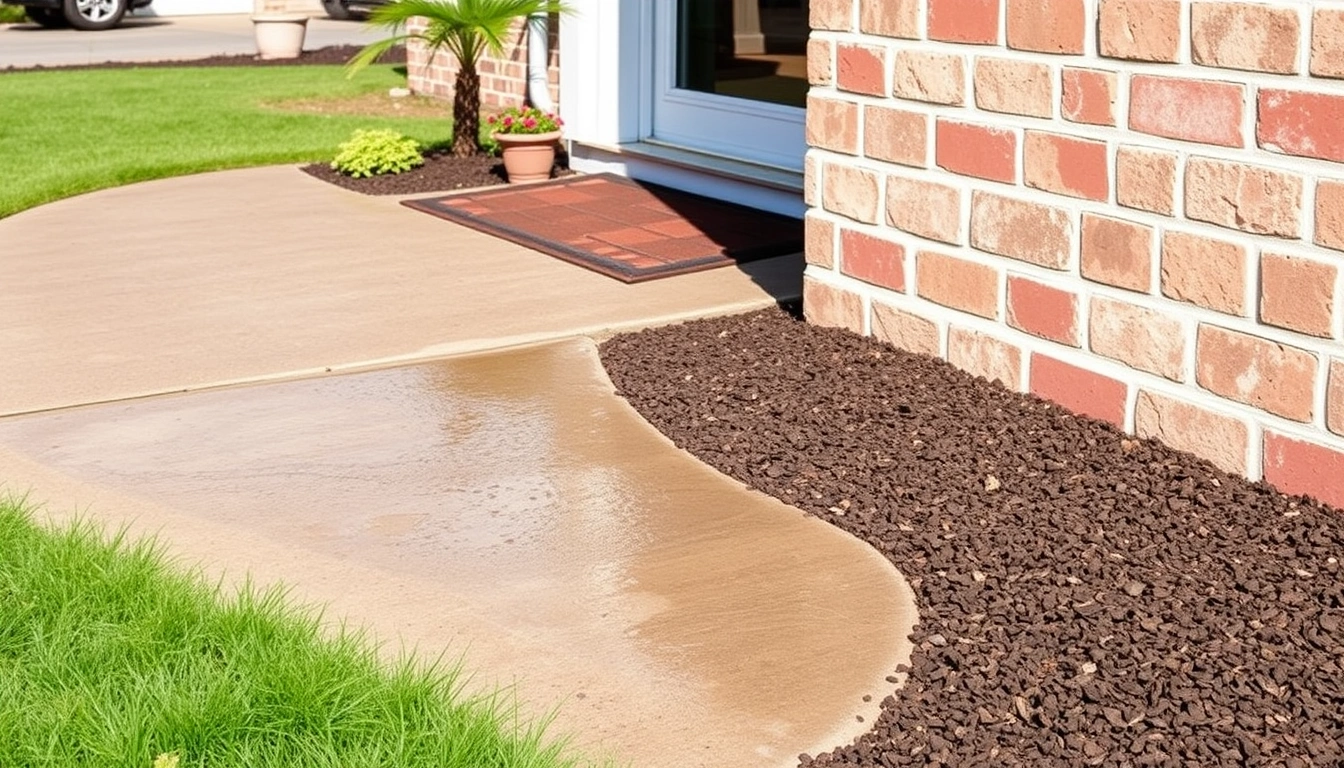
Start with the easiest sign: standing water. After normal rain, a sidewalk or patio should shed water away from structures and not leave a puddle that sits for hours in a new depression. If water collects in one spot every time, that spot has likely dropped or the surrounding area has lifted. Next, check for a lip at joints. If one slab edge sits noticeably above the next or below it, that is a vertical offset, and it often means the base beneath one side has moved. On a driveway, this is especially common where the slab meets the garage floor or apron.
Then look at crack behavior. A tight, random surface crack from shrinkage can appear without settlement. What worries me more is a crack with one side lower than the other, or a crack that widens into a wedge shape. A crack that is wider at one point than another is not proof of failure, but it is a sign that movement is uneven. If you can slide a coin or key under one side of a crack or joint in one section and not the next, that unevenness matters more than the crack’s length.
Finally, compare the surface to fixed references. A patio that used to sit flush with a door threshold but now drops by about 1/4 inch or more can create a trip edge and may indicate settlement. A driveway that used to drain toward the street but now runs back toward the garage is showing grade change. I am deliberately using qualitative language because the exact threshold for concern varies, but a visible change that affects walking, doors, or drainage should not be ignored.
Step-by-step: how to inspect a slab for settling
You can do a careful inspection in 15 to 30 minutes with a 2-foot level, a tape measure, chalk, and a smartphone camera. I would document everything before trying to decide whether the surface is merely worn or truly moving. Small notes now save a lot of squinting later.
- Walk the area slowly and mark every suspect spot. Use chalk or painter’s tape to mark cracks, dips, lips, and puddles in a grid pattern about every 3 to 5 feet. Verify whether the same spot shows more than one symptom. A crack alone is less convincing than a crack plus ponding or a height change.
- Check for vertical offset across joints and cracks. Place a 2-foot level or a straightedge across the seam and measure the step with a tape measure or ruler. Verify whether the offset is consistent along the seam or changes from one end to the other. A problem spot is one where the edge difference is obvious enough to catch a shoe or wheel.
- Test drainage after rainfall or with a controlled rinse. Watch where water runs for 2 to 5 minutes. Verify whether water moves away from the house, down the intended slope, or stalls in one low area. A problem is water pooling in the same depression every time instead of flowing off.
- Measure slope over a known distance. Set a level across 4 feet if you have it, or use a 2-foot level and repeat the check in adjacent sections. Verify whether the slab has a continuous fall in one direction or an abrupt change at one point. A sudden change suggests settlement more than normal design slope.
- Compare the slab to a fixed reference. Measure from the surface to a door threshold, garage floor, step riser, or foundation line. Use the same reference point and record the measurement in inches. A problem is a difference that is new or clearly larger than nearby sections.
- Look for the shape of the crack. Note whether it is hairline, open, stepped, or widening. Verify whether the crack is clean and uniform or whether one side has dropped. A stepped or offset crack is more concerning than a thin cosmetic one.
- Check nearby water sources. Inspect downspouts, irrigation heads, hose bibs, and visible runoff paths. Verify whether water concentrates near the settled area after rain or watering. A problem is a low spot that lines up with a chronic water source, because wet soil often loses support over time.
- Take dated photos from the same angle. Photograph the marked spots with a ruler or tape measure in frame, then repeat in 30 to 60 days if the issue is uncertain. Verify whether the offset, gap, or puddle is stable or getting worse. Movement over time is the key difference between an old blemish and active settlement.
What I would not do is judge the problem from one glance at a crack sealant line or a single photo. A settled slab often tells its story through several small clues: height difference, drainage change, and one side of a joint behaving differently than the other.
What to check before you blame the concrete
Check the base, the water, and the edges before you assume the slab itself has failed. Concrete is often the visible victim, not the root cause. The part underneath is usually where the story starts.
First, look at the soil at the edge of the slab. If the soil has pulled away from the concrete, sunk lower than nearby ground, or turned soft after rain, that suggests loss of support. A patio over expansive clay may move with moisture changes, while a driveway over poorly compacted fill can settle more steadily. Those are different problems with different patterns. Clay often heaves and settles seasonally; loose fill tends to drop where it was never compacted enough.
Second, trace water away from the area. Downspouts that discharge next to a slab, splash blocks that end too close, or irrigation overspray can saturate the base. Water does not have to flood a slab to matter. Repeated wetting can soften subgrade, wash out fines, and create voids. If the low spot lines up with a gutter overflow or a leaking pipe, that is a meaningful clue.
Third, look at the slab edges and adjoining surfaces. A sidewalk segment that settles near a tree root zone may be affected by root pressure or root decay, depending on species and maturity. A driveway apron that drops at the street may be influenced by the transition from private slab to public pavement. A patio that is tight against a retaining wall can move differently because the wall and slab are not settling in the same way.
Finally, remember that not all cracking means settling. Concrete shrinks as it cures, and control joints are there to encourage cracks in planned locations. According to the Portland Cement Association, control joints are used to manage where shrinkage cracks occur, and a crack that stays level on both sides may be a shrinkage crack rather than settlement. A crack with one side lower is a settlement clue. That distinction matters because it tells you whether the problem is mainly cosmetic or structural. If I had to choose one thing to verify first, it would be elevation difference, not crack length.
When should you stop and get qualified help?
You should stop DIY inspection and get qualified help when the movement is tied to safety, structure, or active change. I’m being direct here because this is the point where guessing can lead to the wrong repair.
A lip higher than about 1/2 inch at a walking path: it creates a trip hazard and suggests meaningful differential settlement — get a qualified concrete or accessibility professional to assess it.
The slab is attached to the house, garage, or foundation: movement may involve the structure, not just the paving — stop treating it as a surface issue and have it evaluated by a qualified professional.
Water pools against the house or garage after rain: drainage is being redirected toward a place it should leave, which can affect more than the slab — get help identifying the cause before patching the surface. According to the U.S. Environmental Protection Agency, keeping water away from foundations is part of preventing moisture problems.
A crack is widening, offsetting, or changing over 30 to 60 days: the problem is active, not historical — document it and have it inspected rather than sealing it and hoping it settles down.
You see voids, rocking slabs, or hollow sounds under a panel edge: support may be missing under part of the slab — do not assume filler or caulk will solve it.
There are signs of sinkage near steps, retaining walls, or utility lines: those areas can fail differently and can carry higher risk — stop and bring in the right specialist.
I would also stop if the area is a main entry route, an elder’s path, or anywhere a fall would be serious. In those spots, the question is not just “is it settling?” It is “is it safe to leave as is for now?” That is a different standard.
Common mistakes that hide the real problem
The first mistake is judging by crack width alone. A thin crack can be harmless, while a narrow crack with one side dropped can be a real settlement clue. The consequence is false reassurance. Measure the height difference across the crack or joint instead.
The second mistake is filling the crack before looking for the cause. Sealant may hide the symptom and make future inspection harder. The consequence is lost evidence and repeated damage. The better alternative is to document the area first, then address drainage or support.
The third mistake is ignoring water because the slab looks “dry most of the time.” Settlement often follows intermittent wetting, not constant flooding. The consequence is missing the source, such as a downspout, sprinkler head, or buried leak. The better alternative is to inspect after rain and watch runoff for 10 to 15 minutes.
The fourth mistake is comparing one area to another without a fixed reference. A driveway can be uniformly sloped and still be fine. The consequence is blaming normal design for a real defect, or vice versa. A door threshold, garage floor, step, or known level line works better.
The fifth mistake is assuming every sunken slab needs the same repair. A patio over soft fill behaves differently from a sidewalk over tree roots or a driveway apron over washed-out base. The consequence is choosing the wrong remedy and paying twice. The better alternative is to identify whether the issue is soil loss, compaction, root pressure, or structural movement first.
The sixth mistake is waiting until the trip edge is obvious from across the yard. By then, the slab has often moved far enough to make repair harder and drainage worse. The better alternative is to note small changes early and recheck them in 30 days.
What changes in edge cases?
A different lens helps when the slab is new, very old, or built on reactive soil. A new slab can show minor early movement as the base finishes compacting, especially in the first 6 to 12 months. That does not excuse a serious lip, but it does mean you should compare it against construction timing before assuming failure. An old slab may have settled long ago and then stabilized; if the condition has not changed in years, the issue may be chronic rather than active.
On expansive clay, which swells when wet and shrinks when dry, a patio or sidewalk may rise and fall seasonally. The pattern there is often not a one-way sink but a repeated shift after wet weather. In that case, the key clue is cycle and consistency, not just drop. If one corner keeps moving every rainy season, I would treat that differently from a one-time settlement, and it is wise to have a qualified professional review the pattern.
Tree roots are another edge case. A slab can lift where roots push from below and then settle later when roots die or moisture changes. That can create a mixed pattern: one panel high, the next low, and cracks that look stepped. A purely cosmetic patch misses the underlying movement. A professional can help decide whether the slab needs lifting, stabilization, or replacement.
If the concrete was poured over older fill, utility trenches, or a spot that was backfilled after plumbing work, the risk is different again. Those areas can compress years after construction, especially if the fill was not placed in thin, compacted lifts. The visible symptom may look the same as ordinary settlement, but the cause often is not. This is where records, age, and site history matter as much as the crack itself.
Why catching settling early matters
Catching settling early helps because the repair options stay broader when the movement is small. A minor lip may be manageable with leveling, drainage correction, or targeted stabilization, while a larger drop can mean replacement. Early action also reduces trip risk and helps protect nearby features such as steps, garage edges, and foundation-adjacent slabs. According to the American Concrete Institute, concrete performance and distress should be evaluated in context, not by one symptom alone.
There is also a money angle, even if you never plan to sell. Water that keeps pooling in one place can enlarge the low spot, wash out more base, and turn a moderate issue into a bigger one. A quick inspection after the first sign of unevenness can prevent repeated patching. If you want a practical benchmark, use 30 days as your recheck interval and compare the same photos, measurements, and puddle locations.
For homeowners asking how to tell if your sidewalk, driveway, or patio is settling, the short answer is this: look for measurable height change, repeatable drainage change, and movement that gets worse over time. If you see all three, do not wait for the crack to “tell the rest of the story.” Gather measurements, watch the area after rain, and bring in a qualified professional when the slab is tied to the structure, the movement is active, or the trip hazard is growing.
Sources
- Portland Cement Association, concrete joint and crack control guidance.
- U.S. Environmental Protection Agency, guidance on keeping water away from foundations.
- American Concrete Institute, concrete distress evaluation and repair references.