How to Tell If a Concrete Slab Needs Crack Repair Before Lifting

Last updated: November 20, 2026
Quick Answer: If a concrete slab crack shows movement, vertical offset, crumbling edges, or water entry, it usually needs repair before lifting; hairline, dry, stable cracks often do not.
Key Takeaways
- Check whether the crack is active, open, or displaced before a slab lift begins.
- Active cracks need closer review when they change over time, admit water, or show offset.
- Repair comes first when slab edges are broken, the crack steps, or jack pressure could worsen it.
- Sealing and structural stabilization are not the same repair.
Concrete slab crack repair comes before lifting when the crack shows movement, separation, or damage that could turn a small defect into a bigger break during the slab lift. This guide on How to Tell If a Concrete Slab Needs Crack Repair Before Lifting settles the first check, the repair order, and the signs that mean stop and call in help.
The first question to ask before any slab lift
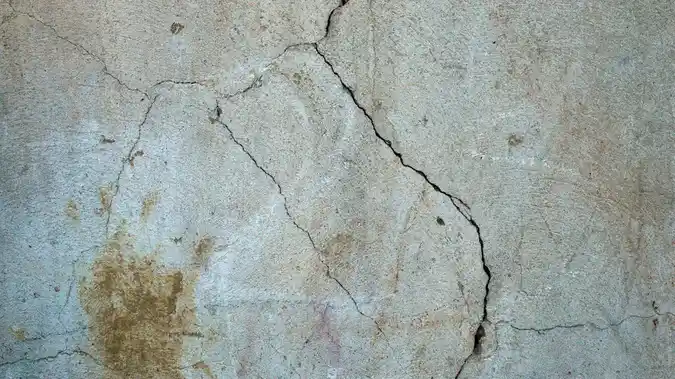
The first question is whether the crack is active, open, or displaced before anyone starts a slab lift. Picture this: you’re standing on a garage slab or sidewalk panel with a jack planned for later this week, and the crack in front of you already looks tired.
That first look decides whether a concrete crack filler, epoxy, or polyurethane sealant belongs in the plan before lifting. A hairline, dry crack with no offset is a different problem from a crack with one side higher than the other. Movement beats width every time.
Here’s the catch:
- A crack can be narrow and still be active.
- A wider crack can sometimes be stable.
- A bad lift plan can turn a repairable crack into a broken edge.
What matters most is whether the slab is still moving, whether the crack crosses a control joint or random field, and whether the crack has vertical offset. A crack with 1/8 inch of separation and a visible step is not just a cosmetic line. It’s a sign the slab has been working against itself.
How do I know if the crack is active or stable?
An active crack needs more attention than a static one, and you can sort that out by checking for change over time, water entry, and offset. A crack that widens with the seasons or after rain is a different repair from a dry, dormant line that has stayed the same for months.
Picture this: you’re kneeling beside the slab with a marker, a ruler, and a flashlight, trying to decide whether the line is just old damage or an opening that still moves. The answer comes from three checks, not one. Crack width, edge height, and moisture all matter.
Use this short procedure:
- Clean the crack with a stiff brush and look for dirt packed deep in the line. Clean edges make the next reading real, not guessed.
- Measure the opening at several points with a ruler or crack gauge. Write down the widest spot and the narrowest spot.
- Check for vertical offset by running a straightedge or level across the crack. A step between sides is a warning sign.
- Mark both ends with pencil or tape and revisit the crack in a few days or weeks. If the line spreads by even a little, it is active.
- Look after rain or a washdown. Water that enters and then reappears at the same line suggests a path through the slab, not just a surface blemish.
A stable crack usually stays the same width, stays dry, and has no side-to-side movement. An active crack often has fresh dust at the edges, a change in width, or damp staining after weather. If the crack keeps changing, lifting first can pull against it.
For a clean repair sequence, the hub article on repair planning is the best place to start in this site’s repair process.
What crack damage means repair before lift?
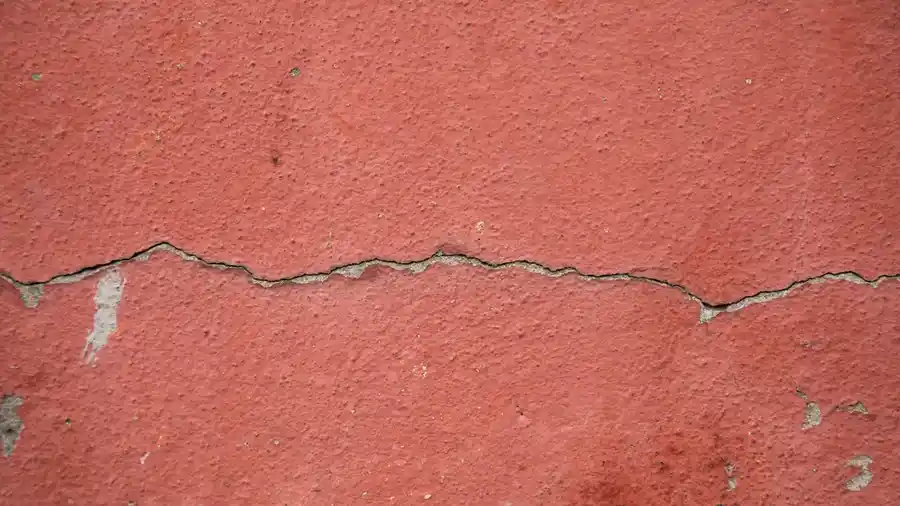
Crack damage needs repair before lift when the slab edges are broken, the crack has a step, or the break looks like it will grow under jack pressure. A lift pushes force through the slab, and a weak crack line can open wider or chip at the edges if it is ignored.
Because that damage can worsen under pressure, look closely at the crack before any lift is scheduled. Picture this: you’re staring at a garage floor crack that has already dropped one side by half an inch, and the edge crumbles when you tap it. That is not a simple seal-and-go case. It needs crack stabilization before a lift is even worth discussing.
Look for these signs:
- Vertical displacement: one side sits higher than the other.
- Spalling at the crack: the edge is breaking away, not just split.
- Multiple branch lines: the crack has smaller cracks feeding off it.
- Soft or hollow sound: the slab may be delaminated near the crack.
- Water staining or efflorescence: moisture is moving through the fracture.
A crack with offset often needs epoxy or another stabilizing repair, not just a flexible sealant. Polyurethane sealant can handle some movement and weather exposure, but it does not rebuild broken concrete edges. Epoxy is better when the goal is a harder bond and more crack stabilization. Concrete crack filler is the light-duty option and usually fits minor surface cracks that do not show movement.
The trade-off is simple. If you skip repair on a damaged crack, the lift can chase the weakest line in the slab. If you overbuild a tiny, stable crack, you waste time and money. The right call depends on movement, not fear.
Which cracks can wait, and which ones should stop the lift plan?
Cracks can wait when they are hairline, dry, non-moving, and have no vertical offset, while cracks with active movement or broken edges should stop the lift plan until they are addressed. That split can keep people from treating every crack the same.
Picture this: you’ve got three lines on the slab, and only one of them looks ugly. The question is not “Is there a crack?” The question is “Which crack changes the structure enough to matter for a slab lift?” That answer depends on the type of crack, not just the fact that it exists.
Use this decision table:
| Crack condition | What it usually means | Repair priority before lift |
|---|---|---|
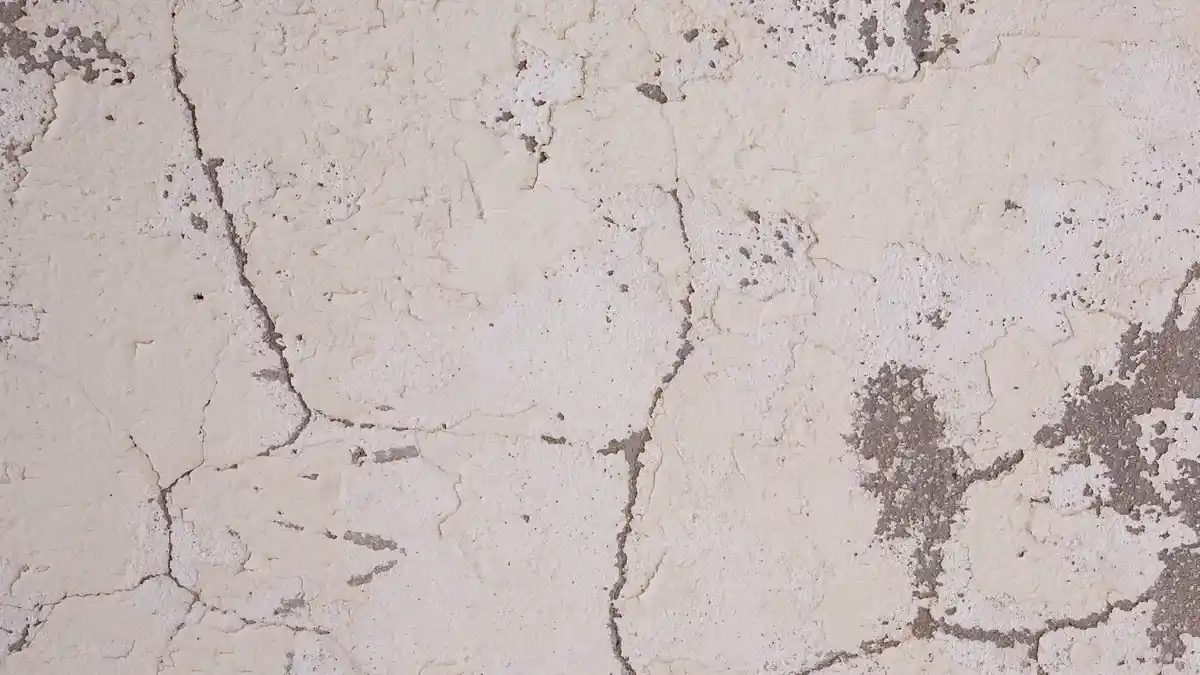
| Hairline, dry, no offset | Likely stable surface shrinkage | Often can wait |
| Wider but flat, no movement | May be stable if edges are sound | Often can wait if the contractor agrees |
| Offset at one side | Movement or settlement | Repair first |
| Crumbling edges | Weak concrete at the crack | Repair first |
| Damp line after rain | Possible active path for water | Inspect and likely repair first |
| Branching cracks | Stress is spreading | Repair first |
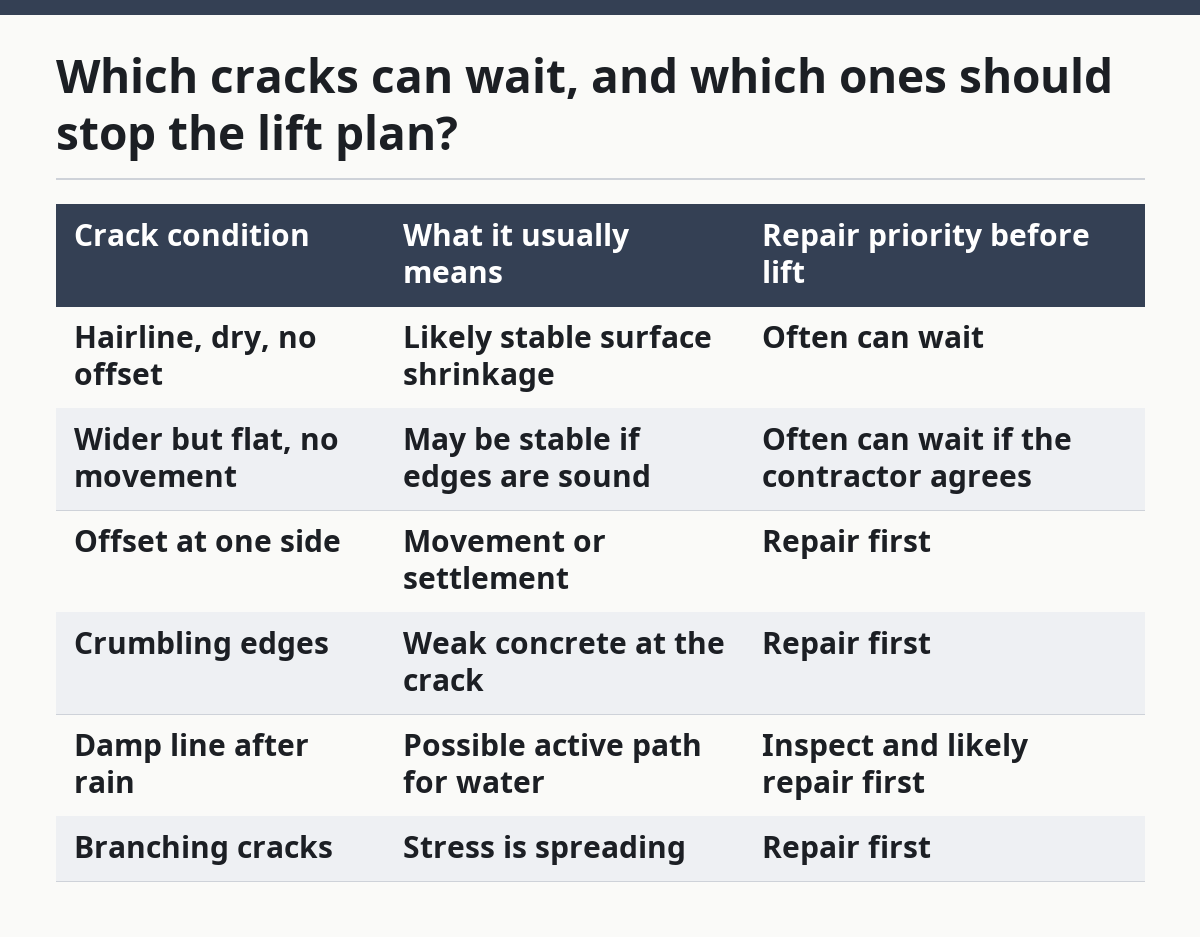
A stable hairline crack can often be sealed later with concrete crack filler after the slab is back in place. A crack with separation and movement is a different story. If the slab is going to be jacked near the fracture, the crack may need epoxy or stabilization before any lift begins.
This is where a local site visit matters. Clay soils, freeze-thaw cycles, and drainage problems change how fast a crack grows. A slab in a wet yard after winter does not behave like a dry patio on well-drained base.
How much does crack repair change the job?
Crack repair changes the job by adding labor, materials, and sometimes a delay, and the final cost depends on crack length, repair type, and whether the slab has to dry first. A simple seal is one thing; structural stabilization is another.
Picture this: you were expecting a lift quote, and now someone is talking about prep work, cleaning, injection, curing time, and a second visit. Epoxy repairs usually need cleaner, drier conditions than a flexible sealant, and that changes the schedule.
What affects the price and timing:
- Crack length: longer cracks take more prep and more material.
- Repair type: concrete crack filler is simpler than epoxy injection.
- Moisture: wet slabs slow down adhesion and can push the repair date back.
- Access: tight side yards, enclosed garages, and heavy furniture add labor.
- Extent of damage: a cracked edge or failed joint takes more than a neat surface line.
A small crack repair can be a quick add-on. A structural repair can add a separate visit and curing time before lifting. If the crack must be stabilized first, the lift may be delayed until the repair reaches enough strength for the slab work to proceed safely.
The bad job looks easy at first and expensive later. You see patch material smeared over a moving crack, a lift that reopens the line, or a slab edge that chips because the crack was never stabilized. That is the cost of choosing speed over sequence.
What should you ask the contractor before the lift starts?
You should ask whether the crack is stable, what repair material they plan to use, and whether the slab can be lifted without making the crack worse. Those three questions expose the plan fast, and they keep the job from turning into guesswork.
Picture this: you’re on the phone or standing in the driveway with a contractor, and the crack is the one thing nobody wants to spell out. Don’t let that happen. Ask for a plain answer about repair sequencing, the condition of the crack, and the reason for the order.
Use these questions:
- Does this crack show movement or offset?
- Is this a concrete crack repair issue before lifting, or can it wait?
- Would you use epoxy, polyurethane sealant, or concrete crack filler here?
- What visible sign would make you stop the lift?
- If the crack opens during lifting, what is the next step?
A good answer will mention the crack’s behavior, not just its appearance. If the reply is only “we’ll fill it later,” that may be fine for a stable hairline crack, but it is not enough for a moving fracture. If the answer is “we need to stabilize first,” that means the crack has already crossed into the repair-first zone.
You do not need a perfect technical background to spot a weak answer. If the plan ignores offset, moisture, or edge breakage, the plan is weak.
When should I stop and get help?
You should stop and get help when the crack has vertical offset, spreading edges, water intrusion, or signs that the slab has more than one failure point. A lift is not the time to experiment with a crack that is already unstable.
Picture this: you’ve checked the crack and it still leaves you uneasy because the line is wider in one spot, damp in another, and chipped at the edge. That is the moment to pause. Do not force the lift and hope the crack behaves.
Stop and bring in help if:
- one side of the crack is higher than the other,
- the crack changes width over time,
- the slab sounds hollow near the break,
- water keeps entering the crack,
- or the crack runs through a load-bearing area like a garage wheel path or entry step.
This is not about being cautious for its own sake. A slab lift changes stress patterns. If the crack is already failing, lifting can turn a repairable line into a broken panel with extra cleanup and a worse finish. A local contractor who understands crack repair and lifting can decide whether the crack gets stabilized first or whether the slab needs a different approach.
FAQ
Should cracks always be repaired first?
No. Stable hairline cracks with no offset often do not need to be repaired before a lift. The deciding factor is movement, edge damage, and vertical displacement, not the fact that a crack exists.
Which cracks can wait until after lifting?
Cracks that are dry, narrow, flat, and unchanged over time can often wait until after lifting. They usually fit later sealing with concrete crack filler if the slab is otherwise sound.
Can lifting make a crack worse if it is not repaired first?
Yes. Lifting can widen an active crack, chip weak edges, or extend a fracture that already has movement. A crack with offset or crumbling concrete is the highest-risk case and should be reviewed before any lift starts.
Drafted with AI; not yet reviewed by a person.