Last updated: November 01, 2026
Quick Answer: in New York, the right slab lift is the one matched to the cause of movement; on the page below, the three main options are foam, mudjacking, and replacement. A slab that has dropped, heaved, or cracked in New York does not get fixed by guesswork. The fix depends on why it moved, not just how ugly it looks. The topic of this guide is Site-specific slab lifting scenarios in New York — The Complete Guide. One driveway over fill in Suffolk County, one warehouse slab on Long Island, and one brownstone cellar floor in Brooklyn can each call for a different method, different permits, and different expectations.
I write on construction and property-risk topics with an eye toward the trade-offs that decide whether a repair lasts five years or turns into a repeat call.
Key takeaways
- Slab lifting is not one thing. In New York, the right method changes with soil type, freeze-thaw exposure, access, moisture, and whether the slab sits under a house, driveway, sidewalk, or commercial floor.
- Polyurethane foam lifting is often the fastest option for many tight-access residential and light commercial jobs, but it is not the answer when the base has washed away or the slab has no support at all.
- Mudjacking can still make sense on thicker slabs and larger exterior surfaces, but it adds weight and needs more room to work.
- Full replacement wins when the slab is badly broken, too thin, badly undermined, or tied to drainage problems that lifting will not fix.
- In New York, the best outcome is often the one that pairs the repair with drainage correction, joint sealing, or subgrade stabilization.
- If the slab is part of a structural floor, or if the movement suggests foundation settlement, a licensed engineer or qualified contractor should be part of the decision.
What “site-specific” really means in New York
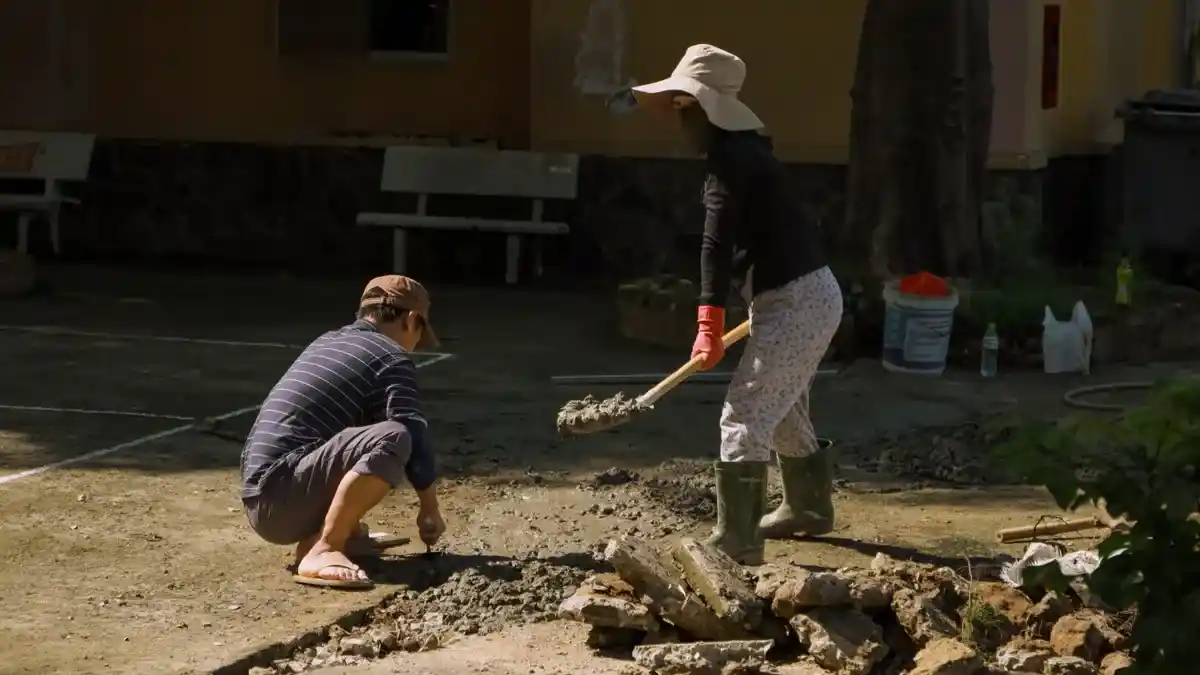
Site-specific means the slab’s location decides the method, not the marketing brochure. A garage slab in Rochester is not the same as a stoop landing in Queens, and a warehouse panel in Buffalo is not the same as a pool deck in Westchester. Soil type, moisture, slab thickness, access, and climate exposure are the big variables; they decide how load moves through the ground.
New York gives you a wide mix of conditions. Up north and out west, frost action can lift and split slabs when water sits under them and freezes. Downstate, settlement from poor fill, utility cuts, old drainage lines, or water infiltration is more common. On Long Island and along the coast, sandy soils drain fast but can lose support just as quickly when water paths change. In older neighborhoods, slabs may be tied to historic settlement, patched utilities, or undocumented fill that settled years ago and is still shifting.
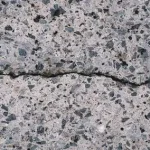
So a generic “inject foam under the slab” answer is often wrong. The slab may be hollow because water washed out fines. It may be cracked because the base is soft. It may be dropped because the edge lost support next to a trench or curb. Lift it without finding the cause, and you may get the height back for a while while the failure mechanism keeps humming under the surface.
Ask one simple question first: does the slab just need support restored, or does the ground problem need fixing too? If the movement came from poor drainage, leaking pipes, rooftop runoff, or repeated freeze-thaw, lifting alone is only half a repair. New York basements, walkways, driveways, loading pads, and storefront slabs are especially sensitive to water management, which makes site diagnosis more important here than in many milder markets. That part is the whole ballgame.
For technical references on slab-on-ground behavior and moisture control, the American Concrete Institute and the Portland Cement Association both publish guidance on concrete slab construction and distress patterns. Consult a qualified professional and review ACI’s slab-related standards and technical resources, along with PCA’s guidance on slabs-on-ground, before choosing a method.
Which lifting method fits the slab, and which one does not?
Foam lifting usually wins for access-limited New York jobs, while mudjacking wins when the slab is thicker, heavier, and easier to reach. Full replacement wins when the slab is structurally tired, not just out of level.
That is the shortest honest answer. The fuller answer depends on what the slab is made of, how far it moved, and what sits beneath it.
Polyurethane foam injection
Foam lifting fits jobs where speed, small drill holes, and low added weight matter. The material expands through small ports, fills voids, and can raise a slab with limited surface disruption. That makes it attractive for sidewalks, residential driveways, garage floors, patios, warehouse aisles, and many commercial slabs where downtime matters.
Its main strength in New York is access. Tight city sites, landscaped yards, and paved areas with buried utilities are often easier to work on with foam than with heavy slurry equipment. Another plus is the low load it adds to the subgrade, which matters when the base is already weak. For a slab that sank because the support washed out, low-density foam can be a clean fix if the voids are localized and the concrete is otherwise sound.
But foam is not magic. If the slab has severe cracking, if the subgrade keeps eroding, or if water is still entering the support zone, the lift can be temporary. Foam also does not solve a wrong drainage slope, and it will not repair reinforcement corrosion or a slab that has already lost enough integrity to spall apart when raised. Skip foam if the slab is fragmented, if the underlying issue is widespread settlement, or if the panel needs major reconstruction.
For homeowners and property managers, foam is often the better choice when the goal is to restore safe use quickly and the concrete panel is still structurally intact. It is less suitable when the job is really a foundation or drainage problem in disguise. A shiny fix can still be a trapdoor.
Mudjacking
Mudjacking makes sense when the slab is thicker, the voids are larger, and the site can handle bigger equipment and larger drill holes. The method uses a cementitious slurry pumped beneath the slab to fill space and raise the concrete. On some larger exterior slabs, that older, heavier approach remains practical because it can be economical and effective for broad areas.
The major advantage is volume. Mudjacking can move more material under a slab and can be a good fit for large driveway panels, some commercial slabs, and areas where a denser fill is acceptable. In New York, that can matter on older slabs with generous access, especially where the slab is not overly delicate and the owner wants a durable support fill rather than a light-expansion product.
The drawback is weight. On weak subgrades, adding a heavy slurry can be counterproductive. Mudjacking also leaves larger injection holes and can be messier to finish. It is not the first choice for thin, decorative, or tightly finished surfaces where patch visibility matters. If the slab has fine cracking, a polished appearance, or nearby utilities that make larger injections risky, mudjacking is the rougher tool.
This method is wrong for many urban interior slabs, for highly finished surfaces, and for sites where soft soils already failed under load. It can also be a poor fit where the real issue is water management rather than support volume.
Full replacement
Replacement wins when lifting would only postpone failure. If the slab is broken into multiple sections, badly thin, heaved by frost, undermined across a broad area, or tied to a drainage defect that cannot be corrected cheaply, replacement is the cleaner choice.
Replacement is also the right call when the slab’s function matters more than the concrete itself. A loading apron, basement slab tied to moisture control, or sidewalk panel with code-driven accessibility concerns may need a rebuild rather than a patch lift. In New York, where freeze-thaw cycles and old utility cuts are common, replacement often becomes the rational answer once cracking, settlement, and drainage problems stack up together.
The downside is obvious: more disruption, longer downtime, and more expense than lifting. But the real cost is not only upfront. A lift on a slab that should have been replaced can turn into a recurring maintenance problem. If the subgrade is unstable, replacement with proper base preparation, compaction, and drainage correction may save the next repair cycle.
The right method is the one that matches the failure mode. If the slab is intact and supported except for voids, lift it. If the slab is compromised or the ground is still failing, rebuild it.
What New York conditions change the choice?
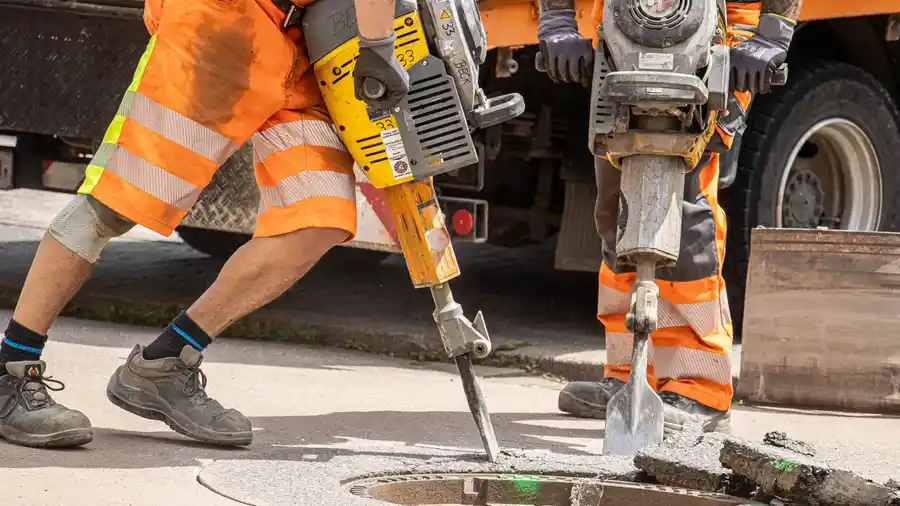
New York weather and soil conditions make water control part of the repair, not an afterthought. The state’s freeze-thaw exposure, mixed soil types, and heavy urban disturbance mean that the same slab problem can have different causes from one county to the next.
Freeze-thaw is the obvious issue in upstate and western New York, where trapped moisture under a slab can freeze, expand, and create upward movement or edge breakage. In those places, a lift that ignores drainage may fail when winter returns. The slab might re-settle after thaw, or the same edge can lift again if water keeps collecting in the same path.
Downstate and on Long Island, the issue is often more about drainage, old fill, and utility-related disturbance. A sidewalk panel near a repaired water line, a driveway edge next to a downspout discharge, or a garage slab over settled backfill can drop for reasons that are invisible until the base is opened. In New York City, utility access, sidewalks, and tight property lines can also make the method selection more restrictive because equipment access is limited and the repair has to respect surrounding structures.
Moisture is the common thread. The American Concrete Institute has long treated subgrade support and moisture control as core slab design issues, and that matters here because many slab lifts fail when the original moisture path is left untouched. The Portland Cement Association also points to base prep, drainage, and jointing as central to long-term slab performance. Those ideas are basic, but New York makes them urgent.
Before anyone drills a hole, a site-specific plan should ask four questions: where did the water come from, where did it go, what type of soil is under the slab, and what caused the support loss in the first place? If those answers are vague, the repair is guesswork.
This is also where a local contractor’s experience matters. New York sites often involve older slabs built over disturbed ground, patchwork utility work, or legacy drainage conditions. A repair that works on a suburban slab with clear runoff may not work in a compact city lot with little room to move water away.
The honest head-to-head
Foam lifting wins on access and speed, while mudjacking wins on bulk fill and replacement wins on damaged slabs that should not be saved.
| Criteria | Polyurethane foam lifting | Mudjacking | Winner for [condition] |
|---|---|---|---|
| Access in tight spaces | Small equipment and small ports suit narrow city sites | Needs more room for mixing and pumping | Foam for tight New York lots |
| Added weight on weak subgrade | Low-density material adds limited load | Heavier slurry adds more load | Foam where the base is soft |
| Large void filling | Works well on localized voids | Better for broad fill under bigger slabs | Mudjacking for wide support loss |
| Surface disturbance | Smaller drill holes, cleaner finish | Larger holes and rougher cleanup | Foam for visible or finished slabs |
| Suitability for cracked slabs | Best when the slab is intact enough to lift | Better for sturdy slabs with simple settlement | Neither if the slab is badly broken |
| Speed of return to service | Usually faster cure and less downtime | Typically slower cleanup and set time | Foam for active commercial sites |
| Long-term fix if water keeps entering | Needs drainage correction to last | Also needs drainage correction to last | Neither without water control |
| Best use case | Driveways, sidewalks, garage floors, light commercial slabs | Thicker exterior slabs, larger panels, some industrial areas | Depends on slab size and access |
| When replacement is smarter | Not ideal for badly fractured concrete | Not ideal for brittle or thin slabs | Replacement for structural failure |
The table points to a practical conclusion. Foam is the better default for many New York jobs because access is often the limiting factor and the slab usually only needs support restored. Mudjacking still has a place where the slab is thicker and the work area can handle a heavier process. But neither one should be sold as the answer to a slab that is broken beyond meaningful repair.
What the table does not show is the most common mistake: choosing a method before checking why the slab moved. If runoff, downspouts, utility leaks, or poor compaction are still active, both lift methods can become temporary fixes. So the right question is not “Which lift is best?” but “What caused this slab to move, and can that cause be corrected?”
Which slab lifting scenarios in New York actually justify each fix?
Foam lifting justifies itself when the slab is sound, access is tight, and the problem is localized settlement. Mudjacking justifies itself when the slab is heavier, larger, and the ground needs a denser support fill. Replacement justifies itself when the slab is too damaged to keep.
Foam lifting: the better fit when speed and access matter
Foam lifting is the right call for many New York driveways, walkways, garage slabs, storefront pads, and utility-adjacent panels because the method can be deployed with limited disruption. A homeowner in a dense neighborhood, a property manager with a loading problem, or a commercial site that cannot tolerate a long shutdown often benefits most from the small footprint of the process.
Its main strength is precision. Small injection points and controlled expansion make it easier to target a void without tearing up a finished surface. That matters in places where replacement would mean cutting against curbs, stoops, pavers, landscaping, or building entrances. The method also tends to be attractive when the slab is only a little out of level and the owner wants use restored, not a full rebuild.
The weakness is that foam can be the wrong answer for slabs with widespread collapse, heavy structural damage, or active water intrusion. If the slab is cracked through multiple panels, has been crushed at the edges, or has soil that continues to migrate, the repair can become a repeat job. In plain terms: foam is excellent at restoring support, but it cannot invent stable ground.
This is the best choice for readers who want a fast, relatively low-disruption repair on an otherwise salvageable slab. It is not for jobs where the slab itself is the failure.
Mudjacking: the better answer for thicker, bigger, less delicate slabs
Mudjacking is the stronger choice when the slab is substantial enough to tolerate a heavier lift and when the defect is broad rather than pinpoint. Larger driveways, commercial slabs, and some exterior flatwork can respond well because the slurry can fill substantial voids beneath the panel.
Its advantage is that it can be effective on broader areas without relying on expansion alone. If the slab has settled over a large zone and access is practical, mudjacking can be a sensible method. That is especially true where the owner values a traditional, proven support fill and the slab is not a fine-finish surface.
Its weakness is the same thing that makes it powerful: mass. The slurry can add load to a weak base, and the process is rougher on appearance. Larger drill holes and cleanup make it a less attractive option for decorative or highly visible surfaces. If the slab is already fragile, mudjacking can be too blunt.
This is the right call for readers with large, sturdy slabs and enough access to work efficiently. It is not for thin, delicate, or visually sensitive concrete.
Replacement: the right answer when the concrete has already lost the argument
Replacement is the right answer when the slab has structural damage, repeated failure, or subgrade issues that no lift will solve. That includes slabs with extensive cracking, broken corners, severe spalling, or widespread loss of support. It also includes cases where drainage must be redesigned, not merely patched.
Replacement also becomes the better choice when compliance or function matters more than saving the existing slab. A commercial entry, accessible route, or structural interior slab may need a clean rebuild to meet the owner’s operational needs. In those cases, a lift can be penny-wise and pound-foolish.
The drawback is the obvious one: replacement is more disruptive. It takes longer and usually costs more in labor, disposal, and restoration. But for a bad slab, that extra work buys a better outcome because the new slab starts with corrected base preparation, proper slope, and a chance to eliminate the cause of the failure.
This is the option for readers who need a true reset, not a cosmetic correction. It is not the right choice if the slab is still fundamentally sound.
What should be fixed at the same time as the lift?
Drainage should be fixed at the same time as the lift, or the slab is more likely to move again. In New York, a slab that has settled often has a water story attached to it, and leaving that story untouched is the fastest way to turn a one-time repair into a cycle.
The most common companion fixes are downspout extensions, grading corrections, joint sealing, and redirecting surface runoff away from the slab edge. In some cases, utility leaks or sump discharge lines must be checked first. If the slab is in a basement or below-grade area, the issue may also involve groundwater entry or persistent moisture migration through the base.
This is where a lot of generic advice falls short. Slab lifting is sometimes sold as a standalone fix, but the support loss may be a symptom of another problem. A driveway panel that settled after a gutter discharge changed direction will not hold if the discharge stays the same. A warehouse slab over poorly compacted backfill will not stay stable if the backfill keeps settling. A sidewalk near a utility trench may need more than fill under the panel.
Site-specific planning means treating the slab as part of a system. That system includes roof drainage, soil compaction, subgrade moisture, and the loads placed on the slab after repair. If a contractor never talks about those items, the repair plan is incomplete.
The best projects pair the lift with a correction that is boring but critical: move the water, stabilize the base, and then bring the slab back to grade. That is less dramatic than a miracle fix, and far more likely to last.
When should you stop considering lifting and choose something else?
Lifting should stop being the default once the slab is fragmented, the subgrade keeps moving, or the repair would not solve the underlying failure. That is the point where replacement, engineering review, or a different moisture-control strategy becomes the smarter move.
There are three clear stop signs. First, the slab has widespread cracking with differential movement across multiple panels. Second, the slab shows signs of structural distress such as broken corners, severe edge loss, or disintegration that would make any lift unstable. Third, the site keeps getting water in the same place, meaning the cause is active and recurring.
There are also cases where lifting is the wrong category entirely. If the slab movement is tied to foundation settlement, not just slab support loss, the issue may need structural evaluation. If the slab is part of a basement floor with moisture intrusion, the fix may involve drainage or waterproofing rather than elevation correction. If the work affects a commercial or public-access area, local code and accessibility concerns can shape the repair path.
In New York, this matters because older buildings and heavily modified sites can hide multiple problems behind one visible crack. A sunken slab may be the symptom, not the disease. That is especially true when water, soil movement, and old utility work all intersect on one property.
I would not recommend slab lifting when the concrete is too damaged to hold the correction, when the ground is still failing, or when the cost of repeated repairs starts to approach the cost of doing the job properly once.
The verdict: which repair should you choose?
Choose polyurethane foam lifting if the slab is still structurally sound, access is tight, and the problem is a localized settlement issue in a driveway, sidewalk, garage, or light commercial area. Choose mudjacking if the slab is thicker, broader, and can handle a heavier support fill. Neither if the slab is badly cracked, repeatedly moving, or tied to drainage or structural problems that lifting will not fix.
The clearest New York recommendation is this: use the least disruptive method that actually matches the failure. Foam is the better default for many urban and suburban jobs because access is often difficult and the slab usually needs precision more than brute force. Mudjacking remains useful for larger, sturdier panels with more straightforward support loss. Replacement wins when the concrete has already crossed the line from repairable to unreliable.
That call is not just about concrete. It is about the site beneath it, the water around it, and the long-term cost of getting the cause wrong.
What a good contractor should say before touching the slab
A good contractor should explain why the slab moved, not just how it will be lifted. That conversation should include soil condition, drainage, access, the risk of hidden voids, and whether the slab is a good candidate for repair at all.
If the first proposal is just a method and a date, the plan is incomplete. The useful proposal names the likely cause, identifies the method that fits the slab’s thickness and condition, and says what will be done to reduce repeat movement. On a New York site, that should also include a discussion of winter exposure, water routing, and whether permits or utility checks are needed before work begins.
Readers should also ask what the contractor will do if the slab does not respond as expected. A site-specific repair plan should have a fallback. If a panel is more damaged than it looked, the contractor should say so before the work starts, not after holes are drilled.
That is the standard worth insisting on. It is not complicated, but it separates a repair plan from a sales pitch.
Drafted with AI; not yet reviewed by a person.