When Is A Surface Chip Just Cosmetic And Not A Repair Concern?

Last updated: November 21, 2026
When Is a Surface Chip Just Cosmetic and Not a Repair Concern?
Quick answer: a surface chip is usually cosmetic when it is shallow, smaller than about 1 inch across, stays in one spot, and shows no crack growth, loose concrete, or slab movement. In the topic When Is a Surface Chip Just Cosmetic and Not a Repair Concern?, the right call is often to monitor a stable chip rather than repair it immediately.
A cosmetic concrete chip is usually not a repair concern when it is small, shallow, and limited to the slab surface or edge, with no crack growth, no loose concrete, and no sign that the slab is moving. A homeowner can often monitor that kind of chip instead of repairing it right away, especially if it looks like minor surface spall or ordinary wear.
Key takeaways
- A chip on the top edge of a slab is often only appearance-related when the concrete around it is still firm and intact.
- A deeper break, a widening crack, or loose fragments changes the job from simple touch-up to real repair territory.
- Surface spall and minor edge wear are common near doors, walks, steps, and garage slabs because those spots take more abuse.
- A practical approach is to mark the spot, photograph it, and check it again after weather changes.
- If the chip is part of a broader slab problem, cosmetic patching can hide the surface without fixing the cause.
What makes a chip cosmetic?
A chip is cosmetic when it changes how the slab looks more than how it performs. That usually means the damage is limited to the surface skin or a small edge, the surrounding concrete is still solid, and the slab is not showing movement, sinking, or a spreading crack.
This is different from a repair concern that affects the slab surface in a structural way. A small chip along a garage edge, porch corner, or walkway joint can be plain wear from carts, snow shovels, impact, or freeze-thaw stress. If the damaged area is only a few centimeters wide and the concrete at the edge still feels firm, a homeowner often does not need immediate repair.
A good way to think about it is this: a cosmetic chip is a surface defect, not a slab failure. The chip may look rough, but if the edge is stable and the damage stops where the break stops, the risk is usually low. The American Concrete Institute and the Portland Cement Association both emphasize that condition and change matter more than appearance alone. That said, a chip can still be worth sealing or patching later for appearance and to keep water from entering the rough spot.
The main trap is assuming every chip is harmless. A surface chip can be the visible part of a larger problem if it sits beside a crack, a hollow-sounding area, or concrete that keeps breaking away. In that case, the chip is not the real issue; it is the clue.
Which signs point to surface wear, not slab damage?
Surface wear is the likely answer when the chip is isolated, the break is clean, and the slab around it still feels tight. A few common signs point in that direction:
- The chip is shallow and stays near the surface.
- The edges of the break are not crumbling in your hand.
- There is no rust staining, no long crack, and no change in the slab line.
- The damage is in a high-wear spot such as an entry, stoop, driveway edge, or garage threshold.
- The chip looks older and has not changed after a wet season or winter.
Minor edge wear often shows up first where tires turn, salt gets tracked, or tools hit the slab. On a porch or stoop, the nose of the concrete can chip from repeated impact. On a walkway, the top edge may flake where people step near the corner. Those are appearance-only defects unless the break keeps spreading.
A simple field check helps. Run a finger over the area and look for loose grit. Press around the chip with a screwdriver handle or similar blunt tool, not a metal tip, to see whether the surrounding concrete sounds and feels firm. If the surrounding slab is solid and the chip does not extend into a crack, it is more likely cosmetic.
The catch is that cosmetic damage still deserves a second look after rain, snow, or a hard freeze. Water can enter a rough chip and make the edge worse over time. The NRMCA notes that moisture and freeze-thaw cycling can accelerate surface deterioration, so a stable chip should still be watched rather than ignored.
When should a homeowner watch instead of repair?
A homeowner should watch a chip instead of repairing it right away when the damage is stable, the edge is firm, and the spot is not in a critical walking or load path. This is the right move for many small surface spalls and chips that do not keep growing.
A simple monitoring routine works well:
-
Clean the chip with a brush and water.
Dirt hides the true edge, and a clean surface makes the next check useful. -
Take one close photo and one wider photo.
The close shot shows the chip itself; the wider shot shows where it sits on the slab. -
Mark the outline lightly with chalk or tape nearby.
The mark gives you a reference point without changing the slab surface. -
Check it again after a month or after heavy weather.
If the size and shape stay the same, the damage is likely stable. -
Watch for loose material, widening, or a new crack.
Any change means the chip is no longer just a cosmetic issue.
This kind of monitoring is practical because it costs little and avoids overreacting to every rough spot. It is especially useful on older concrete where small chips are common and not every defect needs a crew, a patch, or a full repair plan.
The drawback is that monitoring only works if you actually revisit the spot. A chip that looked harmless in spring can become a larger edge loss by the next winter if water keeps entering it. If the area is exposed to salt, snow, or repeated impact, check it more often.
Cosmetic chip or repair concern?
A cosmetic chip is easy to live with; a repair concern changes the slab’s condition or the likely repair path. The comparison below keeps the difference simple.
| Situation | More likely cosmetic | More likely repair concern |
|---|---|---|
| Size of damage | Small, shallow surface chip | Deep loss or larger broken section |
| Edge condition | Firm edge, no loose pieces | Crumbling edge, loose concrete |
| Nearby slab condition | No crack or movement | Crack, widening break, or changing line |
| Location | Low-risk wear spot | Repeated impact area or active traffic edge |
| Change over time | Stays the same | Grows after weather or use |
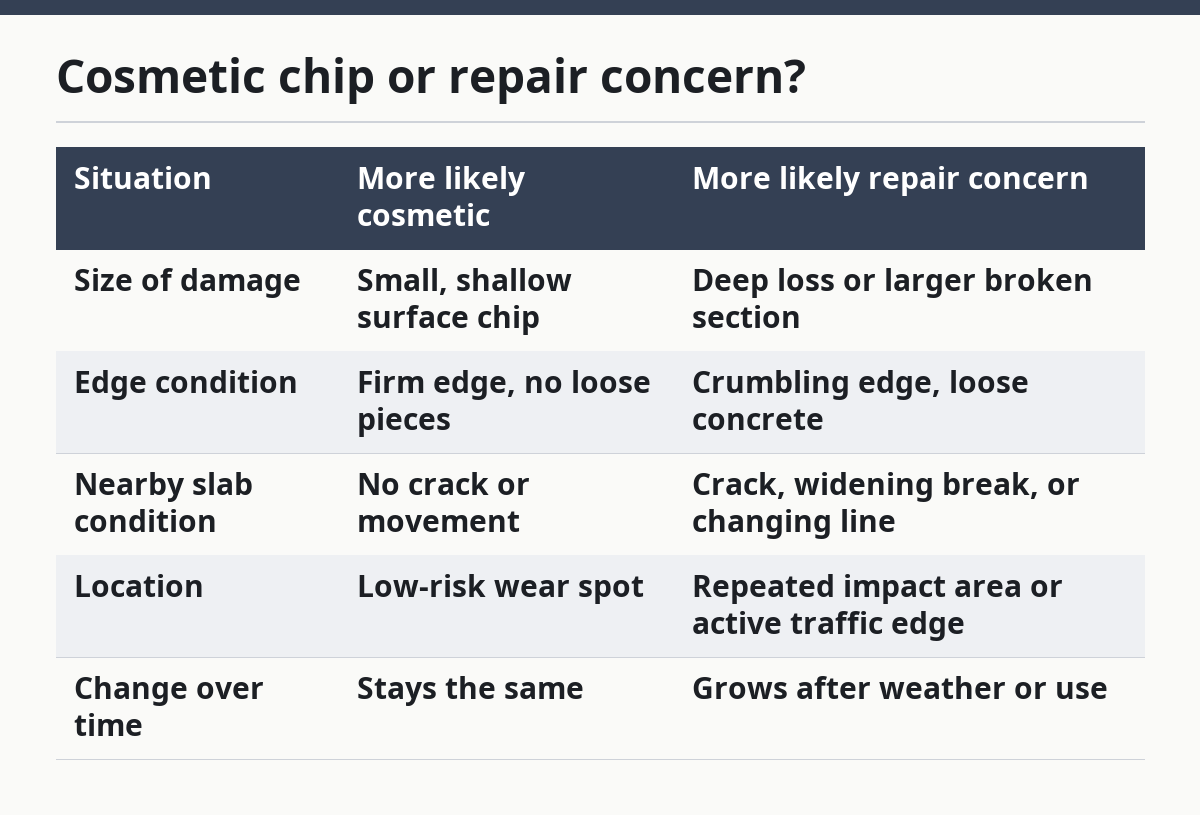
A cosmetic chip may still get patched for looks, especially on a visible porch or front walk. A repair concern is different because the fix needs to address why the slab is losing material. That can mean a more careful repair decision, not just a surface filler.
A bad mistake here is putting a thin patch over an active chip and calling it done. If the underlying concrete is still breaking away, the patch can fail fast and make the area look worse. The better approach is to match the repair to the condition, not just to the appearance.
What a bad diagnosis costs
A bad diagnosis costs either money, time, or both. If a homeowner treats a real defect as cosmetic, the chip can keep spreading until the damaged area is larger and more visible. If a homeowner treats a harmless chip like a major repair, the result is unnecessary work on a slab surface that only needed watching. In either case, a quick check by a qualified concrete contractor can prevent a small problem from turning into a larger one.
This is where scope matters, even if no exact price is quoted. A small appearance patch is not the same job as a repair that needs cleaning, bond prep, crack work, or replacement of a broken edge. The larger the damaged area and the less stable the concrete, the more the repair path tends to expand.
A poor repair also leaves a mark. A patch that does not match the slab texture, color, or edge profile can stand out more than the chip did. On a front step or entry slab, that matters because the eye goes straight to the defect. In a garage, a rough patch may not bother anyone, but a loose edge can still snag a tire or collect water.
The practical cost of waiting too long is another issue. If a small chip is left open in a place that gets wet, freeze-thaw cycles can enlarge the break. That does not mean every chip needs immediate repair, but it does mean the homeowner should be honest about exposure. A covered porch and an unprotected driveway do not age the same way.
What should you ask before calling a contractor?
You should ask about the chip’s cause, the repair method, the finish, and whether the work is meant for appearance only or for a deeper slab issue. Those questions keep the conversation focused on the actual problem instead of a generic patch job.
Ask these in plain language:
- Is this damage likely cosmetic surface wear or a sign of a larger slab problem?
- Will the repair be a patch, an edge rebuild, or a different fix?
- What surface preparation is needed before repair?
- How long will the slab need to stay dry or unused after the work?
- What finish can you match on the visible edge?
If a contractor cannot explain why the chip happened, that is a warning sign. A good answer should mention wear, impact, water entry, or another concrete surface condition, not just “we’ll fill it.” The right repair choice depends on whether the chip is only a surface spall or part of a broader defect.
You do not need a major explanation for every chip, but you do need a clear distinction between appearance-only defects and damage that affects the slab surface. That distinction is the whole point of this page and the rest of the concrete crack repair and concrete slab inspection guidance.
When does a chip stop being cosmetic?
A chip stops being cosmetic when it grows, loosens, or connects to a larger condition in the slab. That usually means the damage is no longer just on the surface. If the edge keeps breaking, the chip is feeding on itself.
Watch for these changes over a period of weeks or months:
- the opening gets wider
- new flakes fall off
- the edge turns soft or sandy
- a crack appears next to the chip
- the spot changes after rain or freezing weather
A surface spall can be small at first and still become a repair issue later. That is why change matters more than size alone. A small, stable chip is often cosmetic; a small chip that keeps shedding concrete is not.
Because the question is whether the spot is stable, the best clue is comparison. A photo taken today and checked again after weather can show whether the edge is holding or changing. The U.S. Department of Energy notes that freeze-thaw exposure can worsen concrete damage, so a chip that changes after cold or wet weather deserves more attention.
This is the point where homeowners often overcorrect or underreact. Some want to patch every tiny defect immediately. Others ignore the spot until a larger section breaks away. The better rule is simple: stable stays on the watch list, changing moves into repair territory.
How can I tell if a chip is just cosmetic?
A chip is probably just cosmetic if it is shallow, stays in one spot, and does not come with loose concrete, a crack, or slab movement. The surrounding slab should feel firm, and the damage should look like wear rather than active breakage. If it has not changed after weather or use, it is more likely an appearance-only defect.
Does surface damage mean settlement?
No, surface damage does not automatically mean settlement. A chip or surface spall can come from impact, wear, freeze-thaw stress, or ordinary edge abuse without any slab movement below. Settlement is a separate question and needs its own check if the slab line, joints, or adjacent surfaces start to shift.
When should a chip be monitored?
A chip should be monitored when it is shallow, stable, and limited to the slab surface or edge, but it is in a spot that gets wet, hit, or walked on often. Take photos, recheck after weather, and compare the edge over time. If it changes, the chip has moved beyond cosmetic damage and deserves a new repair decision.
Drafted with AI; not yet reviewed by a person.