Last updated: November 21, 2026
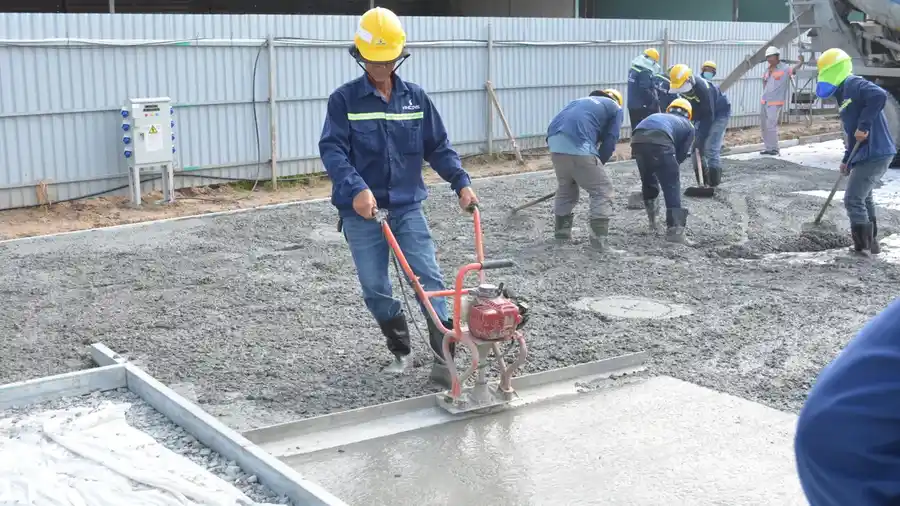
Quick answer: seal a slab joint after leveling in most cases. If the joint needs polyurethane sealant, caulk, or another joint sealant, leveling usually comes first so the lift can move the concrete without fighting the sealant or tearing it open. The main exception is when a temporary filler is needed to keep water and debris out before the work starts.
Key takeaways
- Leveling usually comes first because slab movement can break a fresh joint seal.
- A true expansion joint needs a sealant that can move with the concrete, not a rigid patch.
- If water is getting into the joint, temporary protection before leveling may help, but the final seal still belongs after the slab is set.
- Sealant compatibility matters as much as timing; the wrong caulk can fail fast or block proper bond.
- A bad sequence often shows up as cracked sealant, squeezed-out filler, or a joint that keeps opening.
What is the right order?
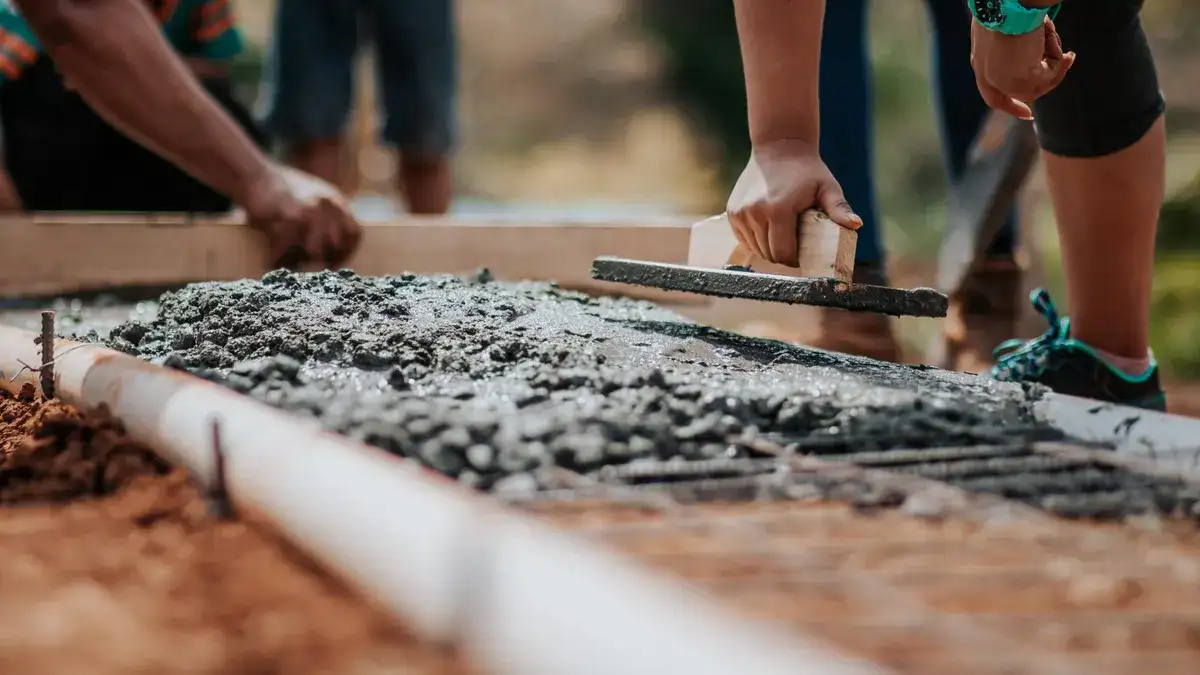
The right order is usually leveling first, then sealing the slab joint. That sequence protects the sealant from movement while the slab is being lifted and lets the finished joint width settle before the final bead goes in. It matters most on expansion joints, where the slab needs room to move and the sealant has to stay elastic.
If the joint is open and collecting dirt or water, a contractor may use a temporary filler or tape-style protection before the leveling work. That is not the final seal. The final joint sealant belongs after the slab reaches its final position and the surface is cleaned out.
This is why a generic answer like “seal it first” fails. A concrete slab joint is not a crack in drywall. It is a moving line in the slab, and the timing has to match that movement. Standards for joint sealants, such as ASTM C920 for elastomeric joint sealants and ASTM C1193 for joint design and installation, both point toward matching the sealant to the joint’s movement, not freezing the joint in place. For the standard references, see the ASTM pages for C920 and C1193.
A simple way to think about it: if the leveling work changes the joint width, depth, or edge shape, wait. If the work is only cleaning and protecting the joint, a temporary step can happen first, but the real seal still waits.
When should joint sealant go in first?
Joint sealant goes in first only when the work is temporary protection, not the final seal. That can happen when the joint is full of loose grit, the slab will be worked on soon, or water intrusion is a concern during the leveling schedule. In that case, a contractor may place a removable material to reduce dirt and moisture entry.
This does not mean a final polyurethane sealant should be installed before lifting. Polyurethane sealant is made to stretch and recover, but it still needs a stable joint size and clean edges to bond well. If the slab is lifted after the final seal goes in, the sealant can pull, split, or detach from one side.
The timing question changes if the project uses different materials on the same joint. A backer rod, tape, or temporary filler can be used as a short-term measure. A finished seal for an expansion joint is the last step, not the first.
A reader asking who this is not for should hear this plainly: if the joint is part of an active movement problem, sealing alone is not the fix. It only controls water, dirt, and edge wear. It does not correct a slab that still needs leveling or a joint that keeps changing shape.
How does leveling change the seal?
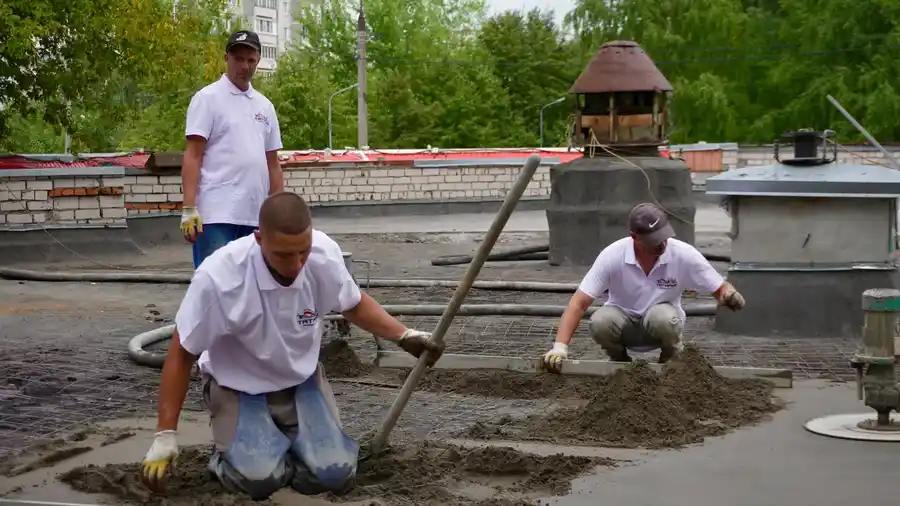
Leveling changes the seal because the slab can move, the joint can widen or narrow, and the edge height can change during the lift. That movement is exactly what a sealant has to handle, so installing it before the slab is final can waste both material and labor. A seal that looked fine at 8 p.m. may be torn by the next morning’s adjustment.
Here is the practical sequence most jobs follow:
- Clear the joint of loose debris, old crumbly filler, and standing water so the leveling crew can see the edge and reach the joint line.
- Complete the leveling work first, because the final slab height and joint width may change during the lift.
- Let the slab settle in its new position so the joint stops shifting while the sealant cure. If the slab is still moving, consult a professional before sealing.
- Choose the right sealant for the joint type; a flexible polyurethane sealant is common where movement is expected.
- Install the final joint sealant after the joint is clean, dry enough for bonding, and at its finished width.
- Finish the joint edge so the sealant sits neatly and can move without peeling from the sides.
The result you want is a clean line that stays bonded on both sides of the concrete slab, with enough flexibility for seasonal movement. That is especially important in an expansion joint, where the gap is there for a reason.
Before or after leveling: which is better?
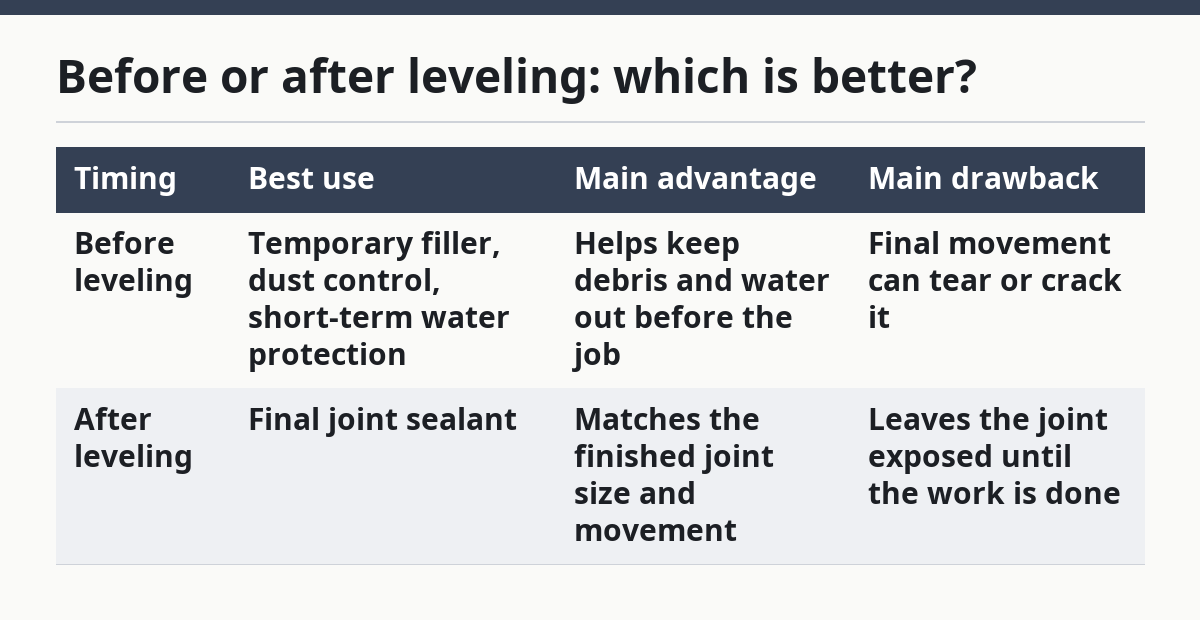
After leveling is better for the final seal, while before leveling is sometimes acceptable only for temporary protection. The comparison is simple: final sealant before leveling risks damage; final sealant after leveling fits the finished joint.
| Timing | Best use | Main advantage | Main drawback |
|---|---|---|---|
| Before leveling | Temporary filler, dust control, short-term water protection | Helps keep debris and water out before the job | Final movement can tear or crack it |
| After leveling | Final joint sealant | Matches the finished joint size and movement | Leaves the joint exposed until the work is done |
This is the part many people miss: the joint sealant is not just a cosmetic line. It is part of the joint’s movement plan. If the slab has to move a little after leveling, the seal needs to be installed at the end so it can tolerate that motion.
The exception is not a contradiction. A temporary product may go in first if the contractor needs short-term protection. The finished seal, though, belongs after the leveling work.
What makes a sealant compatible?
A compatible sealant matches the joint type, the amount of movement, and the condition of the concrete. For a concrete slab joint, the key term is movement accommodation. If the joint is an expansion joint, the sealant has to stretch and recover instead of turning brittle.
Polyurethane sealant is often chosen because it stays flexible and bonds well to concrete when the joint is prepared correctly. Caulk is a broader word, and not every caulk is right for a slab joint. A general-purpose tube from a hardware shelf may work on a sink edge, but it can fail fast in a moving concrete joint.
The joint also needs the right depth and shape for the sealant to perform. ASTM C1193, which covers guide for use of joint sealants, focuses on joint design and preparation for exactly that reason. A sealant that is too deep, too shallow, or packed into a dirty joint can fail even if the product itself is good. Manufacturer guidance from Sika’s joint sealant resources also stresses correct joint preparation and movement capability.
A simple test for compatibility is this: if the material is not meant for concrete movement, do not use it as the final seal. If the product label does not clearly match the joint’s movement needs, it is the wrong choice.
What does a bad job look like?
A bad job usually shows up as split sealant, loose edges, and a joint that keeps taking on water. If the seal was installed before leveling, you may see the bead stretched thin on one side or torn where the slab lifted. If the wrong filler was used, the joint may look closed but still let in dirt and moisture.
Other warning signs are easy to spot at the slab surface. A sealant that sits proud and gets scraped off by foot traffic is too high. A seal that sinks into the joint and leaves a gap on top is too low or was installed in the wrong width. A glossy skin with open cracks down the middle often means the joint moved after the material set.
These failures usually cost more than a cosmetic redo. Water intrusion can widen the problem, stain the slab edge, and wash debris deeper into the joint. The fix is usually removal of the failed material, proper cleaning, and reinstallation after the leveling work is complete.
What to ask a contractor is straightforward: will the leveling change the joint width, what joint sealant is being used, and is the seal final or temporary? Those three questions tell you a lot about whether the job sequence makes sense.
What should I ask before the job starts?
Ask three things before the work starts: whether the joint will be sealed before or after leveling, what product will be used, and how the joint will be cleaned before sealing. Those answers tell you whether the contractor understands movement and compatibility, not just appearance.
Also ask whether the joint is an expansion joint or another type of slab joint. That matters because an expansion joint is supposed to move, and the sealant must be chosen for that job. If the answer is vague, that is a warning sign.
You should also ask what affects the price and time on the job, even if no quote is being discussed yet. A deeper joint, a damaged edge, more cleanup, or a need for temporary protection can add steps. A small, clean joint is faster than one packed with old filler or wet debris.
The safest general rule is usually this: final sealing comes after leveling, and any early sealing should be treated as temporary. That rule keeps the joint from being locked too soon and keeps the sealant from being sacrificed to the lift.
For broader context on slab edge and surface care, the hub page on concrete slab surface and edge condition care covers the surrounding repair sequence without mixing in other types of fixes.
Should joints be sealed before lifting?
Usually no, not with the final sealant. The slab may still move during lifting, and that movement can tear the bead or break the bond on one side.
A temporary filler can be used before lifting if the job needs short-term dust or water control. The final joint sealant should wait until the slab is in its finished position.
Does sealant interfere with leveling?
It can, if it is the final seal and it gets in the way of movement or equipment. A fresh bead can be damaged by lift tools, slab movement, or changes in joint width.
Temporary protection is different. A removable filler or tape-style barrier may help during the work, but it should not replace the final seal.
When is the best time to reseal a joint?
The best time to reseal a joint is usually after the leveling work is done and the joint is clean, dry enough for bonding, and at its final shape. That lets the new sealant fit the actual gap instead of the gap you hoped to have.
If the old sealant is failing, remove it before resealing. A new bead over old cracked material usually fails again.
When is a contractor the right call?
A contractor is the right call when the joint is moving, the edge is damaged, or water keeps getting into the slab. Those are not problems for a quick tube of caulk alone. They need the right order, the right product, and a joint that is prepared for movement.
This matters most on a concrete slab with expansion joints, because the joint is doing a job the slab itself cannot do. If the sequence is wrong, the seal fails early and the water problem stays open. If the sequence is right, the joint can move and still stay protected.
Ask for the plan in plain language: leveling first or sealing first, what sealant is being used, and whether the seal is temporary or final. If those answers are clear, the job is probably being handled in the right order.
Drafted with AI; not yet reviewed by a person.