Last updated: November 21, 2026
Yes — tree removal can change how a nearby concrete slab should be repaired, because the repair may need to account for root decay, a soil cavity, and future settlement after the tree is gone. If the slab was already moving, the first check is not the crack itself but the ground under it: whether roots were propping up the soil, whether removal left a void, and whether the slab still has support.
Key takeaways
- Root loss can change the repair plan even when the concrete crack has not changed.
- A slab that looked stable beside a live tree may settle after removal as roots decay.
- The repair choice often shifts from a simple patch to stabilization, fill, or replacement.
- The sooner the slab is checked after tree removal, the easier it is to catch movement before it spreads.
- If the ground is still dropping, repairing the concrete first can waste money.
What changes after the tree comes out?

Tree removal changes the slab repair plan when the roots were part of the support system under or beside the slab. Once the tree is gone, the roots begin to decay, and the soil around them can loosen or disappear in pockets. That creates a soil cavity, and the slab may settle into it over time.
The biggest mistake is treating the crack as if it is only a concrete problem. If the slab moved because the ground changed, a surface patch will not stop the next round of movement. A slab can look repairable on day 1 and still need a different plan after a few weeks or months of root decay.
Here is the first filter I would use before anyone chooses a repair method:
- Check when the tree was removed. If the removal was recent, the slab may still be in a transition period. Decay does not happen at one fixed speed, so the risk is not over the day the stump is cut.
- Look for change in the crack. If the crack widened, the edge dropped, or the slab now rocks, the support has likely changed.
- Look at the soil line near the slab. A low strip, a soft spot, or a hollow sound can point to a void instead of a simple surface defect.
- Decide whether the slab is still carrying use. A walkway panel and a garage slab do not have the same tolerance for movement.
- Choose repair based on ground condition, not only concrete condition. If the soil is not stable, concrete repair alone is the wrong first move.
That order matters because tree roots can hide the real problem. A slab with active settlement needs support work before or along with any patch, especially if the crack crosses a load-bearing edge or a traffic path.
How do roots change the repair plan?
Roots change the repair plan by changing what is under the slab, not just what is on top of it. A live root system can act like a brace in one spot and a pressure source in another. After removal, the brace is gone, and the soil may relax into the space the roots once occupied.
The practical effect is this: the repair may need stabilization before cosmetic work. If the slab is still sound but unsupported at the edge, fill or compaction may be enough. If the panel has already dropped or tilted, a more involved repair is needed, and a standard crack filler will not solve the underlying movement.
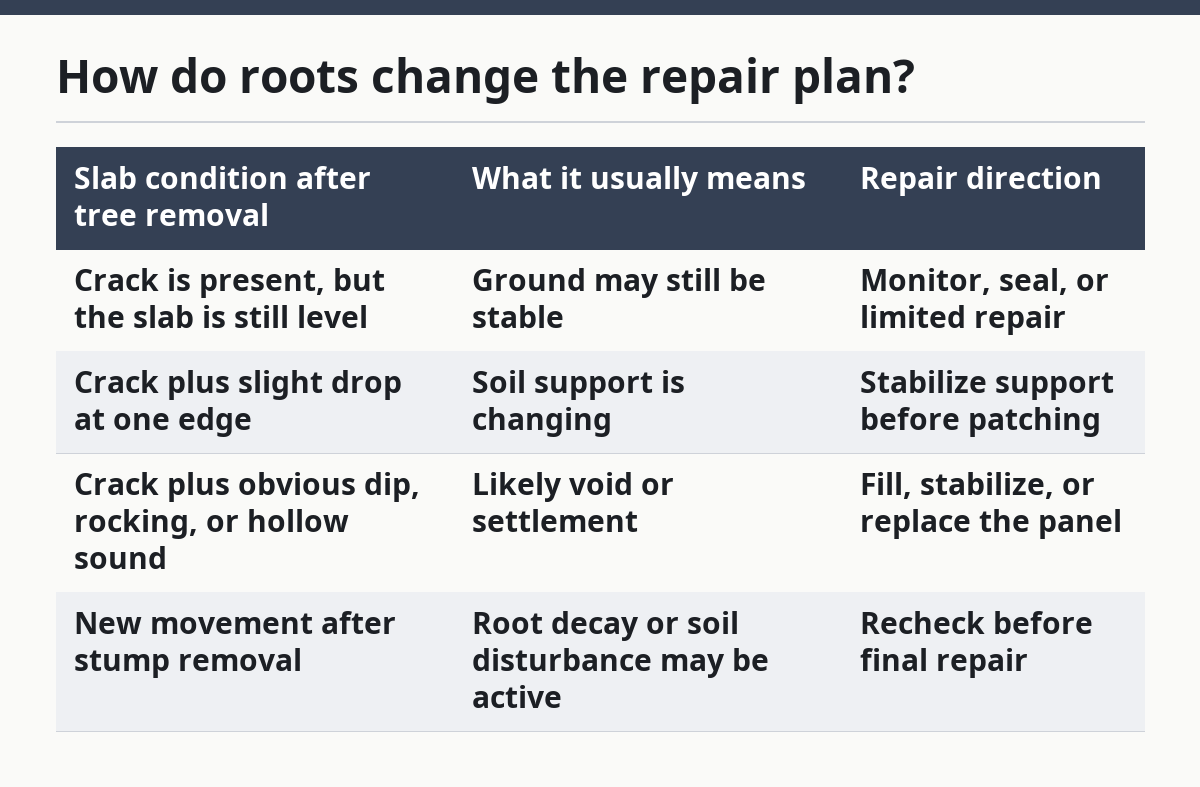
A useful way to sort the options is below.
| Slab condition after tree removal | What it usually means | Repair direction |
|---|---|---|
| Crack is present, but the slab is still level | Ground may still be stable | Monitor, seal, or limited repair |
| Crack plus slight drop at one edge | Soil support is changing | Stabilize support before patching |
| Crack plus obvious dip, rocking, or hollow sound | Likely void or settlement | Fill, stabilize, or replace the panel |
| New movement after stump removal | Root decay or soil disturbance may be active | Recheck before final repair |
The trade-off is time versus certainty. Waiting can reveal whether the slab keeps moving, but waiting also lets settlement get worse. That is why a fresh tree removal near an already damaged slab is not a situation for a quick cosmetic fix.
A slab that is already broken is wrong for a one-step repair if the soil is still changing. It is also wrong for a full replacement if the panel has not settled yet and the ground still needs to be evaluated. The right answer sits between those extremes, and the ground conditions decide where.
What should be checked before any repair starts?

The slab should be checked for movement, voids, and support loss before any repair starts. That check does not need to be complicated, but it does need to focus on the soil under and next to the concrete.
A practical sequence is:
- Mark the crack ends and slab edges. Use chalk or tape so you can see whether the damage grows after the tree work.
- Check for vertical offset. If one side is higher or lower, the slab is not only cracked; it has moved.
- Tap the slab near the crack. A hollow sound can suggest a gap or weak support under that section.
- Inspect the stump area and nearby soil. If soil was removed, disturbed, or cut away, the repair may need fill rather than only concrete work.
- Look for repeat movement after rain or drying. Moisture change can show whether the soil is still active around the repair zone.
The result you want from this check is not a diagnosis by guesswork. You want enough information to tell the difference between a slab that needs surface repair and a slab that needs ground support first.
That matters because a concrete patch over unstable soil is usually short-lived. It may hide the crack for a while, then split again when the slab settles. If the gap below is large enough, the concrete can break at the repaired line instead of the old crack.
A major warning sign is ongoing settlement after removal. If the slab keeps dropping, the repair plan should shift away from cosmetic work. That is the point where a contractor who understands slab support, not just crack filling, should take a look.
What repair path fits the problem?
The repair path should match the amount of support loss, not the size of the crack alone. A small crack over stable ground needs a different fix than the same crack over a developing soil cavity.
The common choices are:
- Seal or patch the crack when the slab is level and the ground seems stable.
- Stabilize the support when the slab is sound but the soil has lost density or contact.
- Replace the panel when the slab is badly broken, badly out of level, or repeatedly moving.
The following table shows the practical difference.
| Repair path | Best for | Main limit |
|---|---|---|
| Seal/patch | Small crack, little or no movement | Does not fix settlement |
| Stabilize support | Void, soft soil, early movement | Does not restore badly damaged concrete |
| Replace slab panel | Severe cracking or repeat settlement | Costs more and needs a stable base |
The wrong move is to jump straight to replacement every time a tree is removed. That can waste money if the slab is still usable and only needs support work. The other wrong move is to patch every crack because patching is the smallest job. If the slab is sinking, the patch will fail.
A local contractor should also think about the timing of replacement. If the ground is still changing after tree removal, replacing the slab too early can trap a moving problem under fresh concrete. In that case, a short delay can be smarter than rushing to pour.
This page fits the broader guide on concrete slab repair alternatives and exceptions because tree removal is one of the situations where the usual repair ladder can change.
When should you wait, and when should you stop?
You should wait when the slab is not getting worse and the main issue is how the ground will behave after the roots die back. You should stop waiting when the slab keeps changing or when the support looks too weak for a safe repair delay.
A short wait can make sense after removal if the crack is stable and the soil still looks firm. That pause lets the ground reveal whether settlement is continuing. A longer wait is risky if the slab is already dropping, because every new day can widen the void and make the final repair larger.
A simple rule helps here: if the slab is only damaged, wait and watch; if it is damaged and moving, act. Movement is the line that turns a repair question into a stabilization question.
The cost of waiting too long is not just a bigger crack. It can also mean a larger repair area, more concrete replacement, and more finishing work around the slab edge. The cost of acting too soon is different: you may repair a slab that was about to settle further, and the new work cracks again.
That is why the decision after tree removal should focus on the ground condition at the moment of repair, not the condition of the tree before removal. Root decay changes the answer. So does a soil cavity. So does future settlement.
What should you ask a contractor?
You should ask a contractor how they will account for soil support, not just how they will fix the concrete. The best question is not “Can you patch it?” but “What changed under the slab after the tree was removed?”
Ask for plain answers to these points:
- Whether the slab shows signs of settlement rather than only cracking
- Whether the repair plan changes if a void is present
- Whether they would stabilize first or replace first
- How long they want to monitor the slab before final work
- What sign would make them stop a cosmetic repair and switch to support work
A contractor who treats every case as the same slab repair is not the right fit here. Tree removal creates a timing problem, and that timing affects the repair. If someone gives a single answer without asking about root decay, stump removal, or the soil cavity, that is a warning sign.
It also helps to ask what the bad job looks like. A bad job usually leaves the slab flat on top but weak underneath. It may look fine for a while, then settle again, crack beside the old repair, or rock when stepped on. That is a failed ground repair, not just a failed patch.
How does stump removal affect the repair plan?
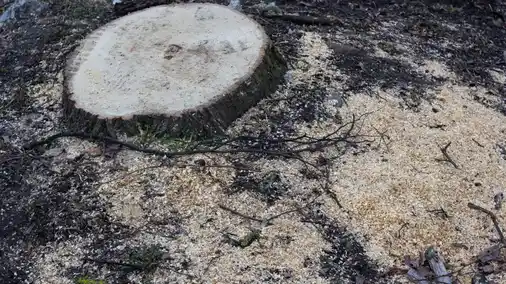
Stump removal can change the repair plan because it may disturb the same soil that supports the slab. If the stump and roots are pulled, ground near the slab can loosen, collapse, or leave a void where material used to be.
That does not mean stump removal is always a problem. It means the repair should account for the soil work, not ignore it. If the stump was removed after the slab had already cracked, the timing matters even more, because you now have two events that can affect settlement.
A final repair after stump removal may need more caution than a repair beside an untouched tree. The reason is simple: the ground can keep changing after the visible work is done. If the slab is close enough to be affected by the root zone, the plan should assume that soil support may still be moving.
Should I wait after removing a tree?
Yes, if the slab is stable and you are trying to see whether the ground will settle more. A short wait can show whether root decay or soil loss is changing the slab support. If the slab is already dropping or rocking, waiting too long can make the damage worse.
Can dead roots leave a void under the slab?
Yes, dead roots can leave a void under the slab when they decay and the surrounding soil loosens or falls in. That void can cause future settlement, especially if the slab was already stressed. A patch over that spot may fail if the support issue is not addressed first.
Does stump removal affect the repair plan?
Yes, stump removal can affect the repair plan because it can disturb the soil next to the slab. That disturbance can create a cavity or weaken the base under the concrete. If the repair is planned right after stump work, the slab should be checked again before the final fix is chosen.
Drafted with AI; not yet reviewed by a person.