How Should You Clean a Slab Edge Before a Repair Crew Arrives?

Last updated: November 21, 2026
Quick Answer: use a 3-step cleanup—dry sweep first, brush second, and only rinse lightly if the crew wants a visible edge. The topic, How Should You Clean a Slab Edge Before a Repair Crew Arrives?, is about exposing the slab edge, clearing loose dirt and debris, and leaving the repair area easy to inspect and reach.
Key takeaways
- Start with dry cleanup. Loose dirt, leaves, gravel, and chips hide the slab edge and slow the crew down.
- Use a broom and a hose, not a heavy blast. A hard spray can push mud back into the joint or spread debris.
- Stop short of aggressive cleaning if the edge is damaged, crumbly, or undercut. That can make the problem worse before repair day.
- Leave the work zone open and visible. A clean edge matters more than a polished surface.
- If the area stays muddy or keeps shedding material, the crew may need to clear it themselves before repair starts.
What should I clean first?
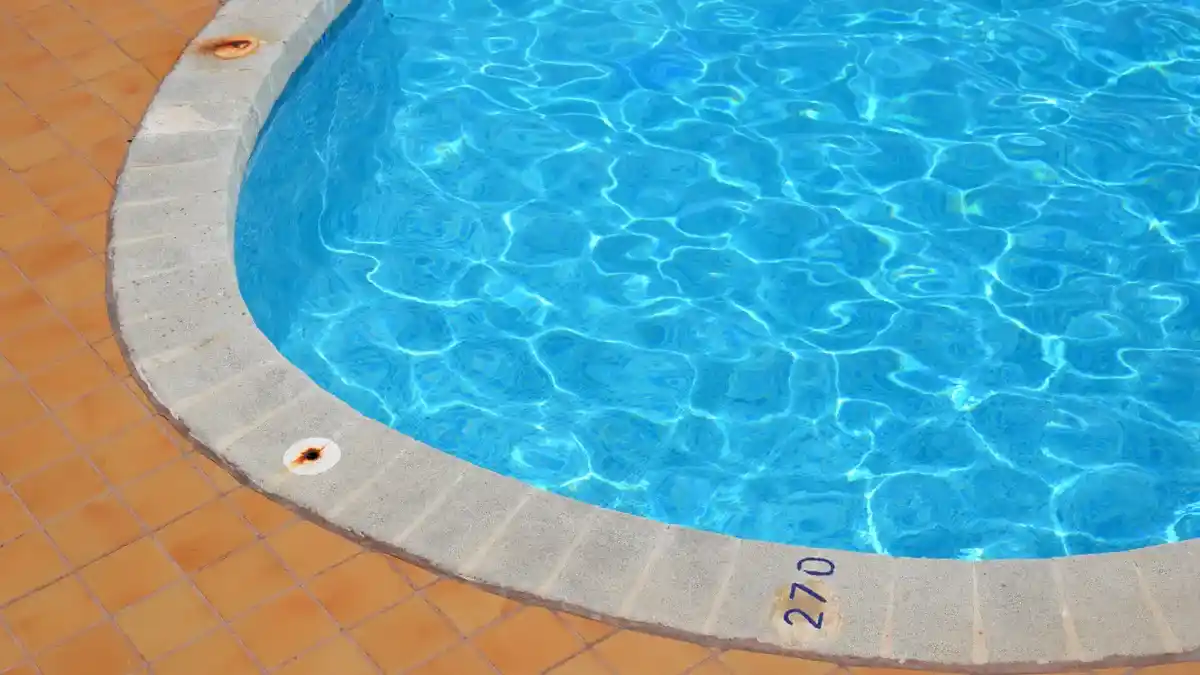
Clean the loose material first, because dirt and debris are the main things that hide the slab edge. If the edge is buried under soil or broken chips, the repair crew has to spend time finding the line of the slab before any real work begins.
Start with a dry broom, a hand brush, and a trash bag or bucket. Sweep away leaves, dust, small stones, mulch, and any loose concrete crumbs sitting on or beside the slab edge. If the edge runs along soil, pull the dirt back just enough to expose the concrete line without digging into the slab or widening the gap.
A simple 5-step order helps:
- Remove big debris by hand. Pick up sticks, wrappers, loose stones, and chunks that can be lifted without tools.
- Sweep the edge with a broom. Work along the full visible line of the slab until the concrete outline is clear.
- Brush packed soil with a stiff hand brush. The aim is to expose the edge, not carve a trench.
- Collect the loosened material. Bag it or move it out of the work zone so it does not blow back across the edge.
- Look for hidden spots. Corners, joints, and low areas often hold the last strip of dirt.
If the slab edge is still invisible after basic cleanup, stop digging. The crew may want to see the edge in its undisturbed state, especially if the repair depends on how the concrete meets the surrounding soil or base.
How much washing is enough?
A light wash is enough when the slab edge still has dust or film after sweeping, but the surface should not be soaked or blasted. A hose with normal flow is usually the right limit. A pressure washer can drive dirt deeper, spread mud across the area, and make the edge harder to read.
Use water only after the dry debris is gone. Wet mud is harder to remove than dry soil, and a hose used too early turns dust into paste. If you do rinse the area, keep the spray low and controlled. Aim to loosen fine dirt from the edge, not strip soil from under it.
This is usually the safest order:
- Sweep first.
- Brush packed dirt second.
- Rinse lightly only if needed.
- Let the edge drain before the crew arrives.
A wet slab edge is not automatically a problem, but standing water is. Puddles hide cracks, soften nearby soil, and make footing worse for the crew. If water pools beside the slab, open a path for it to drain away rather than pushing more water into the joint.
If the work area is near a drain or curb, think about where the rinse water goes. The EPA has stormwater guidance that explains why dirty runoff should not be sent wherever it can flow, and OSHA’s silica page is worth checking if any cleaning method creates dust from concrete. Those rules matter more when power tools or larger cleanup jobs are involved.
What does a good slab edge look like before the crew gets there?
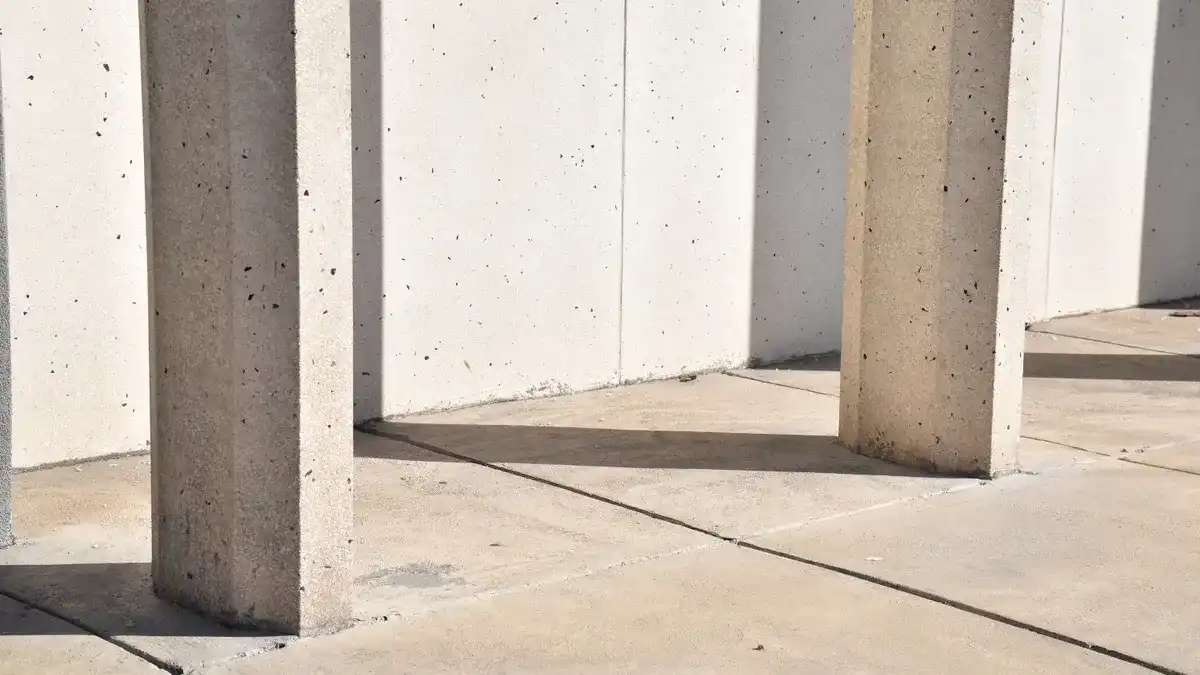
A good slab edge is visible, reachable, and free of loose debris. The crew should be able to see the concrete line, step close to it, and inspect it without first moving a pile of dirt or trash.
The edge does not need to look new. It only needs to be readable. A thin film of dust is fine if the line of the slab is clear. A little moisture is fine if it is not pooling. What is not fine is a hidden edge, loose rubble sitting against the concrete, or a muddy band that disguises where the slab ends and the ground begins.
Use this quick check from a standing position:
- Can you see the full edge line?
- Can you get a broom or hand tool close to it?
- Is there loose soil or debris sitting right against the concrete?
- Is the ground firm enough to walk on without sinking?
If the answer to the first two is no, the prep is not done yet. If the edge is visible but the surrounding area is still cluttered, keep cleaning. The repair crew needs access, not just a clear photo-worthy strip of concrete.
This matters most on tight urban jobs and on sites with narrow access paths. If the slab sits next to a fence, basement stair, storefront, or service corridor, even a small pile of dirt can block the work. That is why edge visibility is part of slab edge cleaning, not a separate step.
What should stay in place?
Leave any material that seems attached to the slab, because tearing at it can change the repair problem before the crew sees it. That includes tight mortar, hard crusts, stable old filler, and concrete that is clearly bonded to the edge.
The main mistake is confusing “clean” with “stripped.” A strong scrub can remove loose grime, but it can also knock off weak but still attached material. If the edge is already damaged, that extra loss can make the repair larger than it needed to be. It can also make the edge look different from the rest of the slab, which may change how the crew plans the fix.
Do not chip at the edge with a screwdriver, chisel, or heavy scraper unless the repair crew told you to remove something specific. A chipped slab edge is harder to repair cleanly than one that still shows its original shape, even if it looks messy.
The same caution applies to joints. If a joint has dirt in it, clean the loose material at the opening, but do not pry deeper into the joint unless that is part of the repair plan. A repair crew often needs to see the joint as it is, not as a homeowner guessed it should be.
If the edge is breaking apart in sheets or flakes, stop cleaning and wait for the crew. That is no longer normal prep; it is a separate damage issue.
What work area prep helps the crew most?
The best work area prep is usually a clear, dry, walkable strip around the slab edge. If the crew has to move pots, bins, hoses, toys, or stored materials before it can reach the concrete, the cleanup was not finished.
Keep the area open enough for tools, a bucket, and safe footing. A narrow path can be enough on some jobs, but the edge itself should not be boxed in by loose items. Move anything that can tip over, soak up water, or block sight lines. If there is a hose in the way, coil it out of the work zone after you use it.
Think in terms of access, not decoration:
- Remove furniture and planters close to the edge.
- Move loose tools, tarps, cords, and storage bins.
- Keep pets and foot traffic out of the area.
- Leave one clear route to and from the slab edge.
A tidy work zone also helps the crew judge the repair sequence. If the crew can see the edge from several angles, it can tell whether the dirt line is hiding a shallow step, a gap, or simply surface grime. That saves time and reduces surprises once the work starts.
Do not overdo the cleanup by washing down the entire property. This page is only about edge visibility and access, not full repair-day prep. The hub on concrete slab surface and edge condition care covers the broader picture.
What are the most common cleaning mistakes?
The most common mistake is using too much force, because it turns a simple cleaning job into a larger repair problem. A pressure washer, hard scraping, or aggressive digging can dislodge weak concrete and make the edge harder to assess.
Another mistake is leaving wet sludge at the base of the slab. That mud covers the edge as surely as dry dirt does, and it often ends up inside the joint. A rinse that looks helpful for a minute can leave a thicker mess once the water settles.
A third mistake is stopping after the obvious debris is gone. Small piles of dust and grit still matter if they sit right on the edge line. The crew does not need a showroom finish, but it does need a clean boundary.
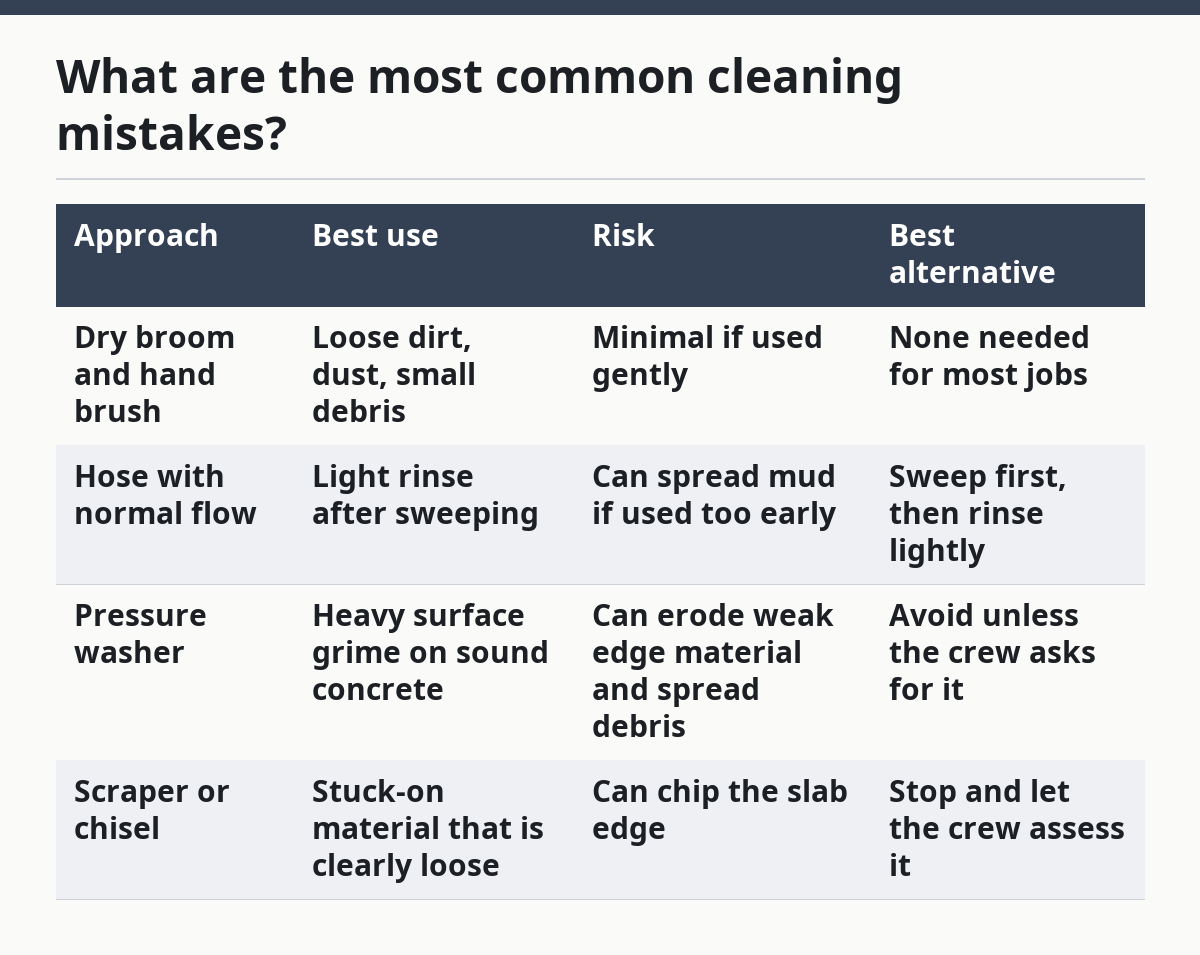
Here is a simple comparison:
| Approach | Best use | Risk | Best alternative |
|---|---|---|---|
| Dry broom and hand brush | Loose dirt, dust, small debris | Minimal if used gently | None needed for most jobs |
| Hose with normal flow | Light rinse after sweeping | Can spread mud if used too early | Sweep first, then rinse lightly |
| Pressure washer | Heavy surface grime on sound concrete | Can erode weak edge material and spread debris | Avoid unless the crew asks for it |
| Scraper or chisel | Stuck-on material that is clearly loose | Can chip the slab edge | Stop and let the crew assess it |
If the area is dusty enough to create airborne concrete dust during cleanup, that is the point to slow down and use a safer method. Concrete dust is not something to stir up just to make the edge look cleaner. A broom and hose are usually enough for this job.
How do I know when to stop and wait for the repair crew?
Stop when the slab edge is visible, the loose debris is gone, and any remaining dirt is stable enough that more cleaning would start changing the concrete itself. That is the right stopping point for most prep jobs.
There are clear signs that more cleaning would do more harm than good:
- The edge is already crumbling.
- Loose pieces keep coming off with each pass.
- Soil is packed so tightly that removal would require digging.
- Water keeps pooling where you rinse.
- The joint or crack looks different after you clean it.
At that point, further cleanup risks altering the repair area. The crew needs to see the actual condition, not a version that was scraped apart during prep. A little dirt is easier for a crew to clear than a damaged edge is to rebuild.
This is also where cost and time start to shift. A clean, visible edge saves crew time. A damaged or over-cleaned edge can increase labor because the repair may need extra shaping or edge cleanup before the real work begins. That is one reason the safest prep is often the simplest one.
If the slab edge is hidden by broken-off sections, deep erosion, or a large area of loose concrete, this page is not the right fix. That situation needs direct assessment, not more brushing.
Should I power wash the edge?
Usually no. A power washer can push dirt deeper into the joint, spread mud across the work area, and damage weak concrete at the edge. A hose with normal flow and a broom are safer for most prep jobs, and they leave the slab line easier to read. See the EPA’s stormwater guidance and OSHA’s silica guidance for more on runoff and dust control: EPA stormwater guidance and OSHA silica.
Do I need to remove all dirt from the joint?
No. The goal is to clear loose dirt that blocks visibility and access, not to excavate the joint. If dirt is packed deep, forcing it out can widen the opening or loosen material the crew may want to inspect first. Leave stable material in place and focus on the exposed edge.
Can the crew clean it instead?
Yes, but a clean edge saves time and makes the first inspection easier. If the area is still muddy, cluttered, or hard to reach, the crew may have to spend part of the visit on cleanup before repair work can begin. Basic slab edge cleaning beforehand is usually the better choice.
For related prep details, see concrete slab surface and edge condition care and repair-day access planning.
Drafted with AI; not yet reviewed by a person.