Last updated: September 10, 2026
Key Takeaways
- Watch where runoff goes for 15 to 30 minutes after a storm or hose test.
- Verify whether the movement is still active by remeasuring after 2 to 4 weeks.
- If the base was placed in lifts thicker than about 4 to 8 inches and not compacted properly, it can settle later under load.
- Lay a 4-foot level or straight board across the slab and measure the gap with a tape or ruler every 2 to 3 feet.
In a New York home, a sinking concrete slab usually points to what’s underneath it, not the slab itself. The soil or fill has lost support. Poor compaction, water washing fines out of the ground, frost movement, old fill, and shrinking soil can all do it. Whether the slab is a floor, garage, stoop, sidewalk, basement slab, or patio, I’d have a qualified foundation or structural professional look at it before writing it off as cosmetic.
Who this applies to, and what it assumes you already know
This is for New York homeowners who notice a slab dropping, tilting, cracking, or pulling away from something else by a noticeable amount — maybe near a doorway, garage opening, porch edge, sidewalk panel, basement floor, or concrete patio. I’m assuming you already know the obvious clues: a low spot you can see, water that now pools where it didn’t before, a door that starts rubbing, or a crack that looks wider on one end.
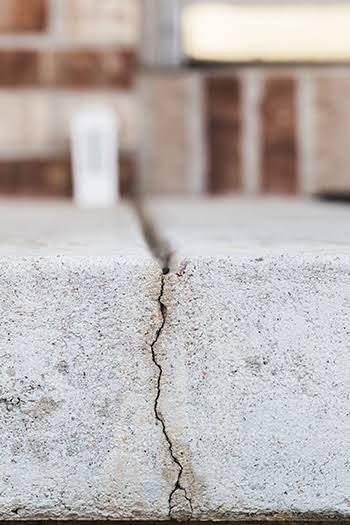
It also assumes you can separate a hairline surface crack from a slab that is actually moving. A 1/8-inch hairline crack may be normal shrinkage. A panel that has settled 1/2 inch or more, or one that tips enough to send water toward the house, is another story. In New York, that difference matters because frost, drainage, and old fill all pile on.
Don’t guess if the slab is tied to a structural problem. Wall cracks, stuck windows, a leaning chimney, or a basement leak that suddenly gets worse? That’s not a simple concrete issue. Speak with a qualified foundation or structural professional about your own situation. Honestly, I wouldn’t treat that as a routine repair.
Why a slab sinks in New York homes
A sinking slab usually means the support below it changed. The concrete itself didn’t “go bad.” Concrete is strong under compression, but it hates movement beneath it. In older New York housing stock, that movement usually traces back to four culprits: poor base prep, water, frost, or soil that was unstable from the start.
Poorly compacted fill shows up a lot where an addition, garage, stoop, porch, or patio was built over backfilled soil. If the base was placed in lifts thicker than about 4 to 8 inches and not compacted properly, it can settle later under load. Uneven settling is common. One side drops first. The other lags behind.
Water is another big one. Downspouts that dump near the slab, clogged drains, broken utility lines, or bad grading can wash fine particles out of the base. Once those fines move, the slab loses support and starts bridging over voids. In clay or silty soil, repeated wet-dry cycles can also change volume and leave gaps. It’s a sneaky little mess.
Frost heave matters in New York because freeze-thaw cycles are real, especially where the slab edge is shallow. Frost does not always push a slab down in a straight line. More often, it lifts one season, then the soil softens and the slab settles in a different position. After a few winters, the thing can wind up tilted or broken at the joints.
Old fill is its own beast in many city and suburban lots. If a slab sits on debris fill, mixed soil, or undocumented fill from earlier work, the ground can compress for years. That’s one reason a slab that looked fine for a decade can suddenly start to sink after a wet season or nearby excavation.
How I would trace the cause, step by step
Start with your own check. I’d do that before anyone talks about lifting or replacement. The point is simple: find out whether the trouble is limited to the slab or part of a broader drainage or ground issue.
- Measure the drop with a straight edge and level. Lay a 4-foot level or straight board across the slab and measure the gap with a tape or ruler every 2 to 3 feet. Verify whether the slope is localized or across the full panel. A problem sign is a gap that grows steadily in one direction, or a visible tilt toward the house.
- Map the cracks and joints. Sketch the slab and mark every crack, joint, and area of spalling. Note widths in 1/16-inch increments if you can. Verify whether cracks line up with settlement or only with surface shrinkage. A problem sign is a crack that is wider on one side, especially if one edge has dropped.
- Check water flow during and after rain. Watch where runoff goes for 15 to 30 minutes after a storm or hose test. Verify that downspouts discharge at least several feet away from the slab and that soil slopes away from the house. A problem sign is standing water, washout at the edge, or a downspout outlet that has created a trench.
- Look for interior symptoms if the slab is inside. Check for doors that drag, trim gaps, or new cracks at adjacent walls. Verify whether the floor depression matches changes in framing, drywall, or baseboard lines. A problem sign is movement beyond the slab itself, which suggests a broader structural issue.
- Probe the slab edge carefully. Use a screwdriver or similar tool at a visible edge or joint to see whether the slab meets solid base or a hollow void. Verify whether the slab sounds solid or hollow when tapped. A problem sign is a hollow sound over a broader area, which can mean lost support underneath.
- Inspect grading and drainage hardware. Check whether the soil drops away from the slab or toward it, and whether gutters, leaders, catch basins, or French drains are blocked. Verify that outlets are not buried, broken, or dumping against the slab. A problem sign is erosion channels or sediment that has collected at the low side.
- Compare seasons and weather history. Ask when the sinking started: after a freeze-thaw winter, a heavy rain, a plumbing leak, or nearby excavation. Verify whether the movement is still active by remeasuring after 2 to 4 weeks. A problem sign is continuing change, which means the cause is still at work.
- Document everything before anyone repairs it. Take photos from the same angle with a tape measure or level in frame. Verify date and location in each image. A problem sign is trying to guess the amount of settlement from memory; that leads to bad repair decisions.
The order matters. If water is still getting under the slab, a cosmetic patch is just lipstick on a pig. And if the issue is structural, a quick lift can hide the real cause instead of fixing it.
Is it the slab, or the soil under it?
Usually, it’s the soil under it, not the concrete itself. Concrete can crack and break, sure, but true sinking comes from lost support. That loss can creep in slowly through years of compaction, or hit fast after a storm or a plumbing leak.
A generic answer gets this wrong by blaming “bad concrete” too fast. In New York, I’d suspect drainage, fill, or frost before I blamed the mix. A slab poured in 4-inch thickness over a well-prepared, compacted base can still move if water undermines it. A weak-looking slab can sit for decades if the ground stays stable. Strange, but true.
There’s also a difference between settlement and heaving. Settlement means the slab goes down. Heaving means it gets pushed up by frost or expansion, then often drops later. The crack pattern helps sort them out. A sunken slab with one side dropped more often points to settlement or washout. A slab with edges curled or sections alternately high and low often points to freeze-thaw problems.
I’d be cautious about any single-cause explanation. Real houses rarely cooperate that neatly. Old fill plus poor drainage, or frost plus a buried downspout outlet, or settlement plus seasonal soil movement — these combinations show up all the time. That’s why the field check matters more than a guess.
What to do when the usual explanation does not fit
Not every sunken slab is a garden-variety settlement problem. Some situations call for a different line of thinking, and that’s where people burn time by treating all sinking the same way, so consult a qualified professional when the pattern does not match a basic drainage or settlement issue.
- **The slab dropped after a plumbing leak: water may have washed out the base — shut off the leak source and have the line checked before any repair decision.
- **The slab is part of a porch or stoop attached to the house: movement may affect steps, railings, or entry alignment — get a qualified structural review.
- **The sinking happened after nearby excavation or utility work: the support may have been disturbed off your property line — document the timing and contact the responsible party or your insurer.
- **The slab sits over old basement fill or a known converted space: the base may be inconsistent in depth and composition — expect more than one repair method to be considered.
- **There are widening cracks plus wall movement: the problem may extend beyond the slab — do not assume lifting the concrete is enough.
- **The low spot returns after a previous patch or lift: the underlying cause was not corrected — stop repeating surface repairs and reassess drainage and support.
Miss these cases, and the bill comes back with interest. You pay to fix the visible symptom while the ground keeps shifting. A slab that settles once can be repaired. A slab that keeps moving is telling you the cause is still active.
The mistakes people make, and what they cost
Patching the crack and ignoring the drop is mistake number one. A sealant or patch can hide the line, but it does nothing for support. The slab keeps tilting, and the repair looks bad again next season.
The second mistake is assuming every sunken slab must be replaced. Sometimes full replacement is warranted, but not always first. If poor drainage is the real problem, a new slab can sink too. Fix the cause first, then decide whether repair or replacement makes sense.
Third, people lift a slab without checking for voids, broken drains, or plumbing leaks. If you push the slab back up while water is still washing soil away, the void often returns. The smarter move is to stop the source of movement first.
Fourth, frost gets underestimated. In New York, shallow exterior slabs without proper base depth or edge protection can move every winter. A quick fix in August may look fine until March. Better to address base prep and drainage, not just the top layer.
The fifth mistake is shrugging off interior clues because “it’s only the sidewalk” or “only the garage floor.” A sunken slab at an entry can change how doors close, how water comes in, and how the house sheds runoff. Don’t view the slab in isolation. Look at it in relation to the building.
When should I stop trying to figure it out myself?
Stop DIY diagnosis when the slab movement is active, structural, or tied to water you can’t control. Concrete itself is not the only issue once the support system is involved, so a professional review is the safer call when the symptoms go beyond a simple surface defect.
Movement is greater than about 1/2 inch: that often suggests meaningful settlement, not just surface wear — have it evaluated before you decide on repair.
The slab is attached to a foundation wall, stoop, or porch: those elements can affect the building enclosure and entry safety — get qualified help.
You see fresh water intrusion, standing water, or soil erosion near the slab: the cause is still active — correct drainage first.
Cracks are widening or offsetting at joints: differential movement is likely — do not rely on cosmetic patching.
There are signs elsewhere in the house, such as sticking doors or new wall cracks: the issue may extend beyond the slab — stop treating it as a slab-only problem.
That’s the practical line I use. If the slab is isolated, shallow, and clearly tied to one drainage issue, a homeowner can often document and monitor it. If the movement is tied to the house, the soil, or active water, I wouldn’t keep guessing.
What a good repair plan usually addresses first
A sound plan starts with drainage, then support, then the concrete surface. Not glamorous. Still, that sequence is how you avoid paying twice. In many cases, the real fix is not “more concrete” but fewer gallons of water reaching the base and a stable subgrade under the slab.
For a small exterior slab, a contractor may discuss mudjacking, polyurethane foam lifting, partial replacement, or full replacement. Each has trade-offs. Mudjacking can be less invasive but may add weight to weak soil. Foam lifting is lighter but not the answer if the drainage problem remains. Full replacement gives a fresh start but costs more and still fails if the base is wrong.
For an interior slab, especially in a basement, the decision can get more complicated because plumbing, waterproofing, and structural loads may all be involved. I’d want that assessed carefully rather than treated like a simple patch job. A good result is not just a level surface; it is a slab that stays put through a wet spring and a hard winter.
FAQ
How can I tell if my concrete slab is sinking or just cracked?
A sinking slab usually shows height change, slope, or a gap under a straight edge, while a crack alone may stay on one plane. If one side is lower than the other by even a small but measurable amount, that points more toward settlement than surface cracking.
Does New York weather really matter that much?
Yes. Freeze-thaw cycles, heavy rain, snowmelt, and poor drainage all increase the odds of soil movement. In a state with cold winters and wet springs, the same slab can look fine in July and fail in March.
Can a small sunken slab be ignored?
Sometimes a minor, stable dip is mostly a nuisance, but I wouldn’t ignore it if water pools, the crack is growing, or the slab is attached to the house. Small problems often tell you where drainage is weak.