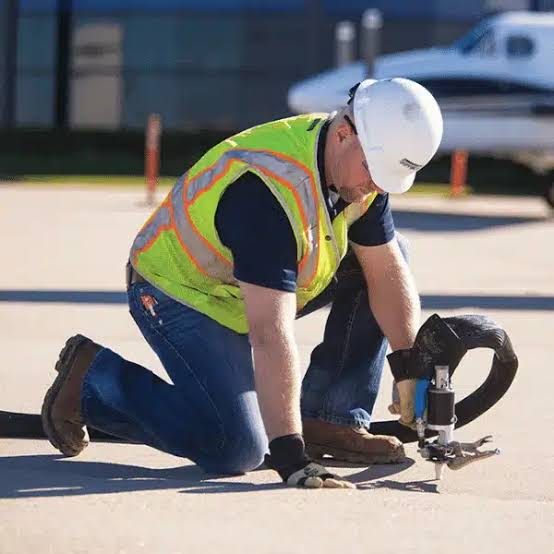
Last updated: September 10, 2026
Key Takeaways
- No straight board or level? A carpenter’s level that is at least 24 inches long works fine for a first pass.
- About 15 minutes per area is usually enough for me, using a straight board, a tape measure, and good daylight or a flashlight at dusk.
- A generic article often skips the main point: “uneven” covers more than one kind of problem.
- Lighting and surface finish matter, too. Bad combo.
Uneven concrete can be a trip hazard. For is uneven concrete trip hazard? what homeowners should fix first, I’d start with the worst height differences on walking paths, steps, and entry points. If a slab edge grabs a shoe, forces someone to step over a lip, or sits where a cane, walker, stroller, or carried load already goes, that spot jumps to the top. And because this is a safety issue, I would also ask a qualified contractor, concrete repair specialist, or accessibility professional to assess any area where the damage is active, wide, or tied to drainage, tree roots, or settlement.
Who this applies to, and what it assumes you already know
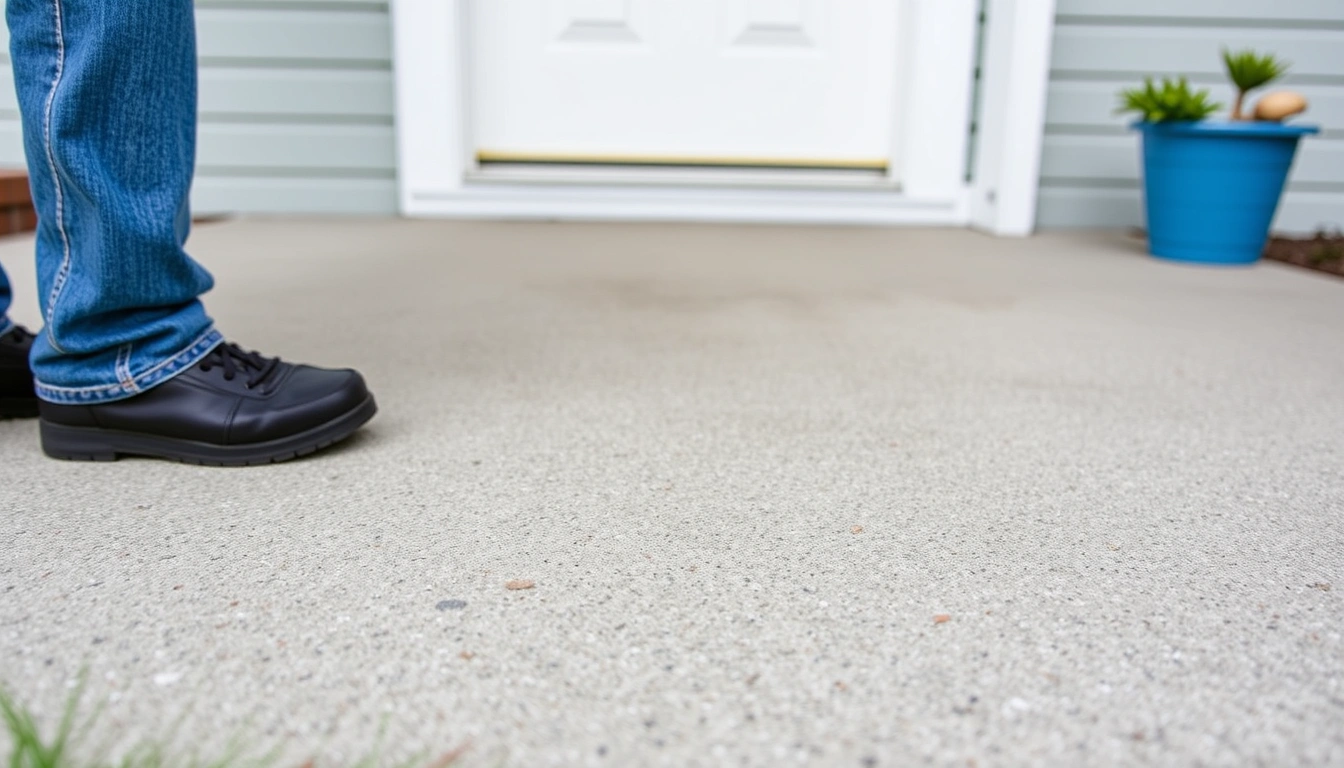
This is for homeowners dealing with settled slabs, lifted edges, or a driveway, sidewalk, porch, or patio that no longer sits flat. I’m assuming you can spot an obvious lip, a cracked joint, a sunken panel, and a place where water pools after rain. I’m not assuming you know how much movement is “too much,” because that depends on where the concrete sits and who uses it.
The practical question in is uneven concrete trip hazard? what homeowners should fix first is not “Is it ugly?” It is “Does this create a predictable stumble point?” A front walk, garage apron, porch landing, basement entry, or the first step out of a car is where uneven concrete becomes most serious. A small rise can matter more than a larger one in a low-traffic corner because people carry groceries, glance at phones, or turn while distracted. Sloppy footing loves those moments. That is why I’d treat any edge that breaks up a normal walking path as a higher priority than a cosmetic crack in a back patio, while still advising homeowners to consult a local building inspector, concrete contractor, or accessibility consultant if they are unsure.
The standard way people talk about this is in terms of a vertical displacement or trip edge: the difference in height between two adjacent concrete surfaces. There is no single universal “safe” number for every home, because use, lighting, shoe type, age, and mobility all change the risk. In the U.S., ADA guidance uses 1/4 inch as the allowable vertical rise, 1/4 to 1/2 inch as allowable only if beveled, and anything over 1/2 inch as a ramp-like change; if you are unsure whether a spot is minor or meaningful, a local building inspector, concrete contractor, or accessibility consultant can help you judge the layout in person. If someone in the home has trouble with balance or foot clearance, I would move that assessment to the front of the line rather than waiting for the damage to spread.
What makes uneven concrete a trip hazard?
Uneven concrete is a trip hazard when the surface changes height enough that a foot, wheel, cane tip, or walker leg can catch on it. But the size of the rise is only part of it; location, contrast, lighting, and the direction people travel matter too. A 1/2-inch lip in a doorway with poor lighting can be a bigger problem than a larger shift beside a fence where nobody walks.
Settlement, soil washout, tree-root pressure, freeze-thaw movement, and failure at joints are the usual culprits. Settlement means the slab has dropped because the ground below it compacted or shifted. Freeze-thaw movement can leave one side of a slab higher after winter. Tree roots can lift a section slowly over years. Then the edge turns into a shoe-catcher and a jolt point for mobility aids. Ugly little surprise, that.
A generic article often misses the fact that “uneven” is not one thing. A crack with the two sides still nearly flush is not the same as a 1-inch lip at a sidewalk joint. A dipped slab that drains water away from the house may be annoying but not as urgent as a heaved slab at the top of porch steps. Slope also matters. A surface can be level enough side-to-side yet still dangerous if it tilts toward a step or garage opening.
Lighting and surface finish matter, too. Smooth concrete with a sharp shadow across the edge can hide a height change. Rough broom-finished concrete may give better traction, but it does not remove the trip edge. If the affected area is near a threshold, an expansion joint, or a transition to pavers, I would check the edge from both directions and at night, because many falls happen when the eye does not read the surface clearly.
Which uneven spots should homeowners fix first?
Start with the walking routes people use most, then move to any edge that is hard to see or hard to step over. Front walk, back door, driveway apron, garage entry, porch landings, and any route used by someone with limited balance or mobility go first. A 3/8-inch rise at a front step can matter more than a 1-inch crack in a side yard if the front step gets used every day.
I’d rank repairs this way:
- Primary entry paths. Main doors, garage-to-house paths, and the route from sidewalk to porch go first because they are used daily and often in poor light.
- Steps and landings. A mismatch at the top or bottom of a step changes expected foot placement. Even a modest lip here can cause a stumble.
- Wheelchair, stroller, and cart paths. Wheels amplify a lip that a walking adult might tolerate.
- Drainage-related lifts or drops. If water collects, the soil below may keep changing.
- Low-traffic cosmetic areas. Back corners and decorative patios can wait if they are not part of regular travel.
What many homeowners get wrong is fixing the visible crack before the hazardous edge. A crack filler does not remove a height difference. A patch can make the lip look cleaner and still leave the trip point in place. If the slab edge is not the thing people catch on, then the crack may be the lower-priority issue.
There is another reason to triage this way: uneven concrete can sometimes signal a broader problem under the slab. If several joints are moving or one corner has sunk noticeably, I would not assume the problem is local. The first repair should not hide active movement without addressing the cause, because the new surface can fail again within a season. That is especially true if the area has gutter runoff, downspout discharge, clay soil, or nearby tree roots.
How do I inspect uneven concrete before deciding on a fix?
I’d spend about 15 minutes per area, with a straight board, a tape measure, and good daylight or a flashlight at dusk. The goal is simple: find the highest-risk edges before you decide whether you need a surface correction or a contractor.
- Walk the route in both directions. Start at the sidewalk and walk toward the door, then reverse direction. Verify where your toe naturally lands. A problem shows up where you instinctively shorten your step or look down.
- Mark every edge that changes height. Use chalk or painter’s tape at each suspect spot, especially at joints, cracks, and slab corners. Verify the mark is on the actual trip edge, not just the crack line. A problem is when the visible crack is not where the height change sits.
- Measure the height difference. Lay a straight 2×4 or aluminum level across the joint and measure the gap with a tape measure or ruler. Check both directions. A problem is any edge that is steeper on one side than the other because people approach from both directions.
- Check the width and length of the affected area. Measure how many feet of the walkway are uneven. A single 2-inch-wide lip is different from a 6-foot run with multiple small offsets. A problem is movement that continues across several joints, which suggests broader settlement.
- Look for water patterns. After rain, note standing water, damp soil at the slab edge, or runoff from downspouts. Verify whether water drains away from the house. A problem is pooling near the same slab that is lifting or sinking, because moisture can keep the ground unstable.
- Check nearby causes. Look for tree roots, broken downspouts, soil erosion, or gaps between the slab and adjacent landscaping. Verify whether the concrete is pushing against something or losing support underneath. A problem is active root pressure or washed-out soil, which often means a surface patch will not last.
- Test the surface in low light. Shine a flashlight across the edge at a shallow angle. This throws the height change into shadow. Verify whether the edge disappears from normal view. A problem is a trip edge that is obvious in daylight but hard to see at night, because that is when people miss it.
- Decide whether the area is static or still moving. Recheck the marked spot after heavy rain or a freeze-thaw cycle. Verify whether the gap got wider, the lip got higher, or new cracks appeared. A problem is ongoing movement, which usually means the repair needs more than cosmetic work.
No straight board or level? A carpenter’s level at least 24 inches long is enough for a first pass. I would not trust eyeballing alone. Concrete can look minor from one angle and become a clear obstruction when you view it across the walking direction.
When should I stop and call someone qualified?
Stop and get qualified help when the unevenness is tied to a structural, drainage, or access problem rather than a simple surface flaw. That is the point where a cosmetic fix can fail, or where a bad repair can leave the hazard in place.
A slab has dropped at the house edge or garage edge: that often points to soil settlement near a foundation or apron — have a contractor or foundation specialist assess it before any lifting or patching.
The height change is at a step, landing, or doorway: people expect exact foot placement there — have an accessibility-aware contractor look at it, because small misfits create falls.
Water pools near the same spot after rain: drainage is likely part of the cause — fix the drainage pattern first, or the repair may move again.
Tree roots are visibly lifting the slab: root pressure can keep increasing — get advice on root management and slab repair together, not as separate projects.
The concrete is cracked in multiple directions and rocking underfoot: that suggests a larger failure, not just a trip edge — replacement may be more appropriate than patching.
Someone in the home uses a cane, walker, wheelchair, or has limited vision: the tolerance for an edge is much lower — prioritize the route they use and ask a qualified professional to assess it in person.
The slab is part of a permitted accessible route: that can involve local code or ADA-related expectations — do not guess, because the wrong fix can preserve the hazard and miss the standard.
For plain homeowners, the wrong tool is any fix that masks the edge without changing the elevation. I would not try to “make it look better” if the problem is clearly a step-off in a path people use every day. In those cases, a pro can decide whether slab jacking, grinding, partial replacement, or a drainage correction is the right sequence. The order matters as much as the repair.
What repairs usually come first, and what should wait?
The first repair is usually the one that removes the trip edge from the most-used path, not the one that makes the surface look newest. If the walkway to the front door has a raised joint and the side patio has a hairline crack, the walkway wins. If the garage apron has settled and now throws off a car tire, that comes before a decorative back path.
For many homeowners, the practical sequence is:
- Stabilize the cause. Deal with runoff, soil washout, or roots first if they are active.
- Correct the elevation. That might mean lifting, grinding, replacing, or blending the edge.
- Restore the walking line. Make sure the path is continuous, especially through thresholds and turns.
- Improve visibility. Better lighting, contrasting edging, or a clear route can reduce risk where the surface is still imperfect.
Grinding can reduce a small lip, but it is not the answer for every slab. It removes concrete, so it works best on modest rises where there is enough thickness left. Slab lifting can help when the panel is sound but has settled. Replacement is the heavy option when the slab is broken, unstable, or badly out of plane. I’d be cautious about any plan that promises a fast cosmetic fix for an active movement problem.
A good result is not “perfectly new.” It is a route where the foot lands smoothly, the edge is visible, water drains away, and the same problem is not returning after the next wet season. If you can walk it without watching every step, that is the right outcome.
What mistakes do homeowners make with uneven concrete?
The biggest mistake is treating every crack like the same repair job, and a qualified professional should be involved when the crack is paired with a height difference or an active slab movement issue. A crack filler in a flat, stable slab is one thing; a filler on a lifted edge near a doorway is another. The result is simple: the hazard stays put, only prettier. The correct alternative is to fix the height difference first.
Another common mistake is grinding too much concrete off one side of a lip. That can reduce the trip edge, but it can also weaken the slab or leave a thin, crumbly edge. The better alternative is to use grinding only on modest height differences and only where enough thickness remains.
A third mistake is ignoring drainage. If gutters dump water beside the slab or downspouts empty at the same corner that is settling, the repair may not hold. The result is repeat movement. The better fix is to correct runoff before or alongside the slab repair.
A fourth mistake is repairing the least-used area first because it is easier or cheaper. That wastes money on a spot nobody trips on while the main route stays dangerous. The better alternative is to rank the route by daily use and visibility.
A fifth mistake is assuming a flat-looking patch is enough. Concrete that is blended but still uneven can be more dangerous in low light because the eye misses the edge. The better alternative is to check the route at dusk and from the direction people actually walk.
What if the problem is small, old, or on a slope?
Small and old is not automatically safe, and slope changes the judgment. A 1/4-inch lip at a driveway edge may still be worth fixing if it sits in a primary path or a permitted accessible route, while a similar lip on a rarely used side patio may be lower priority. On slopes, the bigger question is whether the concrete is creating an abrupt change in foot placement or whether the grade is smooth enough that people naturally adjust. If the area is strong, the accessibility route is clear, and the contractor says the edge is stable, a small imperfection may be managed with lighting, marking, or delayed repair rather than immediate replacement.