Last updated: September 10, 2026
Key Takeaways
- Holes are commonly about 5/8 inch to 1 1/2 inches for foam systems, and sometimes larger for mudjacking.
- A single driveway panel might be 6 to 10 feet wide; a sidewalk section may be 4 feet by 5 feet.
- A contractor may drill holes about 5/8 inch to 2 inches in diameter, depending on method, then pump material into the void.
- What lifting does not do is rebuild rotten subgrade from scratch.
A sunken slab does not fix itself. Concrete slab lifting is the process of raising it back toward level so it sits where it should. In this plain-English guide to what is concrete slab lifting, homeowners can see how the repair works, what it costs in broad terms, and when to call a pro before the problem gets worse.
Who this applies to, and what I’m assuming you already know

Homeowners with a slab that has dropped, tilted, or gone uneven by about 1/2 inch or more are the main audience here, especially when one side is plainly lower than the other. I’m assuming you already know the surface is concrete, not asphalt or pavers, and that the problem is settlement rather than a simple crack in the topping.
This is a repair article, not a miracle cure. If the slab keeps moving, the safest next step is to consult a qualified concrete contractor or structural professional. Slab lifting can be a good answer when the concrete is still structurally sound but the soil under it has moved, washed out, or compressed. But it is the wrong fix if the slab is broken into loose pieces, if rebar is badly rusted through, or if the ground is still actively sinking because of drainage failure, tree roots, or a plumbing leak. In those cases, lifting may only buy time.
I’m also assuming you are trying to decide who to call. So the useful questions are practical: how far the slab can be lifted, whether the crack will still show, how long the work takes, and what separates a solid repair from a bad one. Those are the questions I answer here.
A typical slab-lifting job is local, not giant infrastructure work. A single driveway panel might be 6 to 10 feet wide; a sidewalk section may be 4 feet by 5 feet. Small jobs can be finished in under a day, while larger ones or complicated settlement patterns can take longer. The method matters because the wrong approach can trap water, crack the slab again, or leave an edge higher than the adjoining surface. Ugly, fast, expensive. Nobody wants that.
If the concrete has vertical displacement that trips people, a garage floor that won’t let a door seal, or a patio that sends water toward the house, slab lifting is worth understanding before you replace the whole thing.
What concrete slab lifting actually is
Concrete slab lifting is the act of restoring elevation to a settled slab by filling the void beneath it and pushing or re-supporting it from below. In plain English: instead of tearing out the concrete and pouring new, the contractor tries to put the old piece back where it belongs.
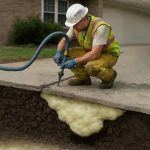
You’ll hear two terms most often: mudjacking and polyjacking. Mudjacking uses a cement-based slurry pumped through holes drilled in the slab. Polyjacking uses expanding polyurethane foam. Same goal, different material. Lift the slab. Support it. Keep it from dropping back into the same hollow space.
“Level” is the assumption people make. Usually, that is not the real target. A good contractor aims for a safe, functional surface and often leaves a slight pitch for drainage. For example, a driveway or patio should not be dead flat if water has nowhere to go. If a porch or sidewalk was originally sloped away from the house by roughly 1/4 inch per foot, the repaired slab should generally respect that layout.
What lifting does not do is rebuild rotten subgrade from scratch, so a professional should inspect drainage and soil conditions before recommending the repair. If the soil under the slab has poor compaction or recurring water flow, the repair still depends on the ground beneath it. That is why a bad slab-lifting job often looks fine on day one and starts moving again after the next wet season. Fool’s gold.
A contractor may drill holes about 5/8 inch to 2 inches in diameter, depending on method, then pump material into the void. The slab rises in small increments. A careful lift might stop a little short of perfectly flush to avoid cracking the slab or creating a “tenting” effect where the center rises before the edge.
What you want is simple: the slab is supported, the trip hazard is gone or reduced, doors and joints work, and water moves the right way.
How slab lifting works, step by step

Concrete slab lifting works by locating the void, introducing a lifting material, and raising the slab in controlled passes until the surface is usable again. The procedure is not mysterious, but it does depend on restraint.
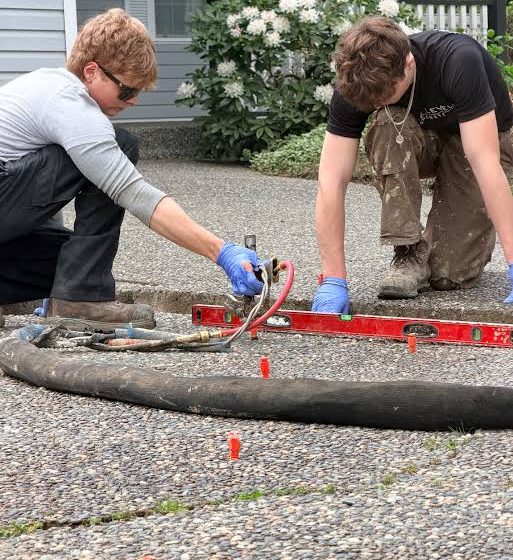
- Inspect the slab and the surrounding grade. Use a 4-foot level or laser level to measure the height difference, and note whether the slab has dropped 1/2 inch, 1 inch, or more. Also check the crack pattern, joint spacing, and whether nearby downspouts, sprinklers, or gutter runoff are dumping water beside the slab. A problem sign is continuing erosion, soft soil, or a crack that opens wider when walked on.
- Mark the lift points. A contractor chooses drill locations along the settled area, usually near the low edge and sometimes across the middle of a larger panel. Hole placement matters because lifting from the wrong spot can create a hump. The verification is simple: the marked pattern should make geometric sense for the slab size. If the plan ignores the low side entirely, that is a warning.
- Drill access holes. Holes are commonly about 5/8 inch to 1 1/2 inches for foam systems, and sometimes larger for mudjacking. The drill should pass cleanly through the slab without blowing out the top surface. Verify that holes are spaced to allow even fill; random drilling usually means guesswork. Chips or spalling around the holes suggest poor technique or worn tools.
- Pump the lifting material beneath the slab. Mudjacking slurry is pumped under pressure; polyurethane foam expands after injection. The key is controlled volume, not brute force. A good lift rises in small increments, often fractions of an inch at a time. If the slab jumps suddenly, the material is being forced too fast and the concrete may crack.
- Watch the slab rise and stop at the right height. The goal is usually to bring the slab flush with adjoining concrete or slightly below it, depending on drainage and crack condition. Use a level across the joint or walkway to verify it. If one corner lifts before the rest or a crack starts widening, the lift should stop and the pattern should be reassessed.
- Fill remaining voids. After the slab is near final position, the contractor should address hollows beneath it so the panel is supported across more than just a few points. A hollow sound when tapped can mean a remaining void. Empty pockets are a problem because they let the slab settle again.
- Patch the holes and clean the surface. Holes are usually filled with matching patch material after the lift. The repair should be flush enough that it does not catch a tire, mower wheel, or shoe edge. If the patch crumbles, stands proud, or leaves open gaps, the finish work was weak.
- Check drainage and the surrounding joints. The repaired slab should not send water toward the foundation or trap it against a garage threshold. Verify that expansion joints still open and close normally and that adjacent slabs did not become the low point. If the fix created a puddle where none existed before, the lift was incomplete or too high in the wrong place.
The whole job can take a few hours for a small section or a full day for a larger driveway. Cure time depends on the material, so ask the contractor whether the slab can be walked on the same day and driven on the next day. Foam systems often let surfaces be used sooner than mudjacking, but exact timing depends on temperature, moisture, and the contractor’s system. I’d ask for a same-day and next-day use plan, not a vague promise.
What a good concrete slab lifting repair looks like — and how much it usually costs
A good concrete slab lifting repair looks boring in the best way: the edge transition is smooth, the trip hazard is gone, and the slab still drains correctly. The crack may remain visible, because lifting does not erase cracks. What matters is whether the slab is supported and the movement has stopped.
Cost depends on area lifted, access, material, thickness of the slab, and how much the contractor has to fight bad drainage or broken edges. Small residential lifts are often priced by the job, not by a neat public rate card. In many markets, mudjacking is usually less expensive up front than polyurethane foam, while foam can be lighter, cleaner, and more precise. That trade-off is real. I would not call either one universally better.
A cheap quote can be misleading if it ignores void filling, drainage, or post-lift finish work. A low price may mean fewer injection points, less material, or a quick cosmetic lift that does not last. A higher price may reflect a larger slab, difficult access, or a contractor who plans to stabilize more than just the visible low spot. Ask what is included: drilling, lift, patching, cleanup, and any warranty terms. If a contractor won’t say whether the price includes hole patching, that’s a red flag.
What you should hear is a clear explanation of scope. For example: “We are lifting a 12-by-14-foot patio panel that has dropped about 1 inch at the outside corner, and we’re correcting the slope away from the house.” That tells you the contractor saw the geometry, not just the problem.
A repaired slab should also match the surrounding concrete as closely as possible. It may not look new. Color differences, hairline cracks, and old patch marks are normal. What is not normal is a visible lip of 1/2 inch or more, a new crack across the panel, or a lifted slab that rocks when stepped on.
When slab lifting is the wrong tool
Slab lifting is the wrong tool when the concrete is too damaged, the soil problem is active, or the repair would put the slab in a worse slope than before. Here are the situations where I would stop and rethink the plan:
The slab is broken into multiple loose pieces: That means the panel has lost too much integrity to lift cleanly — remove and replace it instead of trying to rescue shattered concrete.
The slab keeps moving after heavy rain or during dry spells: That points to an active ground problem — fix drainage, leaking pipes, or soil washout first, or the new lift may fail again.
The edge has dropped several inches and the concrete is cracked through: That is often beyond a simple lift — replacement may be safer and less expensive than repeated repair attempts.
The slab is thin, badly spalled, or honeycombed: Weak concrete can crumble under lifting pressure — patching it first may not hold, so replacement or partial replacement is the better answer.
The repair would create a drainage problem toward the house or garage: A “level” slab can send water the wrong way — the better fix may be a partial lift, regrading, or a different approach altogether.
There is evidence of a plumbing leak below a floor slab: That means the soil is being undermined by water — the leak has to be found and fixed before any lift makes sense.
In those cases, slab lifting may still be part of the answer, but it is not the first answer. The consequence of forcing it is simple: the slab moves again, sometimes faster than before. If a contractor tells you every settled slab is a lifting job, I would keep shopping.
The mistakes people make, and what they cost
The most common slab-lifting mistakes are not technical mysteries; they are judgment errors, and they usually show up as recurring movement or poor drainage.
-
Trying to make the slab perfectly level instead of functional. That can send water toward the foundation or create a visible hump. The better choice is to restore the original slope and stop the trip hazard.
-
Ignoring the cause of the settlement. If downspouts, grading, or runoff are still washing out the base, the repair may sink again. The fix is to solve drainage first or at the same time.
-
Choosing the lowest bid without asking what is included. A bargain quote may exclude patching, cleanup, or enough material to fill the void. The result is a shallow lift that does not last.
-
Accepting a lift that stops early without verification. A slab that is still 1/4 inch to 1/2 inch low may seem “good enough,” but that can remain a trip hazard and continue to collect water. Check with a straightedge or level before the crew leaves.
-
Overlifting the panel. Raising too far can crack the slab or create a new high spot. The repair should be conservative, not dramatic.
-
Assuming all slab lifting methods are the same. Mudjacking and foam each have strengths. Mudjacking can suit some larger voids; foam can work well where weight matters and precision matters. The wrong method for the site can shorten the life of the repair.
The cost of these mistakes is usually repetition: another repair, another bill, and sometimes full replacement. That is why I care less about the advertisement and more about whether the contractor asks about drainage, slab thickness, and the size of the drop.
What should you ask a contractor before you hire them?
You should ask five direct questions before you hire anyone for slab lifting. The answers tell you more than the sales pitch.
First, ask how much the slab has dropped and what slope they intend to restore. If the contractor cannot talk in inches and direction, they are guessing.
Second, ask whether they plan to use mudjacking or polyurethane foam, and why. There is no universal right answer, but there should be a site-specific reason.
Third, ask what happens if the slab cracks during the lift. A clear answer should describe the plan for stopping, patching, or limiting the lift. A vague “that never happens” answer is not useful.
Fourth, ask what is included in the price. Drilling, lifting, void fill, patching, cleanup, and site access can all affect the final bill. You want the scope written out.
Fifth, ask what they think caused the settlement. If the answer is “just age,” I would push harder. Soil movement, water flow, and nearby landscaping often matter more than age, so a good contractor should be able to explain the likely cause before recommending slab lifting.