
Last updated: November 01, 2026
Quick answer: a concrete slab can often be lifted if the damage is local and the slab still behaves like one piece. For this guide, the topic is How to Tell Whether a Slab Can Be Lifted at All, and the first test is simple: does the slab still have enough strength to move without breaking apart?
A repairable concrete slab can often be lifted, but only if the concrete still has enough strength, the damage is not through the whole thickness, and the slab has not failed at the edges or around a major crack. The question is not “is it cracked?” It is “does this slab still behave like one piece?” In many cases, the answer depends on a few visible clues and a basic field check.
What “liftable” means for a concrete slab
A slab is liftable when it can be raised without breaking apart, opening a structural crack, or revealing that the base underneath has failed too badly to support it. That usually means the concrete still has continuous sections, the settlement is local rather than widespread, and the slab has not turned into loose fragments. A slab with one sunken panel at a driveway joint is a different case from a patio that has split into three moving pieces.
Therefore, the first clue is simple: liftable slabs usually still move as a unit when they are pushed, tapped, or loaded near the low area. If one side rocks and the other side stays put, the slab may still be intact. If the slab flexes, crumbles, or sounds hollow over a wide area, the odds get worse.
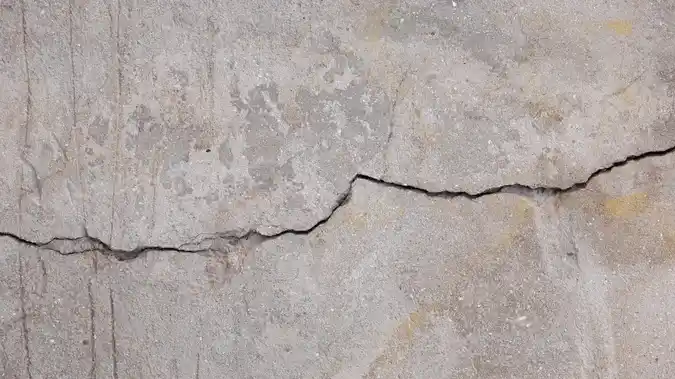
A basic rule of thumb is to separate surface damage from structural damage. Hairline shrinkage cracks near control joints are common and do not automatically rule out lifting. A long crack that runs through the slab, especially one with vertical offset, can. The same goes for severe heaving, where one section has been pushed up by roots, frost, or expansive soil; lifting a slab that is already forced upward can make the mismatch worse.
The right decision framework starts with the concrete itself, not the repair method. That is the point of the broader guide to concrete slab lifting methods and applications, but this page is about the first gate: can the slab be lifted at all?
First, look for the signs that the slab still has enough structure
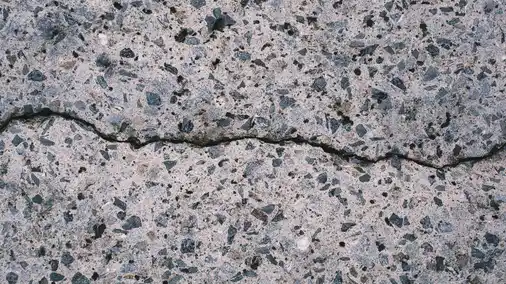
A slab is more likely to be liftable if you can still see one or more intact panels, clear control joints, and crack lines that look stable rather than shattered. Start at the low corner or edge and work across the panel with a flashlight, a straightedge, and a screwdriver or similar probing tool.
- Map the crack pattern first. Mark every crack, joint, and patched area with chalk or painter’s tape. You want a simple sketch of where the slab is broken and where it is still one continuous piece. A slab with one main crack and a few minor surface cracks is often more promising than one with a spiderweb of breaks.
- Check whether the crack is structural or cosmetic. Put the tip of a screwdriver into the crack. If the crack is tight, shallow, and does not widen when you press near it, that is better than a crack with loose edges or movement. A crack that passes through the slab thickness or shows displacement is a warning sign.
- Test whether the slab still bears together. Tap with a hammer and listen for a clear, solid sound versus a dull, hollow one. A mostly solid sound suggests the slab still has continuity. A widespread hollow sound can mean poor support, which lowers the odds of a clean lift.
- Inspect the control joints. Control joints are meant to guide cracking, not trap it. If the main damage follows a joint and the panels on either side are still intact, the slab may still be liftable. If the joint has blown apart or the concrete has broken away at the arris, edge failure may be limiting the repair.
- Measure the movement. Use a straightedge or level across the affected area. A difference of about 1/4 inch or more is enough to create a trip edge and usually tells you the slab has settled enough to need a lift decision. The measurement itself does not decide liftability, but it tells you how serious the movement is.
If the slab passes these checks, it is at least worth a lifting assessment. If it fails them, the slab may still be repairable in other ways, but it is no longer a straightforward lift candidate.
How do you tell settlement from heaving?
Settlement points toward lifting; heaving often points toward fixing the cause first. Settlement means the slab has dropped because the soil or base below it lost support. Heaving means the slab has been pushed upward by something under or around it, such as expansive clay, freeze-thaw action, or roots.
Because of that difference, the repair path changes. A settled slab can often be raised back toward level if the voids below it are stable enough to fill. A heaved slab may need the upward force reduced before any lifting makes sense. If you lift a slab that is being actively pushed from below, it can crack at the highest point or fail again soon after.
Here is the practical distinction:
- Settlement often creates a low spot, a tip toward one side, or a panel that drops at a joint. The surrounding concrete may still be in line. You may also see void indicators such as erosion at the edge or a gap under the slab edge.
- Heaving often creates a high ridge, a tented slab, or a panel that slopes upward more than its neighbors. Cracks may run from the raised area outward, and the joint lines can compress or misalign.
A slab with settlement and a clean underside is a stronger lift candidate than a slab with heaving and a fractured surface. If the movement is seasonal, or if nearby slabs are moving in different directions, the soil problem may be active. That does not automatically make lifting impossible, but it makes the case less predictable.
One useful field check is to place a level or straightedge over a 6-foot span. If the slab is simply low, the issue is more likely settlement. If the slab has a hump in the middle or a lifted edge with cracks radiating outward, heaving is more likely. A slab that is both cracked and heaved is often the least cooperative candidate for lifting.
What void indicators tell you about liftability
Visible void indicators are one of the best signs that a slab may still be liftable. A slab that has lost support beneath it can often be raised if the concrete remains sound enough to handle the movement. The problem is not always the drop itself; it is whether the slab has enough intact structure to be lifted without breaking.
Look for these signs:
- A visible gap at the edge. If daylight shows under the slab edge, or you can slide a thin tool under it, the base has likely eroded away in that spot.
- Rocking or bouncing under foot. A slab that shifts when stepped on near the settled area often has an underlying void.
- Water tracks or washout marks. Soil lines at the edge or gravel migration near downspouts suggest support loss.
- A hollow sound over a broad patch. This can mean the slab spans a void rather than sitting tight on grade.
These signs point to a slab that may be liftable because there is room to restore support. They do not guarantee success. A concrete panel can still be too cracked, too thin, or too weak at the edges to survive the process.
The size and location of the void matter. Small, local voids under a garage edge or driveway corner are more favorable than long, continuous voids under the center of a large patio. A center-span void raises the risk that the slab will bridge too much and crack during lifting.
The honest trade-off is this: a slab with obvious voids may be easier to diagnose, but not necessarily easier to save. Void plus sound concrete is promising. Void plus shattered concrete is not.
Can previous patching tell you the slab should not be lifted?
Previous patching does not automatically rule out lifting, but it tells you to slow down and inspect the slab more carefully. Old patch material, epoxy, mortar, or surface overlays can hide the true crack pattern and can fail when the slab is moved.
Patches matter for three reasons:
- They can mask structural cracks. A cosmetic patch over a crack may make the slab look better than it is. If the patch line is straight but the slab is still moving at that line, the repair history is warning you about the real failure point.
- They can create weak interfaces. A patched area may not bond uniformly with the original concrete. During lifting, that mismatch can open up at the edges.
- They can tell you the slab has been a problem before. Repaired spots near repeated settlement, especially around the same joint or edge, often mean the underlying cause was never fixed.
A thin surface patch is less concerning than a full-depth repair. Full-depth patching or prior slab stitching around a crack suggests the concrete already had a more serious break. If you see multiple repair colors, patched control joints, or layered materials, assume the slab has a history that may complicate lifting.
What to do with that information: treat old repairs as a filter, not a verdict, and consult a qualified concrete repair professional. If the patched area is small and the rest of the slab is continuous, the slab may still be liftable. If the patch sits on a crack with offset, or if several patches line up with settled sections, the slab is moving out of the “easy lift” category. For repair-history guidance, see the National Ready Mixed Concrete Association and Portland Cement Association.
Common mistakes that make a lift fail before it starts
The most common mistake is judging by appearance alone, and it can turn a potentially repairable slab into a broken one. A slab that looks only slightly cracked may still be too weak to lift if the damage goes through the thickness or if the edges have broken down.
Three mistakes show up often:
- Ignoring edge breakdown. Chipped, crumbled, or spalled edges are not just cosmetic. They are where lifting pressure can blow out the slab. If the edge has already lost mass, the slab may not transfer force evenly.
- Treating every crack as the same. A shrinkage crack near a control joint is not equal to a structural crack crossing the slab. Treating every crack as the same is a mistake; consult a concrete repair professional if the crack is wide, offset, or runs through the slab thickness. See the American Concrete Institute and the NRMCA.
- Forcing a slab with active heave. If the slab is rising from soil movement, roots, or frost, lifting without addressing the cause can make the problem worse. The slab may already be at its limit.
Another mistake is failing to look at the whole panel. A 3-foot corner drop may look local, but if the surrounding slab has multiple cracks and previous patching, the problem is broader than the visible low spot.
A simple way to avoid these errors is to think in layers: concrete condition, movement pattern, and support below. If any one of those layers fails hard, the slab may no longer be liftable in a useful way.
What to ask a contractor before you approve lifting
A good contractor should be able to tell you why the slab is liftable or why it is not, and should explain the limit in plain terms. Ask for a walk-through of the slab, not a price first. If the answer starts with a number before it starts with the slab’s condition, the diagnosis is too shallow.
Use these questions:
- Where is the structural crack, and does it run through the slab? A yes there is more serious than a surface crack.
- Do you see settlement, heaving, or both? Those are different problems and can change the repair path.
- Are the edges sound enough to lift? Edge breakdown is one of the clearest signs a slab may fail during the process.
- Do the void indicators suggest the slab still has support points? You want a slab that can be brought back into level without collapsing a weak span.
- Has previous patching changed the risk? A contractor who ignores old repairs is guessing.
A contractor may also mention drilling, foam injection, mudjacking, or slab replacement. That is fine, but those are next-step options. On this page, the only question is whether the slab can be lifted at all. If the answer is uncertain, the safest conclusion is often “maybe, but only after a closer inspection,” with an on-site evaluation from a qualified contractor.
The bad outcome to watch for is a promise that sounds absolute. A concrete slab with cracks, heaving, prior patching, and edge loss is rarely an obvious yes. It is a judgment call, and the judgment should be tied to what the slab itself is showing.
What a no-go slab looks like
A slab is usually not a lift candidate when the damage is structural, widespread, and tied to failing edges or active movement. If the concrete is broken into multiple unstable sections, the slab no longer behaves like one unit. If heaving and settlement are both present in the same panel, the base conditions are not stable enough for a clean lift.
The strongest no-go signs are:
- multiple through-cracks with offset
- crushed or missing edges along a major side
- widespread hollow sounding beyond the settled area
- previous repairs that failed and reopened
- visible heave in one area and settlement in another
At that point, lifting may still be physically possible in a narrow sense, but it is no longer a sensible repair decision. The slab may not survive the process intact, and even if it does, it may not stay level.
That is the line this page is meant to draw. A slab can be cracked and still liftable. A slab can be sunken and still liftable. A slab that is structurally broken, actively deforming, or badly edge-damaged may not be.
Key Takeaways
- A slab is liftable only if the concrete still acts like one piece and the support loss is local enough to correct.
- Cracks matter most when they are through the thickness, offset, or paired with crushed edges.
- Settlement is generally a better lifting candidate than heaving.
- Void indicators can help, but they do not override broken concrete or failing edges.
- Previous patching is a warning sign, not an automatic disqualifier.
- If the slab is fractured into unstable sections, lifting is usually the wrong move.
What makes a slab unrepairable?
A slab is usually unrepairable by lifting when the concrete has lost structural integrity, the edges are badly broken, or the movement is too widespread to correct. Multiple through-cracks, severe crumbling, and active heaving are the main warning signs. In those cases, a contractor may say the slab is beyond lifting even if some parts still look intact.
Can a cracked slab still be lifted?
Yes, a cracked slab can still be lifted if the crack is stable, not badly offset, and the slab still behaves like one unit. However, if the crack is through the thickness or paired with edge failure, a qualified concrete repair professional should inspect it before any lift is attempted. See the American Concrete Institute and Portland Cement Association.
Drafted with AI; not yet reviewed by a person.

