Seasonal Movement in New York Slabs: Causes and Prevention

Last updated: November 20, 2026
Quick Answer: In New York, slab movement is usually caused by water, frost, and soil change, and the safest first step is to control drainage before repairing the surface. This guide for Seasonal movement causes and prevention for New York slabs — The Complete Guide explains what causes movement, what you can prevent, and when a slab needs a concrete contractor or structural engineer.
Key Takeaways
- New York slabs move most often from frost heave, poor drainage, washout, and shrinking or settling soil.
- The biggest prevention step is simple: keep water away from the slab edge and base.
- Not every crack means failure. Some cracks are cosmetic; others show that support is leaving.
- Slabs near downspouts, snow piles, driveway edges, and planted beds take the hardest seasonal hit.
- Prevention works best when it starts with grading, gutters, joints, and base prep — not with patching the crack first.
If you own a sidewalk, driveway, garage slab, stoop, patio, or basement floor in New York, seasonal movement is not random. It follows water, temperature, and soil conditions, and those conditions are predictable enough to manage. This guide on seasonal movement causes and prevention for New York slabs — The Complete Guide keeps that focus throughout, and the good news is that the main causes are usually visible.
The bad news is that many repairs fail because they treat the symptom, not the cause, so a professional should confirm the source when movement keeps returning. A crack filled with caulk may stay shut for a season, then reopen when the ground freezes again. A slab lifted with mudjacking may look level, then sink again if the base is still wet.
Why New York slabs move with the seasons
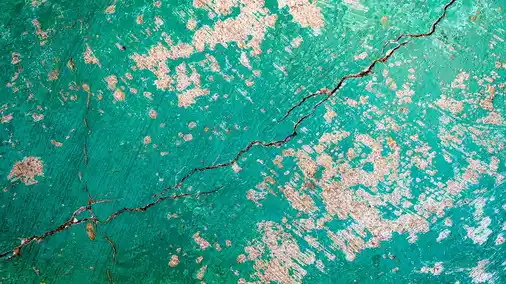
Picture this: you have a slab that looks fine in summer, then a winter storm hits, snow melts against the edge, and a few months later one corner sits higher than the rest. That pattern is classic in New York, where freeze-thaw cycles, clay-heavy soils in some areas, and heavy rain all push and pull on concrete. Seasonal movement is usually water movement showing up as slab movement.
Here’s the catch: concrete itself does not usually “expand and shrink” enough to cause the drama people see. The soil under it changes first. When wet soil freezes, it grows. When wet soil softens, it loses strength. When dry soil shrinks, it leaves a gap. The slab then bridges over a void or rides up on frozen ground.
The most common seasonal forces are:
- Frost heave from water in the soil freezing and expanding.
- Settlement when wet or loose fill compresses under load.
- Washout when runoff carries fine soil out from under the slab.
- Expansive clay movement in some sites, where soil swells when wet and shrinks when dry.
- Thermal stress that widens existing cracks and joints, especially on long runs.
In New York, the exact mix depends on location. A Queens driveway on fill soil does not behave like a north-side Buffalo stoop exposed to repeated freeze-thaw. A Westchester patio with poor drainage does not fail the same way as a Manhattan basement slab on a tight urban lot. The setting matters, and that is why seasonal movement causes and prevention for New York slabs — The Complete Guide has to stay site-specific.
What actually causes slab movement in New York?
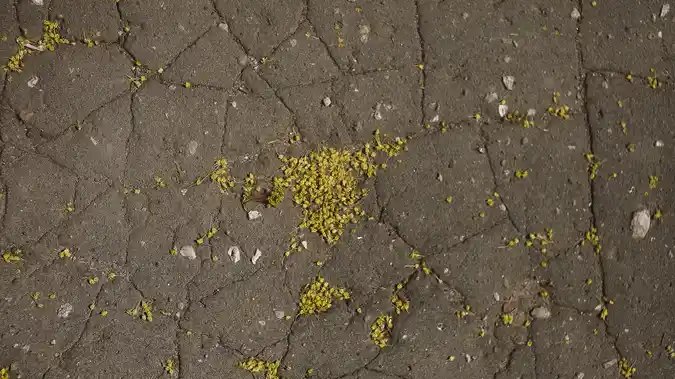
Picture this: you walk the edge of a driveway after spring thaw and see one slab panel tipped up an inch, while the panel beside it has a low spot where meltwater pools. That is not just bad luck. It usually means the base has been weakened by one of four site problems.
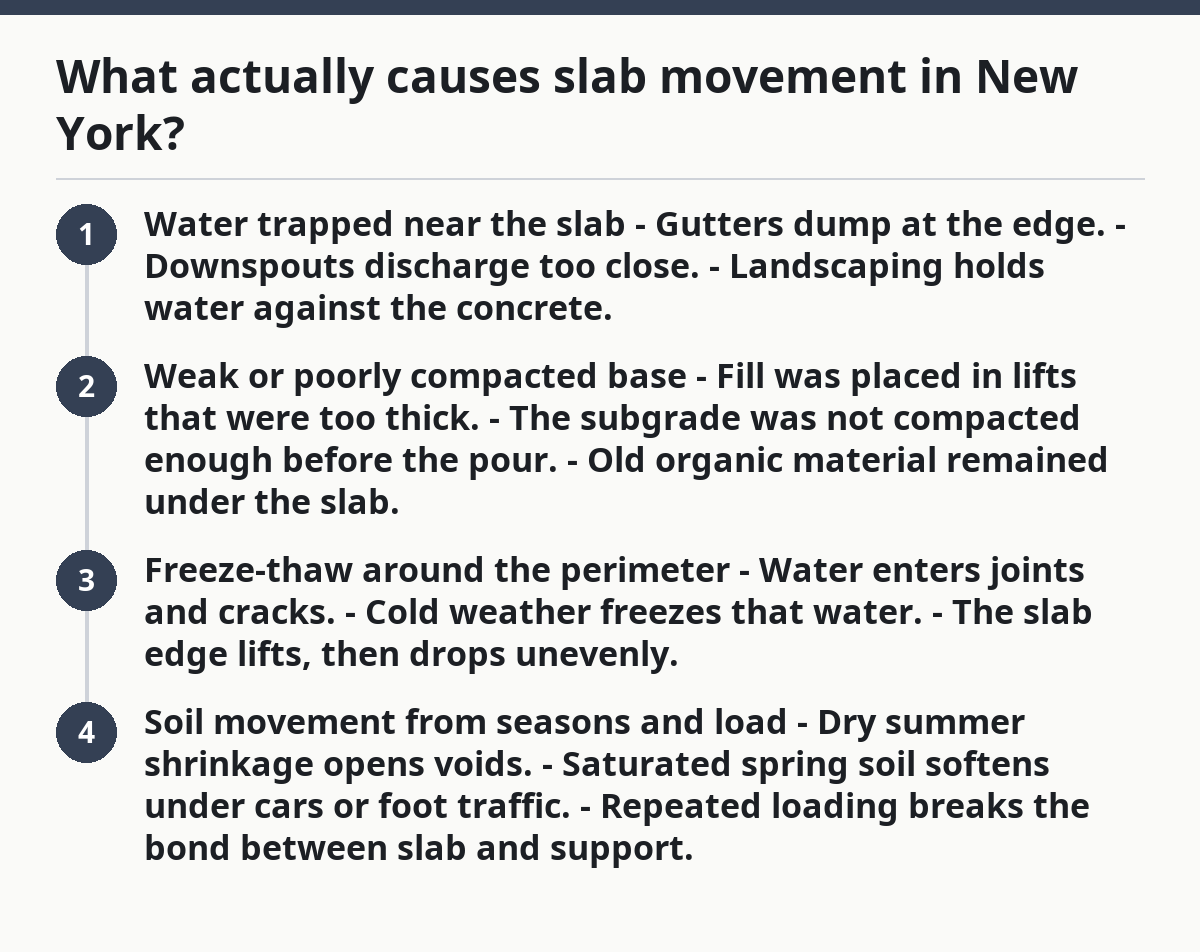
The main causes are:
- Water trapped near the slab
– Gutters dump at the edge.
– Downspouts discharge too close.
– Landscaping holds water against the concrete. - Weak or poorly compacted base
– Fill was placed in lifts that were too thick.
– The subgrade was not compacted enough before the pour.
– Old organic material remained under the slab. - Freeze-thaw around the perimeter
– Water enters joints and cracks.
– Cold weather freezes that water.
– The slab edge lifts, then drops unevenly. - Soil movement from seasons and load
– Dry summer shrinkage opens voids.
– Saturated spring soil softens under cars or foot traffic.
– Repeated loading breaks the bond between slab and support.
A concrete slab is only as stable as the layer beneath it. That sounds plain, but it is where many repairs go wrong. People focus on the visible crack because that is what they can point to.
Signs the cause is water, not just age
The clearest clue is where the damage starts. If the same corner keeps moving after rain or snowmelt, water is the suspect. If staining, efflorescence, or moss appears along the edge, moisture is lingering there. If soil has pulled back from the slab in a dry spell, shrinkage is part of the story.
Look for these patterns:
- Cracks that widen after wet weather
- A slab edge that rises in late winter or early spring
- Pooled water after storms
- Soft soil beside the concrete
- A gap under the edge when you probe with a screwdriver
A crack alone does not prove structural failure. A crack plus movement does.
Which New York slab types move the most?
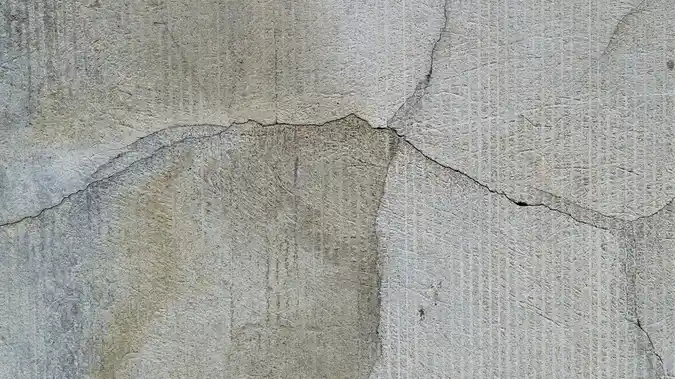
Picture this: you own two concrete surfaces on the same property — a front walk and a garage floor — and only one of them keeps shifting. That is normal, because different slab types face different loads, drainage conditions, and exposure. Exterior slabs move more often than interior slabs.
The most movement-prone types are:
- Driveways: they take vehicle load, snow storage, de-icing salts, and edge runoff.
- Sidewalks and front walks: they often sit near tree roots, utility trenches, and shallow fill.
- Patios: they often have poor drainage if the landscape slopes toward the house.
- Garage aprons and stoops: they sit at a transition point where water collects and freezing is common.
- Basement slabs: they are less exposed to frost from above, but they can move from subgrade moisture, settlement, or hydrostatic pressure.
Exterior slabs in New York take the hardest seasonal beating because they sit near grade. Grade is where water lives. Water is where movement starts.
Why driveway slabs are a special case
Driveways fail for more than one reason. They crack from vehicle weight, but they also move from thaw cycles and edge loss. If the sub-base was thin or wet when placed, wheel loading can pump fines out of the bed over time. That creates settlement, then more cracking.
Edge restraint matters too. A driveway slab with no strong support at the perimeter can begin to curl or drop at the outer strip. Once the edge moves, the crack network usually follows.
Why basement slabs are different
Basement slabs do not face the same frost exposure, but they still respond to moisture and support conditions. A basement slab may crack from settlement, shrinkage during curing, or pressure from the surrounding soil and groundwater. If the floor is damp or the crack changes with rain, the problem may not be in the slab alone.
The American Concrete Institute has detailed guidance on slab-on-ground behavior, and the Portland Cement Association also publishes plain-language notes on cracking and jointing. Those two sources are worth reading if the slab problem is more than cosmetic.
- ACI: https://www.concrete.org
- Portland Cement Association: https://www.cement.org
How do I tell if seasonal movement is normal or a real problem?
Picture this: you notice hairline cracking in a spring sidewalk panel, but the surface still drains correctly and the height difference is tiny. That may be normal shrinkage or seasonal response. Movement becomes a real problem when the slab changes level, drains backward, or keeps worsening after each wet season.
Normal or lower-risk signs:
- Hairline cracks that do not change width much
- Small surface checking with no vertical offset
- Minor joint widening without edge lift
- Slight cosmetic spalling at the surface
Higher-risk signs:
- One side of a crack is higher than the other
- The slab rocks when stepped on
- Water ponds where it used to drain away
- A gap opens beside the slab after rain
- Cracks extend from corners, drains, or re-entrant angles
If the slab is on a small pattern of cracks but still stable, prevention may be enough. If the panel is out of plane, the base is failing or already gone in part.
The quick field check
Use a straightedge, a level, or even a long board:
- Measure whether one side is higher than the other.
- Check whether water drains toward the house or toward a garage.
- Look for voids at the edge after rain.
- Watch for movement over a few weeks, not just one day.
If the slab changes after each storm or thaw, seasonal movement is active. If it has been stable for years, the issue may be old but not progressing.
How do you prevent slab movement before it starts?
Picture this: the slab has not failed yet, and you want to keep it that way through a New York winter. This is the best time to act, because drainage and base prep often prevent more damage than patch products alone. The best part, for most owners, is that many prevention steps are visible and checkable.
Start with the ground around the slab:
- Slope water away
– Aim for positive drainage away from the slab edge.
– Do not let mulch, soil, or pavers trap runoff. - Keep gutters and downspouts away from the slab
– Extend discharge so meltwater does not soak the perimeter.
– Clean gutters before freeze season. - Seal joints and gaps properly
– Water in joints freezes, expands, and opens the crack wider.
– Use the right sealant for the location, not a random tube from the shelf. - Protect the edge
– Keep heavy loads off weak corners.
– Avoid piling snow against the slab where possible. - Fix drainage problems fast
– Standing water near concrete is not a cosmetic issue.
– It is a movement problem waiting for cold weather.
Good prevention is boring. That is a compliment. Boring means the slab stays where it belongs.
The base matters more than the surface
A slab with a bad base will keep reminding you. Proper subgrade preparation usually includes removal of organics, compaction of the soil, and a well-drained granular base where the design calls for one. A slab poured over wet or loose fill is set up for seasonal movement from the start.
On many residential jobs, the failure is not the concrete mix. It is the layer under it. That layer is invisible after the pour, which is why it gets ignored.
Joints and crack control help, but they are not magic
Control joints help a slab crack where the builder planned for it. They do not stop frost heave. They do not fix settlement. They do, however, reduce random cracking by giving shrinkage a planned path.
Sealants help too, but only if the joint is clean and the movement is within the sealant’s range. A failed sealant lets water in. That means the joint has become a weather pipe.
What repairs work after movement starts?
Picture this: the slab is already uneven, and you need to decide whether to patch, lift, or replace it. That decision depends on the cause and the amount of movement, not on the size of the crack alone. The right repair matches the failure mode.
The common repair choices are:
- Crack sealing for small, stable cracks with little or no vertical movement
- Mudjacking or slab lifting when the slab has settled and the base still has enough strength to support a lift
- Polyurethane foam lifting when a lighter, faster lift is appropriate and the voids are limited
- Partial replacement when one area is broken, heaved, or badly undermined
- Full replacement when the slab has widespread failure, poor design, or severe base loss
Not every contractor recommends the same solution. That is why the cause matters. A slab that keeps heaving from frost will not stay fixed just because it was lifted once.
What repair methods can’t fix
Repairs do not cure:
- A bad drainage layout
- Chronic downspout discharge at the slab edge
- A tree root problem that keeps pushing
- A subgrade that keeps washing out
- Deep frost exposure without perimeter protection
If the cause stays in place, the repair becomes temporary by design, so a professional should confirm whether the underlying site condition can be corrected first.
When replacement makes more sense than repair
Replacement is usually the stronger call when the slab has multiple cracks, big level changes, edge collapse, or repeated repair history. It is also the better option when the base has been damaged enough that patching the top will not stabilize the structure below.
A fresh slab still needs the same prevention steps. New concrete on the same bad site can fail just as fast as the old one.
Which prevention steps work best in New York weather?
Picture this: the first freeze is coming, and you have maybe a weekend to do what the slab needs. You do not need a giant project list. You need the few steps that actually change the result in a wet, freezing climate. Water control beats cosmetic repair every time.
The strongest prevention steps for New York conditions are:
- Clean gutters before winter
- Extend downspouts away from slabs
- Regrade soil so water moves away from concrete
- Seal openings where water can sit and freeze
- Keep de-icing chemicals from attacking weak edges
- Remove snow in a way that does not pack meltwater against the slab
- Repair broken joints before freeze-thaw opens them wider
If the slab is beside a foundation wall, pay attention to roof runoff and snow melt. If it is a driveway or walk, pay attention to the edge where meltwater leaves the slab and refreezes.
What not to rely on
Do not expect surface coatings alone to stop seasonal movement. They may help with moisture intrusion, but they do not fix a soft base or a drainage problem. Do not assume a small crack is harmless forever. One winter of water entry can turn a hairline gap into a recurring problem.
And do not ignore the surrounding grade because the slab “looks fine.” The slab often looks fine right before it starts to move.
When should you call a pro instead of DIY?
Picture this: you have one slab panel with a hairline crack and another with a clear height difference, and you are not sure which one is worth fixing first. That is the line where a professional inspection starts to make sense. DIY is fine for surface sealing; bigger movement needs a real diagnosis.
Call a pro when:
- The slab has visible vertical displacement
- The crack keeps reopening after repair
- Water pools beside or on the slab after every storm
- The slab is near a foundation wall or retaining condition
- You suspect frost heave, washout, or settlement
- The structure above depends on the slab’s stability
If the problem affects a basement, garage apron, stoop, or anything tied to the building envelope, the stakes rise fast. A concrete contractor can tell you whether the issue is liftable. A structural engineer may be needed if the movement points to a broader foundation problem.
The honest verdict: what to do first, second, and last
Picture this: you want a short plan, not a theory lesson, and you need to know what matters most on a New York property. Start with water, then support, then repair — in that order. That sequence usually holds up season after season when the site conditions are addressed correctly.
Choose drainage correction if the slab moves after rain, snowmelt, or spring thaw. Choose joint sealing and crack repair if the slab is stable but open to water. Choose slab lifting if the panel has settled but the base can still carry it. Choose replacement if the slab has repeated movement, widespread cracking, or a base that has already failed.
Neither if the real issue is a foundation movement problem, a major soil failure, or an unsafe slope toward the building. In those cases, surface repairs only hide the symptom.
FAQ
Why do New York slabs crack more in winter?
New York slabs crack more in winter because water gets into joints and soil, then freezes and expands. That freeze-thaw cycle pushes on the slab edge and widens weak spots. If drainage is poor, the damage builds faster.
Can I stop slab movement with sealant alone?
No, sealant alone will not stop slab movement if the base is failing or water keeps getting under the slab. Sealant helps keep water out of joints and small cracks, but it does not fix settlement, frost heave, or washout. Use it as one part of the fix, not the whole fix.
Is a small height difference dangerous?
A small height difference can still matter if it is growing or causing water to drain the wrong way. It becomes more serious on walking paths, garage aprons, and anywhere a wheel or foot can catch the edge. Track it over time instead of guessing.
What is the long-term prevention for a driveway slab in New York?
The long-term prevention is good drainage away from the slab, a well-compacted base, and sealed joints that keep water from entering the edge. In a freeze-thaw climate, those three items matter more than surface patches. If the site stays wet, the slab will keep moving.
Should I replace or lift a slab that has settled?
Lift it if the slab is otherwise sound and the problem is limited to settlement over a stable base. Replace it if the slab is badly cracked, broken at the edge, or sitting over a base that has washed out or keeps moving. If the cause is not fixed first, either repair can fail again.
Drafted with AI; not yet reviewed by a person.