Last updated: November 20, 2026
Quick Answer: Hairline cracking on a sunken concrete slab usually means the slab has both surface cracking and movement going on—often from shrinkage first, then settlement or loss of support. If the slab is out of level, it is not just a cosmetic crack.
Hairline cracking on a sunken concrete slab is the topic here: What Does Hairline Cracking Mean on a Sunken Concrete Slab? The sections below explain what that pattern means, what to watch, and when monitoring is enough. For background on slab movement, see concrete slab settlement and crack repair basics.
Key Takeaways
- A hairline crack by itself can be minor; a crack on a slab that has dropped out of level points to movement, not just drying.
- Pattern matters more than the thinness of the crack. Long, straight, repeated cracks and cracks that line up with a low spot deserve attention.
- Surface shrinkage and settlement can happen together, which is why a slab can look “only hairline” and still be failing underneath.
- Measure the crack width and the height difference across the slab, then compare those numbers over 30 to 90 days.
- The repair question is not “Is the crack thin?” It is “Is the slab still moving, and why?”
What hairline cracking means on a sunken concrete slab
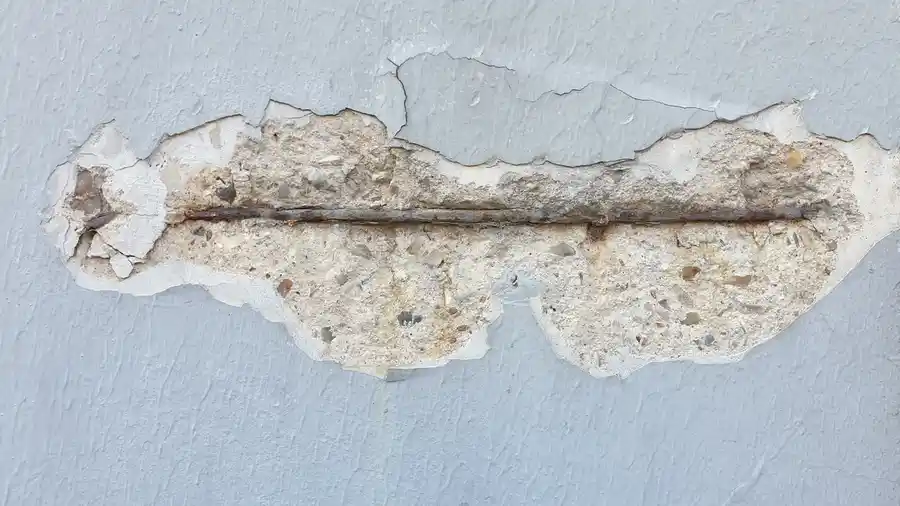
Hairline cracking on a sunken slab means the concrete has opened in a very thin line while the slab has also dropped, tilted, or lost support below it. A hairline crack is usually narrow enough that it looks like a pencil mark, but on a slab that is out of level, that thin line can be part of a larger movement problem.
Picture this: you’re standing at a garage floor or sidewalk and one corner has sunk 1/2 inch or more. The crack may look small from above, yet the slab edges no longer match and the surface has lost its plane. That combination is the clue.
Here’s the catch:
- A crack can start as surface shrinkage during curing.
- The same slab can later settle if the soil below softens, washes out, or compacts.
- Once the slab moves, a crack that used to be cosmetic can start to widen, telegraph, or follow a bend in the slab.
The key is that a sunken slab changes the meaning of a hairline crack. On a level slab, a thin crack often stays a thin crack. On a slab with a low side, it can be a movement marker. The crack tells you where the concrete split; the sunken area tells you the support changed.
This is why I’d treat the phrase hairline cracking as a symptom, not a diagnosis, and I’d urge a professional inspection if the slab is out of level. On its own, it says the concrete opened. On a sunken slab, it also raises the question of whether the slab is still settling, or whether the drop happened long ago and the crack has simply stayed visible.
Why thin cracks can still point to settlement
A hairline crack can still point to settlement because concrete is stiff and unforgiving. If the base under one part of the slab sinks even a little, the slab tries to bridge the gap. That bending puts tension on the top or bottom face, and a thin crack can form before the slab shows a dramatic break.
Picture this: you’re looking at a patio slab that dips toward one edge by less than an inch. The crack may be straight, stair-step, or slightly diagonal, but the real clue is that the slab surface is no longer flat. The crack width alone does not tell the whole story.
A few signs matter more than the word “hairline”:
- A crack that crosses a low spot or a change in height is more likely tied to movement.
- A crack that keeps the same path through several slab panels can mean the problem is structural, not just surface drying.
- A crack that appears near joints, corners, or drain edges often reflects stress at weak points.
- A crack that lines up with a sunken edge can be part of differential settlement.
Surface shrinkage usually leaves a more random network of fine cracks, often shallow and uniform. Settlement tends to show up where support changed: along one side, at one corner, or through a panel that dropped relative to its neighbor.
The truth is, a thin crack on a sunken slab is not “small” just because the line is narrow. The missing piece is the plane of the slab. If that plane changed, the crack deserves a closer look, and a qualified contractor or engineer can confirm whether movement is active. For a broader guide, see how to spot slab settlement.
How to read the crack pattern, not just the width
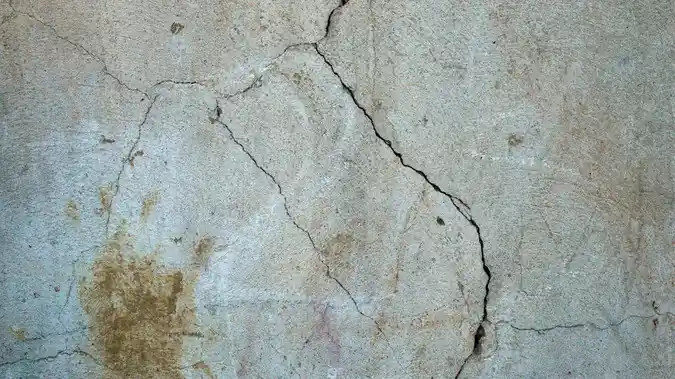
A hairline crack on a sunken slab means more when you look at the pattern clues around it. Straightness, direction, and location tell you whether the slab is likely dealing with shrinkage, settlement, or both at once.
Picture this: you kneel near the crack and trace it with a finger. It runs 6 feet across the slab, bends near the low side, and passes through a joint. That path says more than the width ever will.
Use these pattern clues:
- Straight, long cracks often follow stress lines in the slab.
- Diagonal cracks can show the slab is being pulled in different directions.
- Cracks near one edge can point to support loss at that side.
- Multiple fine cracks in one area can mean drying shrinkage or repeated movement.
- A crack that opens more at one end often marks uneven movement.
Now, you might be wondering how to tell when the pattern is a warning and when it is just an old surface mark. The answer is not to guess from appearance alone. You need a measurement, then a second one later.
Use a simple check:
- Mark both ends of the crack with a pencil and date the mark.
- Measure the visible width with a crack gauge, a ruler, or a coin reference for a rough check.
- Measure the height difference across the slab edge with a straight board or level.
- Photograph the crack and the low spot from the same angle.
- Recheck in 30 days, then again at 90 days if the slab is not a safety hazard.
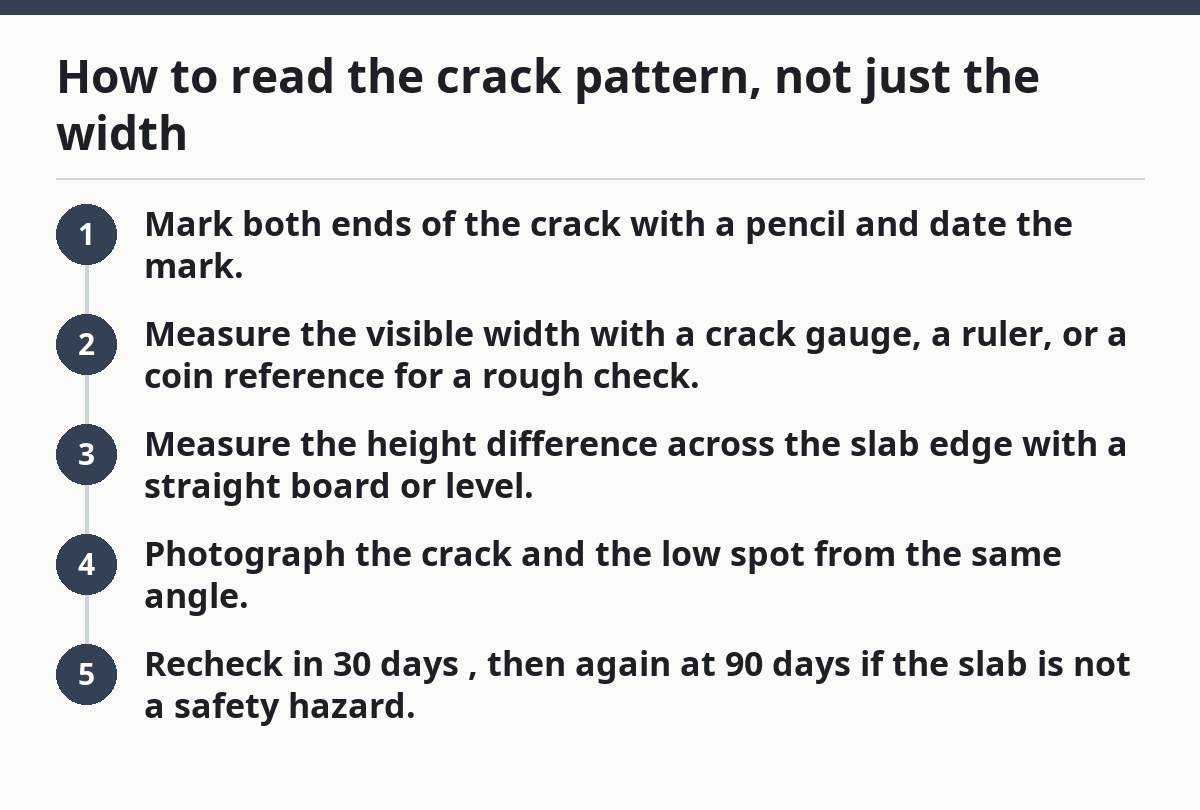
That routine does not diagnose the cause, but it does tell you whether the slab is still moving. If the width stays stable and the level difference does not change, the crack may be old and inactive. If either number grows, the problem is active. For a practical walkthrough, see monitoring concrete cracks.
How to tell surface shrinkage from movement indicators
Hairline cracking means surface shrinkage when the crack stays shallow, stays narrow, and does not track with a change in slab height. On a sunken slab, though, the same thin crack can also act as a movement indicator if it sits beside a drop or tilt.
Picture this: you’re comparing two slabs. One has a web of very fine cracks but stays flat. The other has one fine crack and a clear low side at the same location. The second slab gives you a different message, even though the crack looks similar.
Surface shrinkage usually has these traits:
- Fine, spiderweb or map-like cracks.
- Little to no height change across the crack.
- Cracks that show up early in the slab’s life.
- No matching low spot or edge drop.
Movement indicators usually have these traits:
- A crack near a settled corner, edge, or panel.
- A crack that matches a visible slope or dip.
- A crack that gets wider at one end or along one side.
- A crack paired with gaps at a joint or a step between slabs.
The mistake is treating all hairline cracking as the same thing, and a professional inspection can help separate surface shrinkage from settlement. A slab can have surface shrinkage and settlement together. That combination is common on older concrete, walkways, garage floors, and patios where water, clay soil, or fill material have changed under the slab.
One useful standard is simple: if you can see daylight through a crack, feel a lip underfoot, or notice the slab edge is no longer flush, the issue has moved beyond surface-only cracking. That does not automatically tell you the repair method. It does tell you the crack is no longer just a finish problem. For inspection context, see foundation and slab diagnostics.
What a contractor will look at during a slab inspection
A hairline crack on a sunken slab usually gets judged by three things: crack width, level change, and active movement. A good site visit is about checking the slab as a system, not staring at the crack line alone.
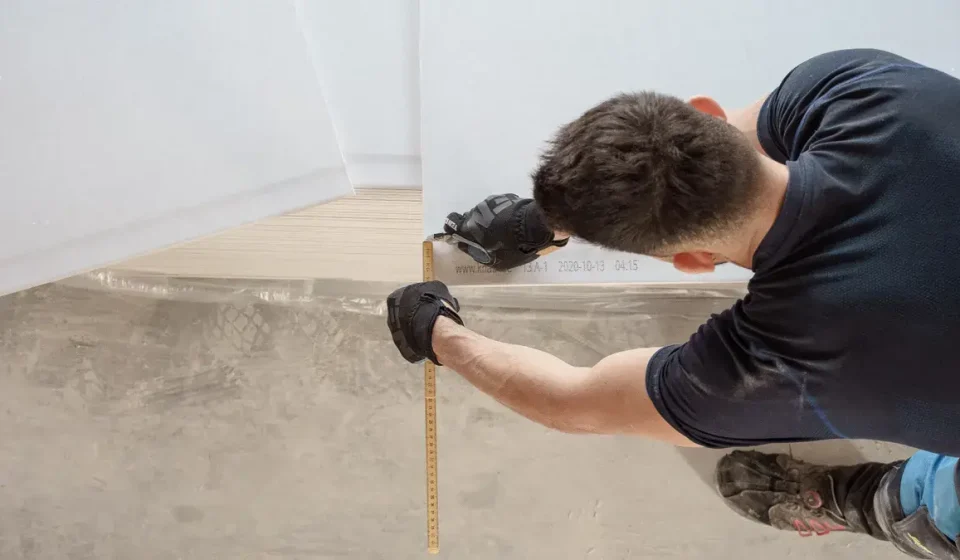
Picture this: you call for an estimate and the person walks the slab with a 6-foot level, a tape, and a flashlight. They are looking for the low point, where water runs, and whether the crack passes through a joint or across a support void.
A typical inspection may include:
- Measuring the crack width at several points.
- Checking the height difference across the slab.
- Looking for voids, erosion, soft soil, or a washout edge.
- Watching how water drains around the slab.
- Noting whether nearby slabs are also out of level.
What affects price? The job type, access, slab size, and how much movement has to be corrected. A simple inspection may be brief, while a repair proposal may need lifting, sealing, or partial replacement. The more the slab has moved, the more time and equipment the job usually takes.
Here’s what a bad job often looks like:
- The crack gets sealed but the slab stays sunk.
- A lifted slab is left with a sharp lip beside it.
- The low spot is ignored, so water keeps pooling.
- The repair covers the symptom but not the support issue.
A contractor worth talking to should explain whether the slab is stable, whether the crack is active, and whether the low area is part of the problem. That question matters more than any sales pitch. If you want the broader framework, the hub article on concrete crack repair and settlement diagnosis goes deeper on the decision tree.
When monitoring is enough and when the slab needs more than that
Hairline cracking on a sunken slab needs monitoring when the crack is stable, the drop is not getting worse, and the slab is not creating a trip edge or drainage problem. If the crack or the level change is active, a patch alone is not the right answer.
Picture this: you have a front walk with a thin crack and a slight dip, but the slab has looked the same for a year. That is a different problem from a driveway slab that keeps sinking after every rainy season.
Monitoring is usually reasonable when:
- The crack stays under the same visual width.
- The slab does not keep dropping.
- Water is not flowing under the slab.
- No one is tripping on the edge.
- The crack does not spread into new lines.
More work is usually needed when:
- The height difference becomes more obvious.
- The crack widens over time.
- The slab rocks, shifts, or sounds hollow in spots.
- Water pools at the low side after rain.
- The crack runs alongside a joint that is opening too.
A concrete slab does not need to be badly broken to be a problem. A 1/4-inch lip at a walkway edge can matter more than a much longer crack on a flat section. That is why I put more weight on the slab’s position than on the crack’s appearance.
If you are deciding whether to call a contractor, bring clear photos, the date you first noticed the crack, and any measurements you have. That gives the inspection a starting point and helps separate an old hairline line from an active settlement issue.
Are hairline cracks normal in concrete?
Yes, hairline cracks can be normal in concrete, especially from drying shrinkage. On a slab that is still level and stable, a fine crack may stay cosmetic for years. On a sunken slab, though, the same crack deserves more attention because the drop suggests movement, not just surface drying.
Can a slab sink without major cracking?
Yes, a slab can sink without major cracking. Concrete can settle as one piece if the soil below compresses or erodes evenly, so the surface may show only a fine crack or none at all. The lack of big cracks does not mean the slab is fine if the surface is clearly out of level.
Drafted with AI; not yet reviewed by a person.