Last updated: November 20, 2026
Key Takeaways
- Check that the invoice matches the right property and job first.
- Compare each invoice line to the proposal, not to memory.
- The line items should show the actual work, not a vague lump sum.
- Deposit received and balance due should clearly add up from the total.
A concrete leveling invoice tells you what was lifted, what it cost, what was paid, and what still needs payment. If you are learning How to Read a Concrete Leveling Invoice, the quickest way to read it is to compare each line item against the original proposal and then check the deposit, change orders, materials charged, and balance due. For payment timing and consumer billing rights, see the FTC’s guidance on billing and the CFPB’s consumer tools.
Start with the job name, address, and total before you read the fine print

The first thing to check is whether the invoice matches the right property and the right job. A concrete leveling invoice should name the project address, the slab or section lifted, and a total that you can trace back to the proposal.
Read the top of the page before anything else. If the invoice says “front walkway” but the estimate was for a garage slab, or if the service date is different from the day the crew actually worked, stop there and ask for a corrected invoice. A mismatch at the top usually means the billing file and the job file were not matched cleanly.
Look for three figures right away: the total amount billed, the deposit already paid, and the balance due. Those numbers should make sense together. For example, if the proposal called for a $500 deposit and the work total is $2,000, the balance due should not be a mystery line buried at the bottom. It should be easy to follow from the invoice itself.
This step matters because many disputes start with a simple clerical problem, not a bad repair. A bad address, duplicate job number, or missing signature can make the invoice hard to defend later if the billing is questioned.
How do I compare the invoice to the original proposal?
You compare the invoice line by line, not by memory. Take the proposal, the invoice, and any change order, then match the scope, quantity, and price on each line item.
Use this order:
- Match the scope. Check that the same concrete areas appear on both documents, such as a sidewalk panel, driveway section, porch step, or garage slab. If the proposal listed 3 panels and the invoice lists 5, that is a change, not a typo to ignore.
- Match the method or material. The proposal may mention polyurethane foam, mudjacking slurry, or a hybrid repair method. If the invoice names a different material or a higher-rate product, the bill should explain why.
- Match the quantity. Look for square feet, linear feet, number of drill holes, number of voids filled, or number of slabs lifted. If the unit count changed, the price should change in a visible way.
- Match the labor line. Some invoices split labor from materials. Others roll both into one flat rate. Either format can be normal, but the invoice should not invent a labor charge that was never in the proposal without a reason.
- Match the total. Add the line items. The sum should equal the subtotal on the invoice, then the tax, if any, and finally the balance due after the deposit.
If the invoice is clean, the numbers will tell one story. If it is sloppy, you may see a proposal for $1,800 and an invoice that jumps to $2,150 with no change order attached. That is the point where you ask for a written explanation, not a verbal one.
A proposal can allow for small field adjustments, but the invoice should show those adjustments clearly. A hidden increase is the kind of billing problem that is easiest to challenge when you still have all the paperwork in front of you.
Which line items on a concrete leveling invoice should I expect?
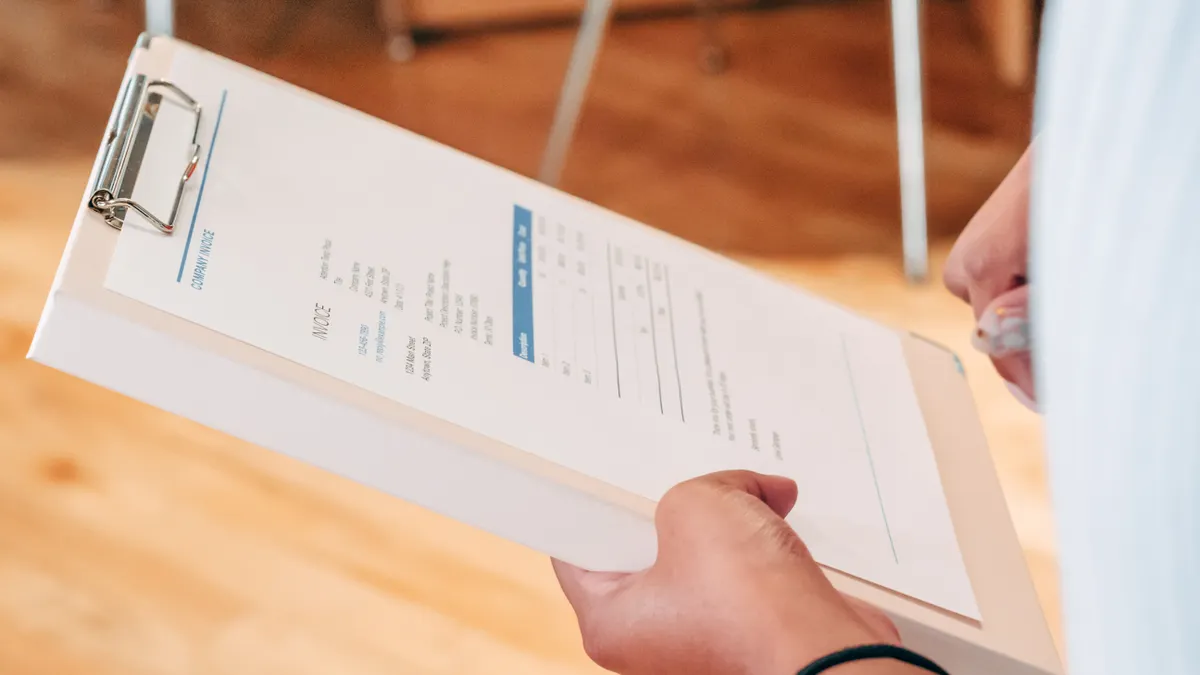
The line items should show what was actually done, not just one lump sum with no detail. A useful invoice usually breaks the job into a few plain categories, such as labor, materials, setup, cleanup, and any added work.
The exact layout varies by company, but these line items are common:
- Site setup or mobilization: travel, equipment loading, and arrival at the site.
- Labor: the work of drilling, pumping, lifting, patching, and finishing.
- Materials charged: foam, slurry, grout, patch compound, or sealant.
- Repair of drilled holes: filling the injection points after lifting.
- Cleanup or disposal: removing debris, rinsing residue, or disposing of waste.
- Change orders: extra work approved after the original proposal.
- Tax, if applicable: depending on local rules and how the company bills the job.
A line item is useful when it answers a simple question: what part of the work does this charge cover? If it does not answer that, it is too vague. “Service fee” or “miscellaneous” without explanation is a red flag, especially on a residential job where the homeowner needs to know what was paid for.
One honest limitation: not every concrete leveling invoice will be itemized in the same way. Some smaller jobs are billed as a flat rate because the work took less than half a day and there was no separate material charge. That can be acceptable if the proposal said the job would be billed that way. What should not happen is a vague flat rate after the fact when the original estimate was detailed.
If the invoice includes a line you do not recognize, ask for the unit price and the quantity. A line that says “materials charged: 2 units” is not enough by itself. You need to know what a unit means on that company’s billing sheet.
What does a deposit and balance due mean on the invoice?
The deposit is the amount paid before or at the start of the job, and the balance due is the amount still owed after that payment is credited. On a concrete leveling invoice, those two numbers should be easy to find and easy to subtract from the total.
A good invoice shows this chain clearly:
- Total job cost
- Minus deposit received
- Equals balance due
If the deposit was $300 and the total is $1,100, the remaining balance should be $800 before any late fee or discount. If the invoice says something else, do not assume the office did the math correctly. Recompute it yourself.
Read the payment terms too. Some invoices require the balance due on completion. Others allow a short payment window, such as 7 or 10 days. If the due date is listed, make sure it is visible near the total and not buried in fine print at the bottom. A missed due date can turn a simple invoice into a collections problem, especially if the homeowner never realized the balance was due immediately.
Also check whether the deposit was labeled “refundable” or “nonrefundable.” If the job was completed, that usually matters less than whether the payment was credited correctly, but it still affects your records. If the invoice shows a deposit and the payment receipt does not, keep both documents together so you can prove what was already paid.
A clean invoice makes the money trail obvious. A confusing one often hides the most important number of all: how much the homeowner still owes.
When does a change order belong on the invoice?
A change order belongs on the invoice when the crew did work that was not in the original proposal and the homeowner approved it. If the job changed in the field, the invoice should name the change, price it separately, and show who approved it.
This matters because concrete leveling often changes once the crew starts opening slabs. A void can be larger than expected. A cracked section may need extra patching. A settled area may require more injection points than the estimate assumed. Those are real conditions, but they still need written approval if they affect the bill.
A valid change order usually includes:
- the added work,
- the reason for the change,
- the added amount,
- and the approval date or signature.
If the invoice includes extra work with no change order, ask for the approval record. A note on a work order is better than nothing, but a separate signed change order is stronger. Without it, the homeowner has less proof that the extra charge was agreed to in advance.
The trade-off here is simple. A contractor should not eat every surprise at their own expense, and a homeowner should not pay for work they never approved. The change order is where that line gets drawn.
If the extra charge is small, such as an added patch area or one more drilled injection point, consult a professional about whether it should be billed as a minor adjustment and ask for a source or written explanation. Even then, it should still appear somewhere on the invoice in plain language. A surprise $150 or $300 increase with no paper trail is not a harmless clerical detail.
What is a bad concrete leveling invoice, and what should I do?
A bad concrete leveling invoice is one that hides the work, changes the price without explanation, or makes the payment trail impossible to follow. The most common problems are vague line items, missing deposit credit, unexplained material charges, and extra work that never got a change order.
Here is what usually looks wrong:
- the total does not match the proposal,
- the balance due does not subtract the deposit correctly,
- “materials” appears with no description or quantity,
- change orders are mentioned but not attached,
- the invoice lists completed work that the property owner never saw.
What to do instead is practical and fast. Mark the disputed line on the invoice, compare it to the proposal, and ask for a corrected copy in writing. Keep the original version, the estimate, the change order, and any email or text thread in one file. If the company says the invoice is correct, ask them to show where the change was approved and where the price came from.
This page supports the broader cost discussion in the guide to How Much Does Concrete Slab Lifting Cost in New York? That is the place for market-wide pricing and cost drivers; this page is the place for checking whether your bill matches your own job.
The biggest mistake is paying first and sorting it out later. Once the bill is paid, you still can dispute it, but your leverage is smaller. If the invoice looks wrong before you pay it, that is the time to slow down.
How should I read the invoice if I got a flat price instead of itemized charges?
A flat-price invoice is still readable if it ties back to the proposal and shows the deposit, final total, and any added work. The key is not the number of line items; it is whether the bill explains the price well enough for a homeowner to verify.
Some concrete leveling companies bill simple jobs as one price because the work is straightforward. A 1-slab patio lift with no extras may be billed as a single job total. That can be fine if the proposal used the same format. In that case, look for the job description, date of service, total cost, deposit credited, and balance due. Those are the minimum pieces you need.
A flat-price invoice becomes a problem when the original estimate was detailed and the final bill is not. If the proposal listed labor, materials, and surface repair separately, but the invoice collapses everything into one line with no explanation, ask for an itemized version. A homeowner does not need a trade-level breakdown of every pump cycle, but the billing should still show what changed, what stayed the same, and what was paid.
If you want one rule to keep in mind, use this: the invoice should let you trace the final bill back to the proposal in under 5 minutes. If it cannot, the paperwork is too thin.
What does a material charge mean on an invoice?
A material charge is the cost of the product used to lift or fill the slab. In concrete leveling, that may be polyurethane foam, slurry, grout, sealant, or patch material, and it should line up with the method named in the proposal.
Should the invoice match the estimate?
Yes, the invoice should match the estimate unless there was approved extra work. If the total changed, the invoice should show a change order or another written reason for the difference, not a surprise number at the bottom.
What if the invoice includes extra work?
Ask for the change order and the approval record. If the extra work was real but never approved, ask the contractor to revise the invoice or explain the charge in writing before you pay the balance due.
Drafted with AI; not yet reviewed by a person.