Last updated: September 10, 2026
Key Takeaways
- How far the slab settled: A 1/2-inch correction is simpler than a section that has dropped 2 or 3 inches.
- A single flat price for every slab: A 20-square-foot walkway and a 200-square-foot driveway are not the same job.
- How long before I can walk or drive on it?
- Slab size and thickness: A single 4-by-4-foot sidewalk panel costs less than a long driveway run.
Concrete slab lifting in New York usually costs less than replacing the slab, but the price can swing a lot based on access, slab size, settlement depth, and whether the job is in New York City, Long Island, the Hudson Valley, or upstate. For many driveway, sidewalk, patio, garage floor, and stoop jobs, I would expect a repair quote to start in the low hundreds and climb into the low thousands, with the biggest jobs priced by square footage, void filling, and site conditions rather than by a simple flat rate.
What concrete slab lifting costs in New York
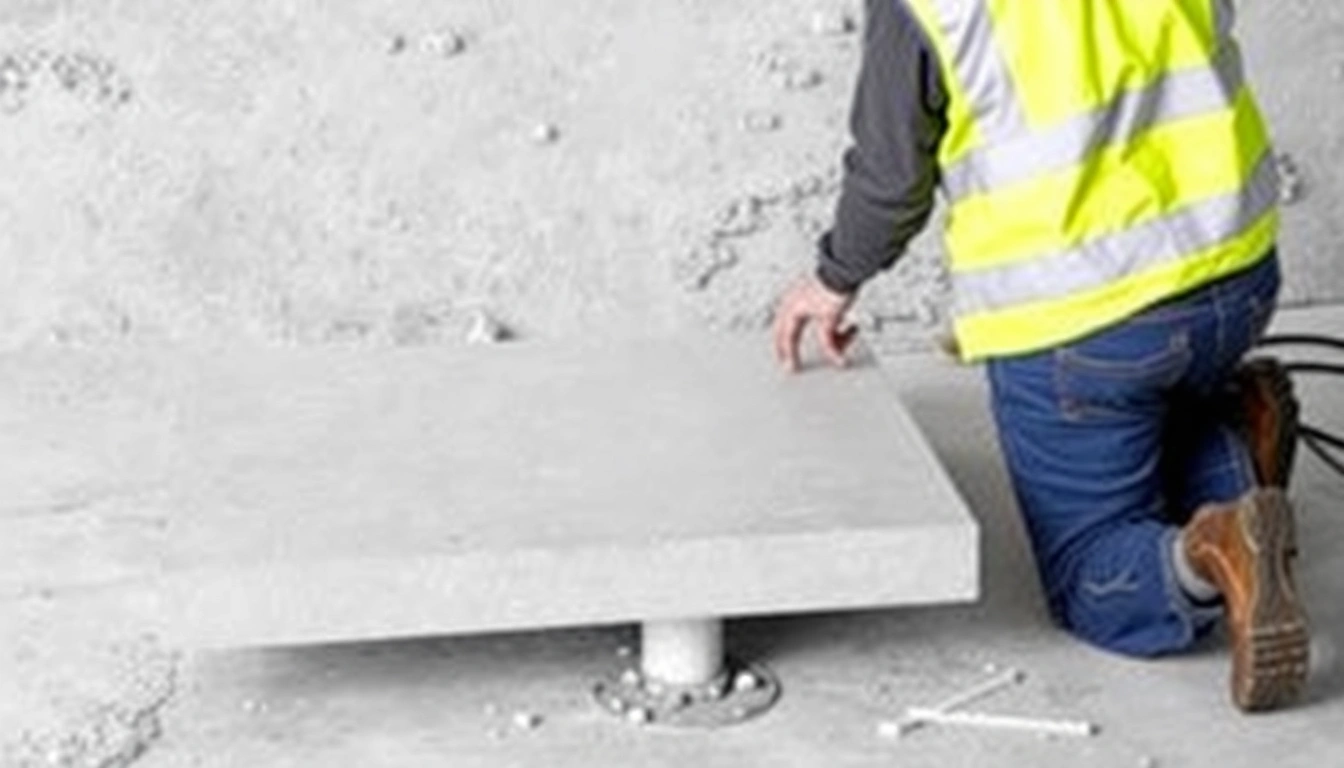
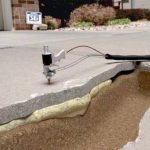
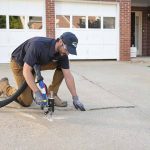
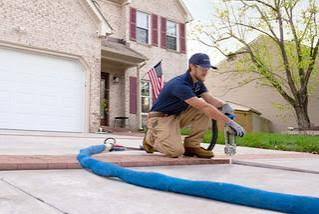
Concrete slab lifting in New York typically lands in a broad range because the fix is often priced per slab, per panel, or per square foot, not as one universal fee. For a small residential section, the total can be a few hundred dollars; for a larger driveway, garage floor, or commercial apron, it can run into several thousand.
Here is the kind of pricing structure I would expect to see on a real New York quote:
| Slab lifting service | Typical pricing structure in New York | What usually pushes it up |
|---|---|---|
| Small sidewalk or walkway panel | About $300 to $900 for a small job | Tight access, trip-hazard grinding, permit work in NYC |
| Driveway slab section | About $600 to $2,500+ depending on size | Large settled areas, multiple panels, void filling |
| Garage floor section | About $800 to $3,000+ | Interior access limits, heavier equipment, drainage issues |
| Patio or rear slab | About $500 to $2,000+ | Poor access through a narrow side yard, root damage |
| Commercial or large flatwork | Often quoted per square foot or by project | Traffic control, work-hour limits, larger voids |
Those ranges are not a promise, and they are not a substitute for a site visit. In New York, I would treat any quote that is dramatically below the local norm with caution, because cheap slab lifting often skips one of the expensive but necessary parts: void stabilization, proper cleanup, or a plan for the underlying cause.
The main cost drivers are usually these:
- Access: A backyard in Queens, a tight brownstone side passage in Brooklyn, or a steep slope in Westchester can change equipment choice and labor time.
- Slab size and thickness: A single 4-by-4-foot sidewalk panel costs less than a long driveway run.
- How far the slab settled: A 1/2-inch correction is simpler than a section that has dropped 2 or 3 inches.
- Underlying voids: If the fill washed out, the contractor may need to stabilize the base before lifting.
- Cracking and breakage: A slab that is already fractured may need repair or replacement instead of lifting.
- Location: New York City work often costs more because of permits, labor rules, parking, and access constraints.
- Method: Polyurethane foam injection and mudjacking are not priced the same, and they are not right for every slab.
If you are calling around in New York City, Nassau County, Suffolk County, Yonkers, White Plains, Albany, or New Jersey-border towns that still get New York weather patterns, ask for a written estimate that separates lifting, void fill, crack repair, and cleanup. That tells you whether the price is real or padded.
Why New York’s soil and weather change the price
New York’s freeze-thaw cycles, variable fill soil, and drainage problems make slab lifting more than a cosmetic fix. A slab that settled in January on Long Island may not behave the same way as one that dropped after a wet spring in the Hudson Valley or after repeated road salt and runoff in the five boroughs.
The biggest local factors are:
- Freeze-thaw movement: Upstate and downstate both see winter movement, but colder areas and shaded slabs are more exposed to frost heave and re-settlement.
- Poor drainage: Heavy rain, clogged leaders, and yard grading issues can wash out base material under sidewalks, stoops, and driveways.
- Urban fill and mixed soils: In older parts of Brooklyn, Queens, the Bronx, and parts of Manhattan, the subgrade may include disturbed fill, old utility work, or patchwork backfill. That makes settlement less predictable.
- Clay and silty soils: In parts of the Hudson Valley and Long Island, soil movement and water retention can make voids and soft spots worse.
- Road salt and de-icing: Salt does not cause settlement by itself, but it speeds surface wear and can make older slabs look worse than the base actually is.
This is why a good contractor does not just “jack it up and go.” If the base is still wet, eroded, or weak, lifting the slab without addressing the support can buy you only a short reprieve. I would rather see a job that includes drainage correction or a clear warning that lifting is a temporary fix than a cheap quote that ignores the cause.
This part matters most in places like Staten Island, eastern Long Island, and the lower Hudson Valley, where drainage and grade often drive the failure. It also matters in cities where sidewalk trip hazards are enforced more aggressively, because a slab that keeps moving can become a recurring liability.
For local code and permit questions, the best official starting points are your city or town public works office and, in New York City, the NYC Department of Transportation for sidewalk-related rules. For contractor legitimacy in New York, the New York State Department of State is the place to verify whether a business registration makes sense for the work type.
How much does concrete slab lifting cost in NYC, Long Island, and upstate?
Concrete slab lifting in New York City is usually the priciest, while smaller towns upstate and in parts of Long Island often come in lower, though not always. I would expect Manhattan and parts of Brooklyn or Queens to cost more than a similar repair in Albany, Syracuse, or the Southern Tier, mainly because of access, labor time, parking, and permit friction.
A practical way to think about it:
- New York City: Highest labor and logistics costs. Sidewalks, stoops, and tight access often raise the price. Jobs may also need extra coordination if the repair is near a public way.
- Long Island: Prices are often mid-to-high, especially in Nassau and denser parts of Suffolk where access is tight and properties are built close together.
- Hudson Valley: Often somewhere in the middle, but steep grades, older homes, and drainage work can add cost.
- Upstate New York: Sometimes lower labor cost, but long travel distance, winter scheduling, and frost-related damage can offset that.
If you live in places like Yonkers, New Rochelle, Mount Vernon, White Plains, Hempstead, Hempstead-adjacent suburbs, Patchogue, Islip, Kingston, Poughkeepsie, or Albany suburbs, slab lifting contractors often cover those areas as part of a wider service radius. Travel and minimum job charges still matter, especially if the repair is small.
The method also affects the bill:
- Mudjacking: Usually cheaper up front, especially for larger slabs, but the material is heavier and may not suit every situation.
- Polyurethane foam lifting: Often costs more, but it is lighter, cures quickly, and can be better when weight on soft soil is a concern.
- Replacement instead of lifting: If the concrete is badly broken, replacement can be the smarter spend even if it costs more today.
I would not choose the cheapest quote in New York if it ignores method choice. A bargain price on a slab that already has voids under it can turn into a repeat repair within a season or two.
How long does slab lifting take, and when can you use the area again?
Most concrete slab lifting jobs in New York take a few hours to a full day, and many repaired areas can be walked on the same day or used the next day depending on the method. A small sidewalk section can be surprisingly fast; a driveway with several panels, void stabilization, or permit constraints can take much longer.
Typical timing looks like this:
- Small residential lift: Often 1 to 3 hours on site
- Larger driveway or patio work: Often half a day to a full day
- More complex jobs: 1 to 2 days if access, prep, or matching adjacent grades takes time
The material matters. Polyurethane foam systems can be usable much sooner than heavier cementitious methods, but the contractor should tell you the exact cure or return-to-service time for the product they are using. I would insist on a clear answer for the “how soon can I park here?” question before agreeing to the job, especially for a garage apron or front driveway in Westchester, Nassau, or a dense Brooklyn block where losing parking space is a real hassle.
Season matters too. In New York, spring through fall is often the easiest time to schedule slab lifting because the ground is less frozen and the contractor can inspect drainage better. Winter work is not impossible, but frozen subgrade, snow cover, and short daylight can complicate the job. If a contractor in Buffalo, Rochester, or the Capital Region says they can lift slabs in January, that may be true, but I would ask what they do differently when frost and snow are involved.
If the job requires municipal sidewalk coordination, a permit, or notice to neighbors, allow extra time. In New York City especially, the calendar can stretch from “booked this week” to “scheduled after paperwork clears.”
How to vet a concrete slab lifting contractor in New York
A concrete slab lifting contractor in New York should be able to explain the cause of settlement, the lifting method, and the expected result in plain language before I would hire them. If they cannot, that is a bad sign.
Here is what I would ask on the first call:
- Do you lift with polyurethane foam, mudjacking, or another method?
- Will you fill voids before lifting, or just raise the slab?
- Do you handle cracked slabs, or only intact ones?
- Is the estimate based on square footage, number of panels, or a minimum charge?
- How long before I can walk or drive on it?
- Do you work in my town or borough regularly?
In New York, I would also ask about permits if the slab touches public sidewalk, curb, or another municipal area. A job on private property may not need the same paperwork as a sidewalk trip-hazard correction in front of a home in the Bronx or Queens. The rules differ by municipality, so a contractor should not bluff through this part.
I would be cautious if the quote says only “raise slab” with no mention of the base, the edge condition, or what happens if the slab cracks during lifting. Also watch for a contractor who promises that lifting will solve water pooling or stop all future settlement. It may help, but it is not magic. If drainage is the real problem, the slab can move again.
New York homeowners in Brooklyn, Queens, Staten Island, Nassau County, Suffolk County, and nearby towns such as Yonkers, New Rochelle, White Plains, and Hempstead should expect some travel radius limits. A contractor who says they serve “all of New York” may be fine, but I would still ask whether your job size clears their minimum service call.
Red flags: quotes that should worry you
A concrete slab lifting quote in New York should worry me if it is vague, unusually low, or refuses to say what happens under the slab. That is where bad repairs start.
Watch for these problems:
- No site visit for a larger job: A contractor who prices a complex driveway or stoop from one photo may miss voids or access issues.
- No mention of drainage or base condition: Settlement is usually a symptom, not a standalone problem.
- A single flat price for every slab: A 20-square-foot walkway and a 200-square-foot driveway are not the same job.
- Pressure to choose immediate replacement or immediate lifting without explanation: Good contractors explain trade-offs.
- Promises to fix all cracks without replacement: Some slabs are simply too damaged.
- No clear return-to-use time: Especially important for driveways, garage floors, and commercial entrances.
A bad lifting job often shows itself in 3 ways within the first 6 to 12 months: the slab settles again, the edges stay uneven, or the crack opens wider because the slab was lifted without enough support underneath. Cosmetic success is not the same as structural success.
For New York properties, I would also be wary of anyone who downplays frost heave, poor drainage, or old fill. Those are not minor details here. They are the reason the slab moved in the first place.
If the area is a repeated problem, I may choose replacement over lifting. That is not the cheap answer, but for severely broken concrete it is the honest one.
When is slab lifting the right fix, and when is it not?
Slab lifting is the right fix when the concrete is still structurally sound enough to save and the main problem is settlement, not destruction. It is not the right fix when the slab is badly cracked, crumbling, or missing too much support.
I would usually consider lifting when:
- The slab has dropped 1/2 inch to a few inches
- The panel is mostly intact
- The base has voids or washout, but the concrete itself is salvageable
- You want a faster, less disruptive repair than full replacement
I would avoid lifting when:
- The slab is broken into multiple pieces
- Rebar is badly exposed or the panel is spalled heavily
- Drainage or grading is so wrong that the same area will keep washing out
- The slab is at the end of its life and replacement makes more sense
That judgment is especially important in older New York neighborhoods with patchwork utility cuts, legacy fill, and repeated winter movement. A front walk in the Bronx, a stoop landing in Brooklyn, or a garage apron in Long Island may look like a simple settling issue, but the real fix can be underneath the slab and outside the slab at the same time.
If you are trying to keep a trip hazard from getting worse, lifting can be a smart move. If you are trying to salvage a