Last updated: September 10, 2026
Key Takeaways
- A good fix in New York often starts 3 to 5 feet away from the slab, not just on top of it.
- How many holes will be drilled, and how visible will they be after repair?
- Ask these directly: Do you serve my town or village, and how far do you travel?
- How do I know if the problem is drainage instead of the slab itself?
Start with the cause. Then the method. Then the result.
When you are learning how to choose concrete slab leveling contractor ny, those three questions matter more than a polished sales pitch. Freeze-thaw cycles, drainage, and soil movement can matter just as much as the concrete itself in New York. A decent contractor should spell out the repair in plain English, hand over a written scope, and say whether leveling or replacement makes more sense.
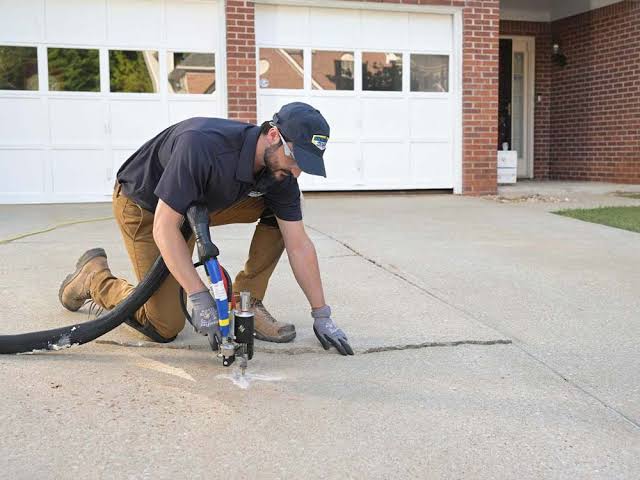
Choose the person who can explain why the slab moved, which method fits your floor, and what the job will look like after New York’s freeze-thaw seasons hit it again. For a driveway in Rochester, a garage in Long Island, or a warehouse floor in the Hudson Valley, that usually means someone who can talk about slabjacking, polyurethane foam injection, drainage, and soil movement without getting foggy. Straight talk. Rare, but worth it.
What concrete slab leveling should cost in New York
Concrete slab leveling in New York usually costs less than replacement, but the final price depends on how much slab has settled, how accessible the area is, and whether the contractor is using mudjacking or polyurethane foam. A small patio in Albany will not price like a long driveway in Staten Island, and a job near a tight brownstone access lane in Brooklyn can cost more than the same square footage in Suffolk County because setup takes longer.
According to the U.S. Department of Energy, air leakage and moisture control can affect repair planning, so a contractor should factor in access and site conditions before quoting. That is the kind of boring detail that saves money later. Here is a realistic way to think about pricing, without pretending every contractor quotes the same way; if you are not sure how to compare bids, consult a local concrete professional and check manufacturer guidance before you sign.
| Service type | Typical use in NY | What changes the price |
|---|---|---|
| Small slab leveling | Sidewalk panels, stoops, steps, small patios | 1–3 slabs, access, edge thickness |
| Driveway section leveling | Garage aprons, sunken driveway bays | Number of sections, vehicle access, crack repair |
| Interior slab leveling | Basement floors, garage floors, warehouse pads | Finished flooring removal, moisture issues, interior protection |
| Polyurethane foam injection | Faster lift, smaller holes, lighter material | Material cost, lift precision, depth of voids |
| Mudjacking/slabjacking | Larger void filling, heavier lift, older concrete | Pump access, heavier mix, cleanup |
| Follow-up repair | Joint sealing, crack filling, patching | Surface damage, stain cleanup, finish level |
For New York homeowners, I would treat very low quotes with caution if they do not say whether cleanup, crack sealing, or warranty coverage is included. Cheap numbers can swell fast once the contractor adds “access difficulty,” “additional voids,” or “unexpected stabilization.” If a quote is missing the square footage, the lift method, or the number of panels to be raised, it is not a serious quote. For comparison, concrete repair guidance from the Portland Cement Association and the American Concrete Institute emphasizes that repair scope should match the cause of distress.
Who this is not for: if your slab is broken into multiple pieces, badly heaved by tree roots, or sinking because the base is failing over a wide area, leveling may be only a temporary fix. In that case, replacement or structural repair can be the better call.
How New York weather and ground conditions change the job
New York’s freeze-thaw cycles, clay-heavy soils in some suburbs, and older drainage patterns make slab settlement more common and make the contractor’s diagnosis more important. A contractor working in Buffalo, Syracuse, or the Capital Region has to think about frost heave and saturated subgrade differently than someone working in parts of Long Island, where drainage and fill quality often drive the problem. In the Hudson Valley, glacial soils and water movement can create voids under sidewalks, garage slabs, and pool decks.
So I would ask what caused the settlement before asking what it costs. If the answer jumps straight to a repair method without mentioning water, downspouts, gutter discharge, grading, or frost depth, that is a weak sign. A level slab can sink again if the cause is not addressed, and the New York State Department of Transportation and local public works departments routinely stress drainage control for durable pavement performance. No mystery there.
A good contractor in New York should be able to discuss at least one of these local factors:
- Freeze-thaw movement: Common across upstate NY and interior suburbs. Water under a slab expands when it freezes, then leaves voids as it thaws.
- Clay or fill soil: A frequent issue in older neighborhoods and around additions where the ground was not compacted well.
- Drainage runoff: Downspouts dumping near a driveway in Westchester, Nassau, or Queens can wash out the base.
- Road salt and surface wear: Not a leveling cause by itself, but it can weaken surface edges and joints on driveways and garage aprons.
- Basement moisture: Important for interior slab leveling in older homes from Yonkers to Rochester.
Near the coast, in a low-lying area, or on made ground, the contractor should say whether leveling alone is enough or whether drainage work should come first. A good fix in New York often starts 3 to 5 feet away from the slab, not just on top of it, because the surrounding grade can be the real cause.
How to vet a concrete slab leveling contractor in NY
The best contractor is usually the one who gives you a specific method, a clear scope, and a straight answer about what the repair will not solve. That matters more than a polished sales pitch. In New York, I would want three things before I signed anything: a site visit, a written scope, and a method explanation tied to the slab type.
When you are learning how to choose concrete slab leveling contractor ny, ask these questions:
-
What method will you use here, and why?
A serious answer will distinguish between mudjacking, polyurethane foam injection, and full replacement. If the contractor cannot explain why one fits your garage slab in Nassau County or your sidewalk in Rochester, keep looking. -
How many holes will be drilled, and how visible will they be after repair?
On a finished interior slab or decorative patio, this matters. Smaller holes are often part of the case for foam, but the right choice still depends on the slab and the voids under it. -
Will you check for drainage or voids first?
In NY, especially after wet springs and winter thaws, that check matters. A contractor who ignores grading is telling you the job is only half thought through. -
What is included in the price?
Ask about cleanup, crack sealing, joint caulking, trip charges, and whether the quote includes returning to adjust a section if it settles after 24 to 48 hours. -
What is the expected cure time before use?
This varies by method. Some foam jobs can be usable the same day, while heavier slabjacking work may need a longer window before vehicle traffic. I would still want the contractor to give a specific time, not a shrug, and you should consult the contractor or product manufacturer before relying on any same-day estimate. -
What does your warranty cover, and what voids it?
If settlement comes back because of a broken drain pipe, poor grading, or a void beyond the filled area, a limited warranty may not cover it. That is not a dealbreaker, but it should be stated clearly.
Also ask for proof of insurance and, where relevant, ask whether the company handles local permit requirements for sidewalk or curb-related work. In many New York municipalities, sidewalk repairs and anything touching public right-of-way can trigger permit rules through the town, village, or city public works department. If a contractor acts like permits never matter, that is a red flag.
What a bad slab leveling job looks like
A bad job usually looks “fixed” for a week and then shows the same slope, a new crack, or a hump where the slab was pushed too hard. The failure is not always dramatic, but small changes can still create a trip hazard or drainage problem.
Watch for these signs after the work:
- The lifted slab has a sharp ridge at the seam.
- Water still runs toward the house after rain.
- Cracks widen within a few months.
- The slab sounds hollow in a larger area than before.
- The repair area looks patched but not stabilized.
- The contractor never explained why the slab settled in the first place.
In New York, a bad repair can fail faster if it was done in cold, wet conditions or on a slab with active drainage problems. If a contractor wants to inject material into a saturated, obviously unstable base without discussing season or moisture, I would be skeptical. For exterior concrete, late spring through early fall is usually a safer window than a freezing shoulder season, because the contractor can better judge soil conditions and avoid cold-related surprises. Interior basement work can happen year-round, but moisture issues still matter.
A repair is also suspect if the contractor promises perfection on older concrete. Many slabs in places like Buffalo, the Bronx, or older sections of Albany already have age-related cracks, patching, or mixed base materials. Leveling can restore function. It cannot erase decades of movement.
How long the job should take
Most slab leveling jobs in New York take part of a day to 1 day, but larger driveways, multi-panel sidewalks, or interior commercial slabs can take longer. A small stoop or a single patio section may be completed in a few hours, while a longer driveway in Rockland County or a warehouse bay in Queens can take most of a day because setup, drilling, lifting, and cleanup take time.
A contractor should be able to tell you three time frames:
- Arrival and setup: often 30 minutes to 2 hours, depending on access and prep
- Actual lift work: sometimes 1 to 4 hours for smaller residential jobs
- Safe return to use: same day for some foam jobs, longer for heavier or more involved work
This is one area where I would not accept a vague “you can use it soon.” If the repair affects a garage, front walk, or business entrance, you need to know whether you can walk on it in 2 hours, drive on it by evening, or wait until the next day. The answer changes with method, weather, and slab thickness. Timing gets slippery fast.
New York weather can also slow the job itself. A cold March morning in Syracuse is not the same as a dry September afternoon in Long Island. If the contractor schedules your exterior work during wet conditions, I would ask how they plan to handle soil softness and whether the lift will hold.
Questions to ask before you book
You should ask enough to learn whether the contractor understands your slab, your soil, and your neighborhood’s access problems. In a city like Yonkers or a dense area of Brooklyn, logistics matter almost as much as technique. Narrow driveways, limited parking, and permit-sensitive sidewalks can all change the job.
Ask these directly:
-
Do you serve my town or village, and how far do you travel?
Many contractors cover nearby areas such as White Plains, New Rochelle, Mount Vernon, Hempstead, Hicksville, or Schenectady, but you want a clear service-area answer, not a guess. -
Can you repair both interior and exterior slabs?
Basement slabs, garage floors, sidewalks, and patios are not the same job. -
Do you provide free estimates?
If the estimate is free, ask whether it is a visual estimate or a site visit with measurements. -
Can you do emergency or same-day leveling?
“Emergency” usually means a trip hazard, a slab interfering with a garage door, or a business entrance that cannot stay blocked. Same-day service is not always possible, but it is worth asking during busy thaw season. -
What happens if the slab moves again?
You want the answer before the work starts, not after. -
Will you coordinate with a permit office if one is needed?
For sidewalk work in many NY municipalities, the answer should be yes or at least “I will tell you if it applies.”
I would favor the contractor who gives direct answers without turning every question into a sales script. Simple. Clean. Useful.
Local sources and standards worth checking
You should cross-check any contractor’s claims against real sources, not just their brochure. For New York work, I would look at the New York State Department of State for licensing-related guidance, the local town or city public works department for sidewalk or right-of-way permits, and the American Concrete Institute for general concrete repair terminology and standards. The Portland Cement Association is also useful for understanding concrete behavior, settlement, and repair methods.
Two solid starting points are:
- New York State Department of State: https://dos.ny.gov/
- American Concrete Institute: https://www.concrete.org/
I am not saying those pages answer every local question, but they are better anchors than a sales page. If a contractor’s explanation contradicts basic concrete repair terminology or ignores municipal permit rules, that is a signal to keep shopping. The U.S. Environmental Protection Agency also provides general guidance on drainage and runoff control at https://www.epa.gov/soakuptherain.
FAQ: concrete slab leveling in New York
Can I get same-day slab leveling in NY?
Sometimes, yes, especially for smaller residential jobs or urgent trip hazards, but same-day scheduling depends on the contractor’s route, weather, and whether the slab is safe to lift that day.
Is a free estimate enough to choose a contractor?
No. A free estimate is a start, not a decision. I would still want the method, the scope, and the warranty terms in writing.
Should I repair or replace my slab?
Repair makes sense when the slab is basically intact and the problem is settlement or voids. Replacement is often better when the concrete is badly broken, heaved, or structurally compromised.
How do I know if the problem is drainage instead of the slab itself?
If the same area gets wet after every storm, if downspouts empty nearby, or if the ground stays soft, drainage is likely part of the cause. In New York, that is common after snowmelt and spring rain. The EPA’s stormwater guidance and local drainage rules can help you confirm whether runoff is contributing.
Do you serve nearby suburbs and towns?
Most New York contractors cover surrounding areas such as Queens and Nassau County, Westchester and the lower Hudson Valley, or Rochester and nearby Monroe County towns, but you should confirm the exact service radius before booking.