
What to Fix Before Slab Lifting, and What Can Wait

Last updated: November 20, 2026
Quick Answer: Which Repairs Should Happen Before Slab Lifting and Which Can Wait Until After? For Which Repairs Should Happen Before Slab Lifting and Which Can Wait Until After?, the usual order is utility checks first, then drainage and support fixes, then slab lifting, and only after that crack sealing and surface patching. In many jobs, that order keeps you from paying twice for the same repair.
Key Takeaways
- Fix the problems that can block the lift first: broken utilities, washout, and badly failed joints.
- Leave most surface cosmetics for after the slab is back in place and stable.
- Crack sealant is usually a timing issue, not a “do it now” issue.
- Control joints often need cleaning, saw work, or sealant after the lift, not before it.
- The wrong order can waste money, hide movement, or make patching fail fast.
Which repairs belong before slab lifting?
Anything that can change slab movement, hide a utility line, or make the lifting setup unsafe belongs in the pre-lift phase. That usually means utility line checks, drainage fixes, loose soil cleanup, and only the cracks or joints that are clearly tied to slab movement rather than surface wear.
A sunken concrete slab with a water line possibly running under the low side changes the picture fast. The right move is to sort the buried risks first; then the lifting work can reset the slab without surprises.
Common pre-lift jobs include:
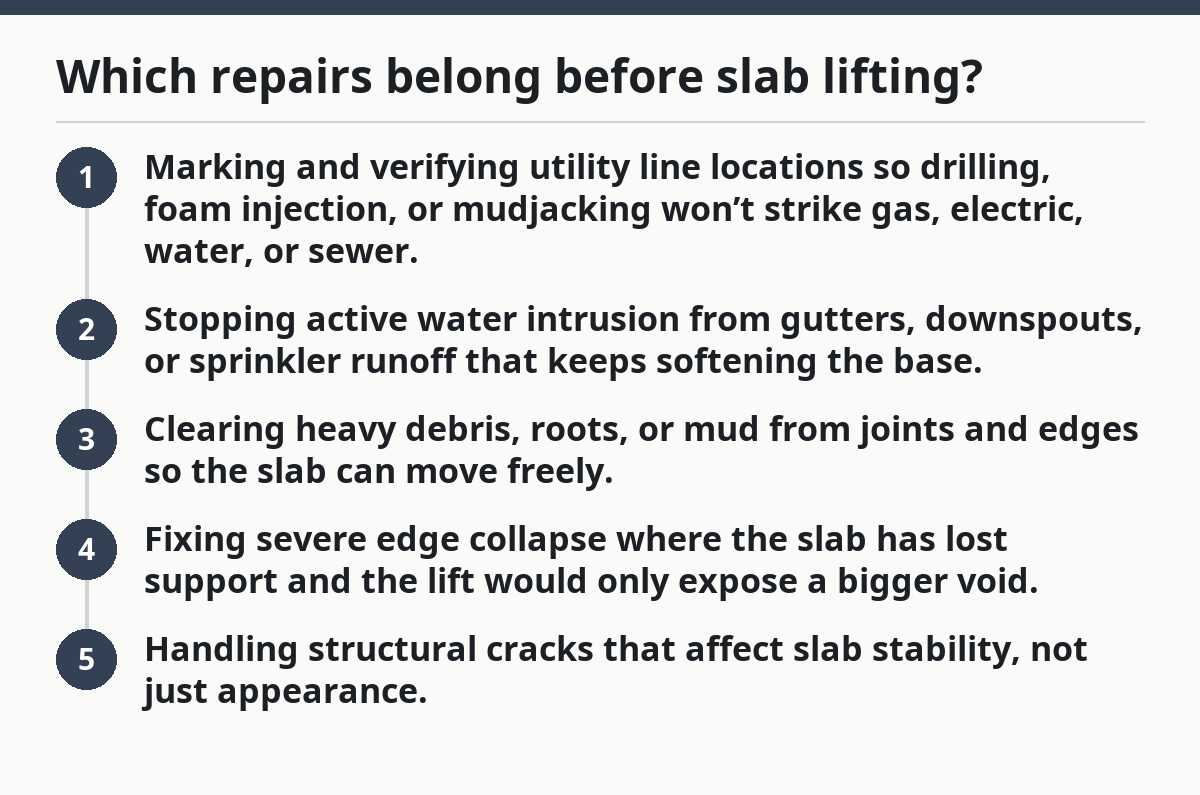
- Marking and verifying utility line locations so drilling, foam injection, or mudjacking won’t strike gas, electric, water, or sewer.
- Stopping active water intrusion from gutters, downspouts, or sprinkler runoff that keeps softening the base.
- Clearing heavy debris, roots, or mud from joints and edges so the slab can move freely.
- Fixing severe edge collapse where the slab has lost support and the lift would only expose a bigger void.
- Handling structural cracks that affect slab stability, not just appearance.
The utility line check comes first because a lift crew can’t work blind. Even a patio that looks clean can hide a shallow conduit or irrigation line. In many areas, the local utility locate process is the normal first step before any drilling. According to the Common Ground Alliance, damaged underground utility lines still happen every year in the U.S., which is why 811 calls are treated as a standard safety step. No glamour there. It simply keeps the job from turning into a repair with a second repair behind it.
What about crack sealant? Honestly, that depends on the crack. If it is active, wide, or tied to settlement, sealing it before the lift is often a short-lived fix. The slab may move again, and the sealant can split like thin ice. For that reason, many crack repairs are better after the slab is back at final grade and the movement has stopped. A lifted slab can shift a little as the material cures and the base settles, so check the product timing with the contractor and, if needed, a structural or slab repair professional before sealing.
What should wait until after the lift?
Most finishing repairs should wait until after the slab is level and stable. That includes cosmetic crack filler, joint sealant, patching spalls, resurfacing edges, and color-matching work that would be ruined by slab movement during the lift.
The slab is back near grade. The low spot is gone. Now you can finally see the real gaps that were hidden by the tilt. That is the moment for finish work, not before.
Jobs that usually wait:
- Hairline crack fill where the crack is not opening or shifting
- Decorative patching on patios, porches, and walks
- Surface grinding at edges after the lift leaves a lip
- Caulking around fixed objects once the slab sits in its new position
- Joint sealant after the slab stops moving and the cuts are clean
Why wait? Because a lifted slab can shift a little as the material cures and the base settles. Seal a joint too early, and that seal can tear or squeeze out. Patch a corner before the slab is fully set, and the patch can chip when the slab settles the last fraction of an inch. In a typical residential job, that settling window can be brief, but it still matters.
This is where a lot of generic advice goes sideways. It says “repair the cracks first” without asking what kind of crack it is. A surface crack on a garage floor and a settlement crack through a control joint are not the same job. One may be finish work; the other may be a clue that the slab is still moving. Different fix. Different timing.
If the slab has a visible lip or offset, the lift should come first because the offset tells you the base has already moved. Patching that offset before lifting just traps a bad shape under fresh material, and that patch is likely to fail at the edge.
How repair sequence planning usually works on site
Repair sequence planning means deciding the order before anyone brings drilling gear, grout, foam, or a jack system to the site. A practical sequence is inspect, locate utilities, fix drainage and support issues, lift the slab, then seal joints and finish surfaces.
You may be trying to keep one sidewalk panel usable while the rest of the property stays open. A clear sequence keeps the work tight, and tight sequencing keeps labor from being wasted on the wrong layer of the problem.
- Inspect the slab for settled corners, open cracks, joint failure, and signs of washout.
- Mark utility lines and identify anything within the lift zone, including water, sewer, gas, and electrical lines.
- Fix drainage problems that are actively softening the base, such as downspout discharge within a few feet of the slab.
- Lift the slab only after the support issue is understood, so the crew is not raising a panel over a moving base.
- Wait for the slab to settle into its new position, then seal cracks, fill joints, and patch surface damage.
That order is not about fussiness. It keeps the repair stack from fighting itself. If a slab is lifted before runoff is corrected, the same water can wash out the base again. If a crack is sealed before lift day, the sealant can be torn when the slab shifts back into place.
The sequence also makes inspection easier. Once the slab is level, the crew can see which cracks were just cosmetic and which ones need follow-up attention. That helps you spend the post-lift budget on visible problems instead of guessing at them. Clean sightlines help; hidden issues do not.
A good contractor will also tell you when a repair should be left alone. A hairline crack that is already tight may not need fresh filler right away. A slab with repeated movement may need drainage work before any finish patch will last. That judgment belongs in the sequence, not as an extra.
Which cracks should be fixed before lifting, and which should wait?
Cracks tied to instability, displacement, or drainage problems should be addressed before lifting, while tight cosmetic cracks usually wait until after the slab is level. The difference is whether the crack is a symptom of movement or just a surface flaw.
A 1/4-inch crack across a driveway panel, with one side lower than the other, is telling you the slab has already shifted. A simple cosmetic patch before lifting will not solve the cause.
- Before lifting: cracks with a vertical offset, cracks that line up with a void, cracks near washed-out edges, cracks that suggest the slab has lost support, and any break that affects stability.
- After lifting: hairline cracks, shrinkage cracks, small surface chips, and non-structural gaps that only need a neat finish.
Joint cracks need special care. If a control joint is open but stable, it may be cleaned and sealed after the slab is back in place. If the joint has collapsed or carries debris that is keeping the slab from moving, it may need attention before the lift so the slab can move freely.
Crack sealant is best treated as a finish product unless the crack itself is causing a safety or support issue. On many jobs, sealing too early wastes material because the slab movement undoes the seal. On the other hand, ignoring an active crack with washout can turn a lifting job into a repeat call.
A simple rule helps: if the crack changes the lift, fix the cause first. If the crack just changes how the slab looks, wait until after. That keeps the repair sequence clean and keeps the final patch from sitting on top of a moving target.
What happens with control joints and joint sealing?
Control joints are usually cleaned, checked, and sealed after slab lifting, not before, unless the joint itself is blocking movement or hiding damage. The joint’s job is to control where the slab cracks, so sealing too early can be pointless if the slab still needs to move.
A driveway with saw-cut control joints full of dirt and old filler needs a careful look. If the slab is still settling, those joints are not finished features yet; they are part of the movement path.
Here’s how the timing usually breaks down:
- Before lift: remove debris that blocks movement, expose the joint if it is buried under soil or old patch, and fix any drainage problem feeding the joint.
- After lift: clean the joint edges, cut back loose filler, and apply fresh joint sealant once the slab is stable.
- Later still: recheck the joint if the area sees freeze-thaw cycles, heavy traffic, or recurring water intrusion.
In colder climates, joint sealant matters more because water in the joint can freeze, expand, and widen the gap. In warm, wet areas, the bigger problem may be washout and soft base material. The timing still stays the same: movement first, seal second.
A bad joint repair looks neat for a week and ugly after the first season. The sealant rips at the edge, dirt packs in, or the joint opens again because the slab was still moving when the work was done. That is money spent in the wrong order.
If the joint is badly broken, the lift crew may need to trim or clean it as part of the project. That does not make it a finish repair. It makes it a prep step so the slab can be raised without binding.
How do utility lines change the repair order?
Utility lines change the order because they must be located and protected before any drilling, injection, or lifting starts. A buried line can be damaged even when the slab itself looks simple, and that risk sits above almost every cosmetic repair.
You may want the walkway lifted, but an irrigation line, gas service, or electrical conduit may run under the slab edge. In that case, the first repair decision is not about cracks. It is about what lies under the concrete.
This is the practical sequence:
- Get the utility locate done before the lift date.
- Flag visible service points, cleanouts, and meter paths.
- Fix any accessible leak or runoff issue that could soften the base near the line.
- Keep finish patching off the schedule until the crew knows where the line is and how the slab can be drilled safely.
This is also where some projects slow down. If a utility line crosses the lift zone, the crew may have to change the injection pattern or avoid certain drill points. That can affect timing and cost. It does not mean the project is off the table, but it does mean the repair sequence has to bend around the line.
If you are comparing contractors, ask how they handle line locations and what they do when a slab sits close to known utilities. A vague answer is a warning sign. A clear answer usually includes coordination with utility marking and a plan for drilling away from the risk zone.
The utility locator for your area is often the most reliable place to start, and the contractor’s own lift plan should match it. For broader process reading, the repair sequence belongs with the rest of the project steps in the hub on repair methods and process.
What does a bad repair order look like?
A bad repair order usually means the slab gets patched before it is supported, sealed before it stops moving, or finished before the drainage problem is solved. The result is wasted labor, repeated cracking, and a cleaner-looking slab that fails in the same place.
A walkway can look fixed for a month, then the same corner drops again after rain. That is the classic sign that the work was done in the wrong sequence, not that the patch was “bad” in isolation.
Common failure signs include:
- Fresh crack sealant split open at the same line
- Joint filler that pulls away from one edge
- A patched surface that flakes where the slab shifted
- A lifted panel that sinks again after the first heavy rain
- Edge repairs that fail because runoff still hits the same spot
The cost of bad sequencing is not just money. It also hides the real source of the problem. If a cosmetic patch goes in first, the lift crew may have to remove it to do the structural work. If drainage gets ignored, the same soft base can ruin the repaired area all over again.
A good order does the opposite. It lets the support work happen first, then the finish work, then the sealants. That is the sequence that gives the repair a chance to last through one full wet season, one freeze cycle, or one round of heavy use.
Should cracks be fixed before lifting?
Usually no, unless the crack shows active movement, a vertical offset, or washout. Hairline cracks and cosmetic gaps are often better after the lift because the slab may move a little during the work and break the patch.
If the crack is structural, it belongs in the pre-lift plan. If it is only a finish issue, wait until the slab is stable and level. That order saves material and keeps the repair from splitting again.
Can I do finishing work after the lift?
Yes, and most finish work should happen after the lift. Crack sealant, joint sealing, patching, and surface touch-ups usually last longer when the slab has already been reset and is no longer moving.
Still, the slab should be given time to settle into its final position before sealing. If the finish work goes in too early, it can tear, lift, or trap a bad edge.
What should be coordinated first?
Utility line marking should be coordinated first, followed by drainage fixes that affect the base. Those two items can change the lift plan and the risk on site.
After that, the repair sequence can move to support correction, lifting, and finish sealing. If a control joint or crack is hiding damage, that gets folded into the same plan so the crew is not working blind on lift day.
Drafted with AI; not yet reviewed by a person.