Last updated: November 21, 2026
Quick Answer: If your concrete slab is sinking, the cause is usually water moving the soil, poor fill, or freeze-thaw damage; the fix depends on whether the concrete is still intact or the ground below has washed out. This article answers the topic Why Is My Concrete Slab Sinking? Common Causes in New York Homes: related questions for homeowners dealing with a sinking slab. In many homes, the slab itself is not the real problem. The soil under it has lost support, and the slab has started to drop into the void.
Key takeaways
- A slab sinks when the ground under it moves, erodes, shrinks, or freezes and thaws.
- In New York, heavy rain, clay-rich fill, snowmelt, poor drainage, and seasonal freeze-thaw cycles make slab settling more likely.
- A small crack is not the same as a sinking slab; uneven floors, gaps, and a step-down at one edge point to loss of support below.
- The fix ranges from drainage correction to slab lifting or replacement, depending on how far the slab has moved and why.
- If doors bind, cracks widen, or the slope keeps changing, the problem is past cosmetic repair and needs a structural review.
What causes a slab to sink in New York homes?
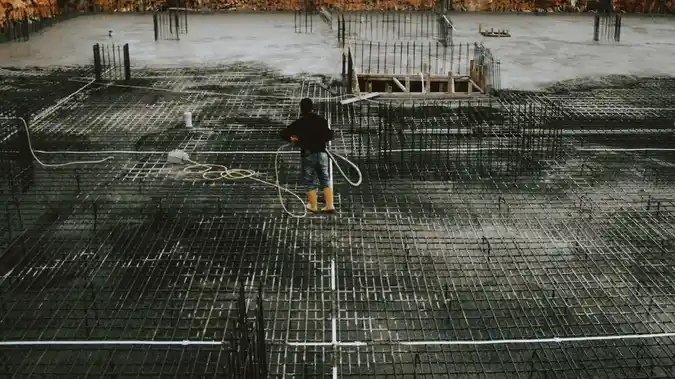
A slab sinks when the soil below it stops carrying the load, and in New York the most common reason is water. Rain, snowmelt, and bad grading can soften soil, wash out fine particles, or leave the fill loose enough to compact later. The New York State Department of Environmental Conservation explains drainage and stormwater as major parts of site stability, and the U.S. Environmental Protection Agency has basic guidance on how runoff can erode soil and carry sediment away. See NYSDEC’s stormwater guidance and the EPA’s runoff and erosion resources.
The most common causes are these:
- Poorly compacted fill under the slab. If the builder placed soil in layers that were not compacted well, the ground can settle years later. This is common around additions, garage slabs, porches, and basement floors near older homes.
- Water from gutters, downspouts, or grading problems. When downspouts dump water beside the slab, the soil can soften and sink. The problem gets worse if the yard slopes toward the house.
- Freeze-thaw cycles. Water in the soil freezes, expands, then thaws and leaves gaps. New York winters make this worse, especially where drainage is already weak.
- Soil type. Clay-rich soils hold water and can swell and shrink. Sandy soils drain faster but can wash out if water runs through them too hard.
- Plumbing leaks under or near the slab. A slow leak can hollow out soil for months before the slab drops. This is one of the more expensive causes because the slab movement is only the symptom.
- Old voids, tree roots, or past excavation. A removed stump, an old trench, or roots that later decay can leave empty space under concrete.
If the slab is sinking near one edge only, water or a void at that edge is usually the first thing to suspect. If the whole slab seems to be dropping evenly, the issue may be broader settlement under the entire slab or in the structure around it. USGS guidance on soil and water movement can help explain how erosion and runoff change support over time.
How do I know it is sinking and not just cracked?
It is sinking when the slab is moving out of level, not just splitting on the surface. A crack can stay put for years, but a sinking slab usually shows a change in height from one side to the other.
Look for these signs:
- A lip or step where one section is lower than the other
- Doors that suddenly drag or do not latch
- Baseboards or trim pulling away
- Gaps where the slab meets a wall
- Water pooling in low spots that were once level
- Cracks that widen on one side more than the other
A simple level check can help. Place a long straight board, level, or laser line across the slab and look for a dip. If the surface has a consistent slope that was always there, that can be different from a new dip that appeared over months. For a home owner, the key question is not whether concrete has a crack. It is whether the ground below is still supporting it.
The American Concrete Institute has repair guidance and terminology used by contractors and engineers, including distinction between cracking, settlement, and structural movement. That matters because a filler or patch can hide a crack while the slab keeps dropping.
What fixes a sinking slab, and which one fits which problem?
The right fix is the one that matches the cause, and the wrong fix wastes money fast. If the soil is still stable and the slab only settled a little, lifting may make sense. If the soil is still getting washed out, lifting alone is a short-term patch. If the slab is broken, hollowed out, or badly out of level, replacement may be the safer choice.
| Criteria | Slab lifting / leveling | Drainage or soil correction | Winner for this condition |
|---|---|---|---|
| Main goal | Restore height and slope | Stop the soil from moving again | Drainage or soil correction if water is the cause |
| Best for | Localized settlement with intact concrete | Downspout, grading, or runoff problems | Drainage or soil correction |
| Strength | Faster fix for a single low area | Addresses the root cause | Depends on the cause |
| Weakness | Can fail if the ground keeps eroding | Does not raise the slab by itself | None alone if both problems exist |
| Cost driver | Size of the slab and access | How much regrading or drainage work is needed | Case-specific |
| Time impact | Usually less disruptive than replacement | Can take longer if digging is needed | Slab lifting for speed |
| Good sign | Crack pattern is stable and slab is sound | Water keeps collecting near the slab | Drainage or soil correction |
| Bad sign | Multiple voids or crumbling edges | Water source cannot be controlled | Neither alone |
| Long-term result | Good only if soil stays supported | Better for recurring water issues | Drainage or soil correction |
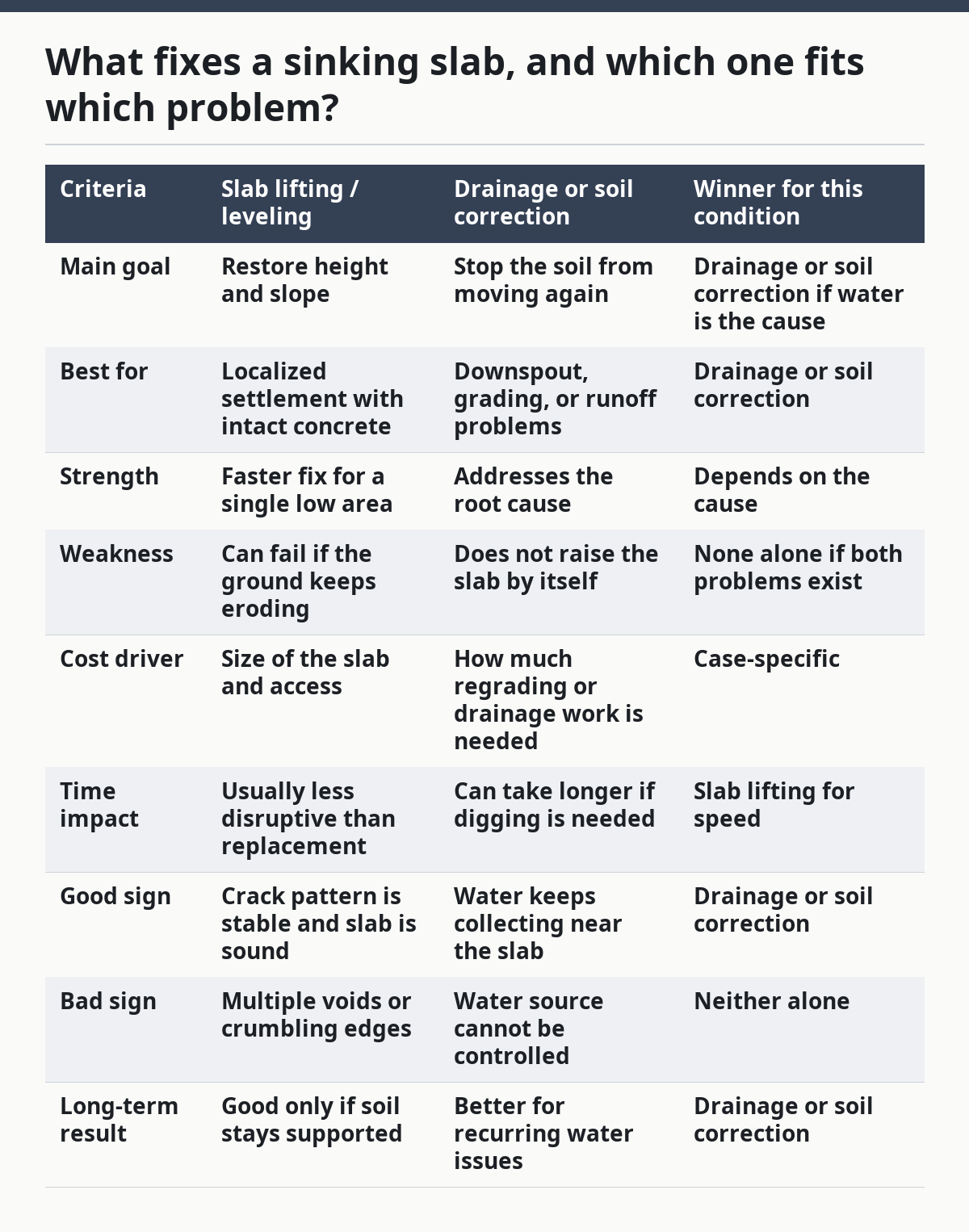
Slab lifting works best when the concrete is still in one piece and the ground below can be stabilized. The drawback is simple: if the soil keeps moving, the slab can sink again. Drainage correction works best when runoff is the real cause, but it does not fix a slab that is already badly out of plane. Replacement makes sense when the slab is too damaged to salvage or the base under it is too compromised for a clean repair.
If the home is in an older New York neighborhood with repeated water issues, the fix often has to start outside the slab: gutters, downspouts, grading, and soil compaction all matter before any lifting work begins. For drainage details, see EPA stormwater basics and NYSDEC stormwater guidance.
Why is this more common in New York than people expect?
It is more common in New York because the weather and lot conditions are tough on shallow slabs. Winter freeze-thaw cycles, spring meltwater, heavy rain, tight property lines, and older utility runs all raise the chance that soil under a slab will move. Homes in coastal areas, river valleys, and older developed neighborhoods can have fill soil or patched ground that settles unevenly over time.
That does not mean every sinking slab is a regional issue. It means local conditions make the usual causes worse. A garage slab in upstate New York may fail because of frost movement. A basement slab in downstate housing may sink because water is trapped against the foundation. A walkout patio on a sloped lot may fail because runoff keeps pulling soil downhill.
The New York State Department of Environmental Conservation and the National Weather Service both publish material on stormwater, snowmelt, and freeze-thaw patterns that shape drainage risk. Those conditions do not create the same repair plan everywhere. A slab in a dry, flat lot and a slab beside a poorly graded hill need different fixes even if both are cracked.
When should I call a contractor instead of patching it myself?
You should call a contractor when the slab is still moving, when the dip is growing, or when water seems to be part of the problem. A surface patch is only reasonable for hairline cosmetic cracks that are not tied to settlement. If the slab has dropped enough that a door sticks, a wall gap appears, or water now runs toward the house, the job has crossed into structural territory.
A homeowner can handle some first steps:
- Extend downspouts away from the slab
- Check whether soil is sloping toward the house
- Look for leaking hose bibs or irrigation lines
- Note whether the dip changes after heavy rain or snowmelt
A contractor or structural specialist becomes the better call when:
- The slab is uneven by enough to catch a shoe or rolling object
- Cracks are wider on one side than the other
- The slab is beside a foundation wall, stair, or load-bearing point
- You suspect plumbing under the slab
- The problem has returned after a previous fix
The honest limit here is simple: a contractor can repair the slab, but if the source is still active, the fix may not last. That is why a good repair plan starts with the cause, not the crack. For more on structural evaluation, see ACI resources.
What should I ask before I hire someone to fix it?
You should ask how they will prove the cause before they repair the slab. A strong answer will mention drainage, soil support, crack pattern, slab thickness if known, and whether the fix is meant to stabilize the ground or only level the surface.
Ask these questions:
- What do you think caused the sinking, and why?
- Will the repair address drainage, soil voids, or just the slab height?
- If the slab is lifted, what keeps it from sinking again?
- What signs mean the slab needs replacement instead of leveling?
- How long will the work take, and what parts of the yard or floor will be disturbed?
A contractor who blames everything on “settling” without checking water flow is not giving you enough. In New York, that is a red flag because drainage and seasonal moisture are such common triggers. You want a fix that matches the site, not a generic promise.
The most useful documents are photos of the crack progression, notes on when the problem started, and a simple sketch showing where water goes after rain. Those details can separate a one-time settlement issue from an active drainage problem.
What is the likely fix in the most common New York cases?
The likely fix is usually a combination of drainage correction and slab repair, not just one or the other. If downspouts and grading are wrong, fix those first. If the slab is still structurally sound but low, lifting may be the next step. If the concrete is badly broken or the soil below has washed away, replacement may be the only durable answer.
Here is the clearest way to think about it:
- One low corner, stable crack pattern: lift and support the slab after checking drainage.
- Water near the foundation or patio edge: correct runoff first.
- Repeated sinking after past repairs: look for an active leak, void, or grading flaw.
- Large, uneven movement across a wide area: replacement or deeper structural work may be needed.
The wrong move is to cover the symptom and ignore the soil. Because the slab depends on the ground below it, the right move is to treat the ground as part of the structure, and to consult a qualified contractor or structural professional before choosing a repair. For a broader technical reference, see ACI.
Why is my concrete slab sinking after a rainy season?
Rain often exposes drainage problems that were already there. When soil stays wet long enough, it loses strength, washes out, or settles into small voids. If the slab moves after rain but seems better in dry weather, water is one of the strongest clues.
Can a sinking slab be repaired without replacing it?
Yes, a sinking slab can often be repaired without full replacement if the concrete is still in good shape and the soil issue can be controlled. Slab lifting works for some cases, but it is not the right answer if the ground is still eroding or the slab has major breakage. The repair is only as good as the soil beneath it.
Is a sinking slab dangerous?
Yes, a sinking slab can be dangerous if it creates a trip edge, breaks a load-bearing transition, or points to a larger structural or plumbing problem. A small dip is not the same as an immediate collapse risk, but active movement should be taken seriously. If doors, walls, or nearby foundation areas are changing too, the issue needs prompt attention.
What is the first thing to check in a New York home?
The first thing to check is water movement around the slab. Look at gutters, downspouts, grading, and whether snowmelt or rain flows toward the problem area. In New York, that one check often explains more than the crack itself.
Drafted with AI; not yet reviewed by a person.