Last updated: November 26, 2026
If the slab edge is pulling away from the base, the safest first check is a simple gap-and-level test: look for a widening crack, measure it at several spots, and see whether a 6-foot level shows the surface is dropping away. If the gap changes, the slab edge is no longer behaving like a tight joint. If the opening is new, wide, or growing, treat it as a structural warning and not just a cosmetic crack.
Key takeaways
- A slab edge that is “falling away” usually shows up as a gap, a step, or a slope, not just one hairline crack.
- The first useful check is visual, then measured: look, mark, measure, and compare.
- A 6-foot level, a tape measure, a flashlight, and a notebook are enough for a basic check.
- Movement that changes across a 24-hour period matters more than a single static crack.
- If the slab is near a load-bearing wall, a garage opening, or a column line, the stakes are higher.
What exactly should I look for?
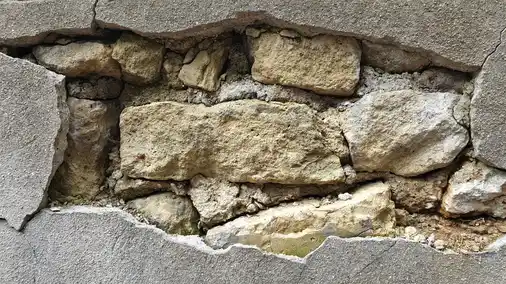
If the slab edge is separating from the base, look for a gap that opens wider at the top or bottom, a visible step between surfaces, or cracks that run parallel to the edge. A clean shrinkage crack is usually thin and stays in one place; a separation problem often looks uneven and changes width along the joint.
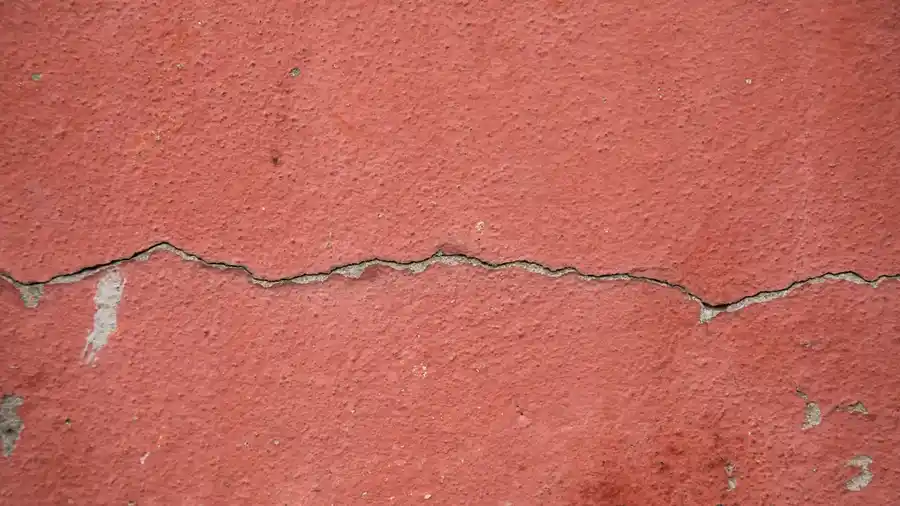
Start with the outside edge where you can see the full line. Use a flashlight at a low angle after dark or in a dim basement so the shadow makes the gap easier to see. A small crack can hide in daylight, but a 3/16-inch opening can be obvious when light hits it from the side.
Do not stop at the crack itself. Check for signs that the slab face is tilting away from the base: trim pulling apart, a visible lip at the edge, or a place where water can pool along the joint. If one area looks open and the next 3 feet looks tight, that uneven pattern matters.
This is the point where many people get it wrong. They focus on the crack and ignore the shape of the break. A crack can be old and harmless-looking while the slab is still moving, so the shape of the joint and the difference from one end to the other are the real clues.
Quick check: If the joint is wider in one spot, shows a lip, or lets water collect along it, treat it as movement until proven otherwise.
How do I measure it without guessing?
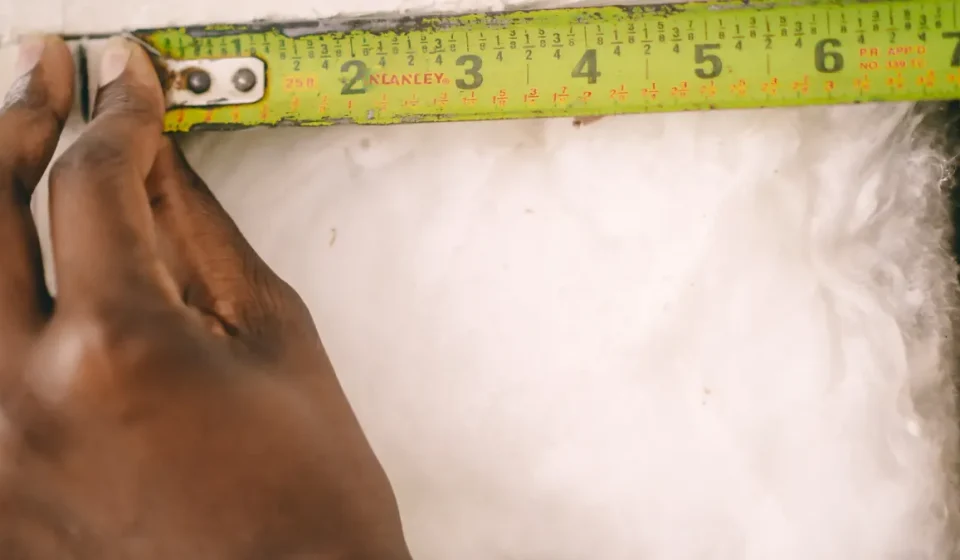
If you want a real answer, measure the gap at the same spots every time and compare the numbers. Use a ruler or tape measure, mark the points with chalk or painter’s tape, and write down the date.
Here is the simplest method:
- Pick 3 to 5 spots along the slab edge.
- Clean off dirt so you can see the crack or joint clearly.
- Slip a ruler, depth gauge, or tape measure into the opening and note the width.
- Mark each spot with tape and a number, such as 1, 2, and 3.
- Repeat the measurement after 24 hours, then again after 7 days if you still see movement.
What you want is not a single big number. You want a pattern. If one point measures the same on two different days, while another point widens or closes, that tells you the slab edge may be moving unevenly.
A 6-foot level helps here too. Set it across the slab near the edge and check whether the bubble centers. If the surface slopes toward the break, the slab may be settling or dropping away from the base. If the level shows a change over several feet, that is more useful than trying to judge by eye alone.
Use a straightedge if the area is short, and a long level if the edge runs farther. A 4-foot tool can miss a gradual tilt that a 6-foot tool catches. The longer the tool, the easier it is to see a slow drop.
Quick check: If the numbers change between checks or the level shows a slope toward the edge, you have movement worth taking seriously.
Which signs mean the problem is structural?
If the crack comes with doors that stick, floors that feel sloped, or a wall that is no longer plumb, the issue is bigger than one broken edge. Structural warning signs usually show up in a group, not by themselves.
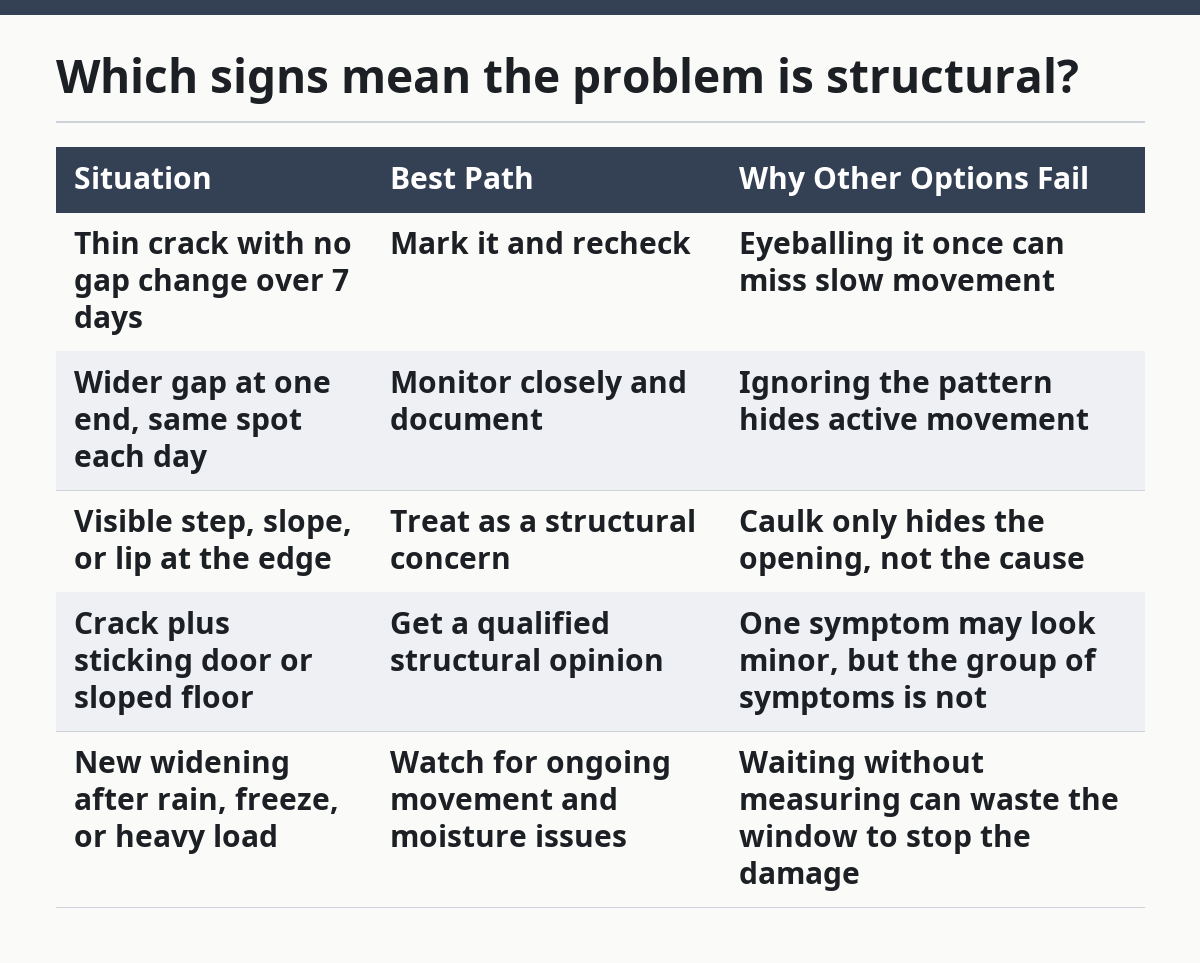
Use this comparison to sort what you see:
| Situation | Best Path | Why Other Options Fail |
|---|---|---|
| Thin crack with no gap change over 7 days | Mark it and recheck | Eyeballing it once can miss slow movement |
| Wider gap at one end, same spot each day | Monitor closely and document | Ignoring the pattern hides active movement |
| Visible step, slope, or lip at the edge | Treat as a structural concern | Caulk only hides the opening, not the cause |
| Crack plus sticking door or sloped floor | Get a qualified structural opinion | One symptom may look minor, but the group of symptoms is not |
| New widening after rain, freeze, or heavy load | Watch for ongoing movement and moisture issues | Waiting without measuring can waste the window to stop the damage |
A generic article would stop at “look for cracks.” That is not enough. The better question is whether the slab edge is moving relative to the base, because the surrounding signs tell you whether the movement is local or part of a larger foundation problem.
If the opening is near a garage slab, a porch slab, or a load-bearing wall, be more cautious. Those areas often carry more stress than a simple walkway edge, and a small change there can matter more than the same-sized crack in a low-use spot.
Quick check: If the crack is joined by a slope, sticky doors, or a new lip, assume the problem is structural until someone qualified says otherwise.
What does the right check depend on?
If the slab edge is indoors, outdoors, dry, or wet, the right check changes. Moisture, load, and access all change what you should trust.
| Situation | Best Path | Why Other Options Fail |
|---|---|---|
| Indoor basement slab | Use a 6-foot level and crack marks | Moisture stains alone can mislead you |
| Exterior slab or porch | Check for pooling water and edge exposure | A dry-day snapshot misses freeze-thaw effects |
| Near a garage opening | Watch for slope and door binding | Cosmetic patching can hide the real change |
| Near a column or support wall | Get a more careful structural review | The load path makes small movement matter more |
| Fresh movement after rain | Recheck after the surface dries | Wet soil can change what you think you see |
If you are in a New York building type with older concrete, mixed additions, or a slab that meets a masonry base, do not assume the joint is ordinary. Older buildings often have more than one material at the edge, and that can make one side move differently from the other.
The right check also depends on whether the slab is a floor slab, a porch slab, or a slab-on-grade edge. A porch edge can separate because of exposure and freeze-thaw cycles, while a floor slab inside may point more toward settlement or a support problem. The symptom can look similar, but the cause may not be.
For a broader safety frame, the Federal Emergency Management Agency has homeowner guidance on earthquake and property damage, and the U.S. Geological Survey explains why ground movement can stress structures. Those sources do not replace a site-specific inspection, but they do help explain why a crack is not just a crack when the building is moving.
Quick check: If moisture, load, or a change in building type affects the edge, use that context before deciding the crack is minor.
When is it okay to monitor instead of panicking?
If the opening is small, stays the same across several checks, and comes with no other warning signs, monitoring is reasonable for a short period. That does not mean ignoring it; it means tracking it with dates, measurements, and photos.
Use this 5-step monitoring path:
- Take a clear photo straight on and another from the side.
- Mark both ends of the crack with pencil or tape.
- Measure the width at the same 2 or 3 points.
- Check again after 24 hours, then after 7 days.
- Compare the photos for a wider joint, a new offset, or fresh dust.
Monitoring works best when the crack is stable and the slab edge is not carrying obvious load. If the gap is unchanged for a week and nothing else is shifting, the problem may be inactive or slow-moving. If it grows after rain, cold weather, or vibration, the situation changes.
Do not use monitoring as a reason to delay forever. A good rule is that if the crack or gap is still changing after you have measured it more than once, the story is no longer “watch it.” It is “find out why it is moving.”
Caulk, patch, or paint can make the line look better, but those fixes do not answer the real question: is the slab still separating from the base? If the answer is yes, cosmetic work only covers the clue.
Quick check: If the measurements stay the same for 7 days and no other symptom appears, monitoring is reasonable; if the numbers drift, move to a stronger response.
When do I stop checking and get help?
If the gap is widening, the slab is visibly dropping, or the area is near a structural support, stop treating it like a DIY problem. That is especially true if you see a step, hear cracking, or notice new floor slope across more than one room or bay.
A plain visual check is not enough when the surface changes shape. At that point, the problem may involve settlement, support failure, or moisture-related movement below the slab edge. Those are not things a patch can solve.
Here is the line I would draw: if the crack is new and active, if the gap is not the same along its length, or if doors and floors are also changing, do not wait for it to “settle down.” The longer you wait, the harder it is to tell what changed first.
This is also the wrong problem for a reader who only wants a clean surface. If the goal is paint-touchup or a neat-looking joint, that is cosmetic work. If the goal is to know whether the slab is falling away from the base, only measurement and comparison answer it.
For serious cases, a qualified structural professional is the right next step. A visual checklist can tell you whether the situation looks stable or not; it cannot replace a proper judgment on load paths, foundation movement, or edge support.
Quick check: If the gap is growing, the slab is sloping, or nearby doors and floors are shifting, stop DIY checking and get a qualified review.
What are the edge cases people miss?
If the slab edge looks bad only in one special condition, the usual advice may fail. These are the cases that change the answer fast.
-
The crack opens after rain.
What changes: moisture may be softening the ground or changing movement under the slab.
What to do instead: measure before and after a wet period, and note whether the width changes by the next dry day. -
The gap looks small but the slab has a lip.
What changes: vertical offset matters as much as width.
What to do instead: use a straightedge or level to check for step-down, not just crack size. -
The opening is near a garage door or large window wall.
What changes: the load path is more sensitive.
What to do instead: treat sticking doors, uneven floors, and panel cracks as linked clues. -
The edge is hidden behind finish material.
What changes: trim can hide the true width of the gap.
What to do instead: inspect at a visible end or a utility edge where the slab line is exposed. -
There is fresh dust or rubble at the crack.
What changes: active movement may be shedding material.
What to do instead: clean the area, photograph it, and recheck after 24 hours. -
The slab meets a different material, like masonry or a patch.
What changes: two materials can move differently.
What to do instead: compare both sides of the joint, not just one face.
These edge cases matter because a simple “measure the crack” rule can miss the bigger picture. The joint may look ordinary while the base is shifting, or it may look dramatic while nothing is moving anymore. The context is the test.
Quick check: If the crack changes with rain, hides behind trim, or sits beside another material, use the edge-case rule, not the generic one.
FAQ
How do I know if the slab edge is really falling away from the base?
If the gap widens, the edge shows a lip, or the surface slopes away from the base, the slab is likely separating or settling. One measurement is not enough; compare the same spot over 24 hours and again after 7 days.
What tool should I use first?
A 6-foot level, a tape measure, a flashlight, and painter’s tape are enough for the first check. The level shows slope, the tape shows whether the gap is changing, and the tape marks let you compare the same point twice.
Is a hairline crack always harmless?
No, a hairline crack is not always harmless if it is part of a growing gap or comes with movement in the floor, wall, or door frames. A crack that stays the same for a week is different from one that keeps opening.
Can I just seal it and move on?
Not if the slab edge is still moving. Sealing can hide the opening, but it does not fix settlement, support loss, or moisture-related movement under the slab.
When should I stop watching it myself?
Stop watching it yourself if the crack widens, a step appears, or nearby doors and floors start changing. That is the point where the problem has moved from observation to a structural question that needs a qualified opinion.
Drafted with AI; not yet reviewed by a person.