Last updated: September 10, 2026
Key Takeaways
- Watch where water sits for 10 to 15 minutes.
- Measure it now, then document whether it changes over 2 to 4 weeks.
- Puddling can be a useful sign of settlement, especially when it follows rain and matches a low spot.
- A difference of about 1/4 inch may be enough to catch a shoe or hold water.
A concrete slab that starts to slope, sink, or open gaps is not just a little cosmetic annoyance. That kind of movement can snowball. And fast. This article explains the signs your concrete slab needs leveling before damage gets worse, so you can judge when to call a contractor and when to keep watching. I’m talking about movement that can crack walls, pinch doors, stress pipes, and turn a small repair into a larger one if you wait too long.
Who this is for — and what I’m assuming you already know
Homeowners, property managers, and small-business owners are the people this applies to. You’re looking at a concrete slab that seems off and trying to decide whether to call a leveling contractor now or keep watching it.
I’m assuming you can already spot the obvious version of the problem: a patio edge that dips, a garage floor that feels wrong underfoot, a sidewalk panel that no longer meets the next one cleanly, or a slab inside the house that shows a new crack or separation. Pretty basic. But useful.
Also, I’m assuming the slab is part of a typical residential or light commercial structure, not a bridge deck, retaining wall footing, or industrial floor. Those are different jobs. Same deal for slabs with major structural failure, severe heaving from tree roots, or ongoing water intrusion that has not been addressed; leveling is not the first fix in those cases.
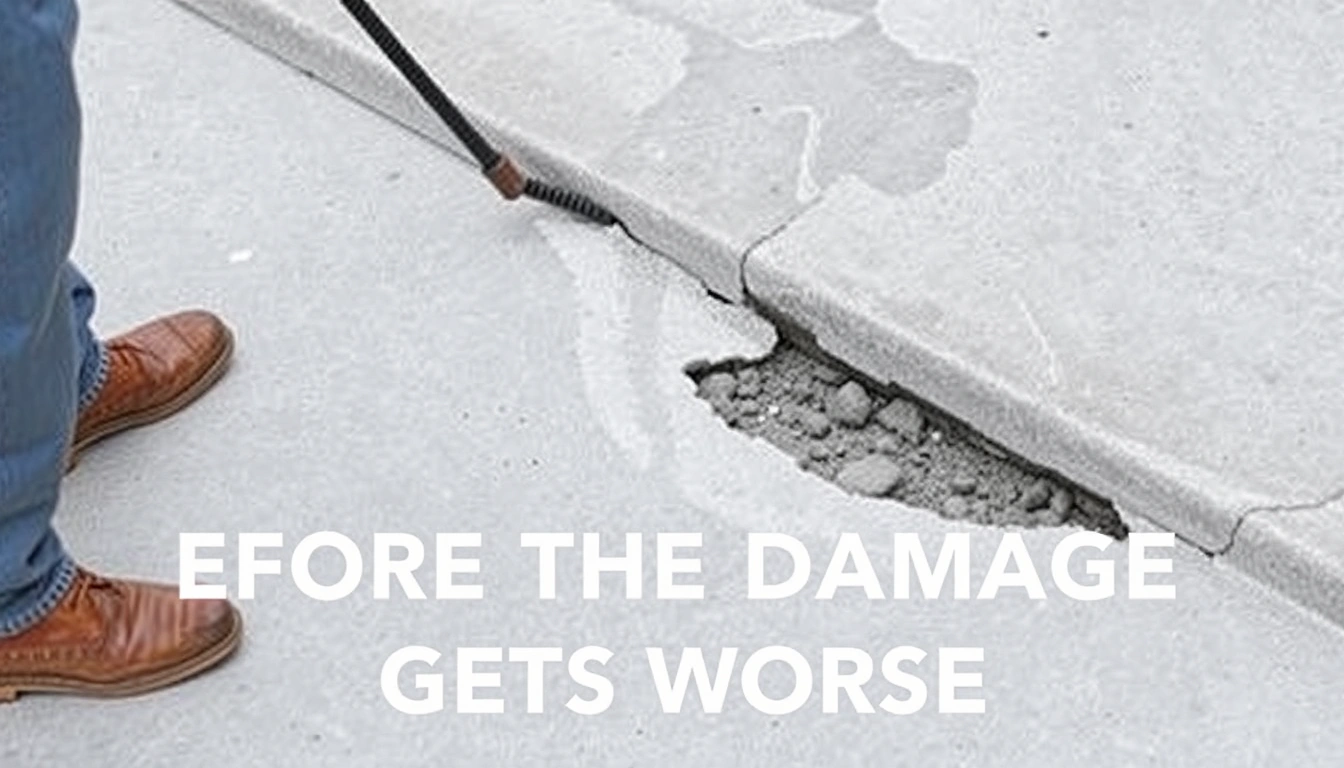
A good rule of thumb: if the slab has moved enough that you can measure it, photograph it, or feel it, it deserves attention. A difference of about 1/4 inch may be enough to catch a shoe or hold water. And a gap closer to 1/2 inch or more at a joint, doorway, or slab edge is more than a minor flaw in most settings.
Here’s what this article gives you: a way to judge the signs your concrete slab needs leveling before the damage gets worse, what a contractor will look for, and what makes one slab a good candidate for leveling while another needs a different repair.
What counts as a signs your concrete slab needs leveling problem?
Any vertical movement that makes the surface uneven or opens a gap between the slab and something it should meet counts as a slab leveling problem. Contractors usually call it “settlement” when the slab has sunk and “differential movement” when one part has moved more than another. In plain language, one side is no longer where it used to be. Simple enough.
Where the slab sits changes how the signs show up:
- Interior slabs: cracks that widen at one end, tile grout that suddenly separates, doors that drag after working fine for years, baseboards pulling away, or a floor that feels like it drops when you walk across it.
- Exterior slabs: puddles that now sit on a patio or driveway after rain, a stair-step at a seam between panels, or a slab edge that no longer lines up with a threshold.
- Attached slabs: garage floors, porches, and sidewalks often telegraph movement into the house. A crack in the slab can be the first clue, but the real issue is the change in slope.
Not every crack means leveling is needed. Hairline cracks from shrinkage are common in concrete. What gets my attention is a crack that comes with one or more of these: height difference across the crack, widening over time, water pooling, or new movement in the structure above it. That combo is a different animal.
A lot of people stare only at the crack line. I’d look at the bigger picture instead: where the slab meets the foundation, whether adjacent panels sit level with each other, and whether the movement has affected doors, trim, or drainage. One crack can be nuisance-level. A crack plus slope plus a threshold gap? That’s the siren going off.
How do I tell if my concrete slab is settling?
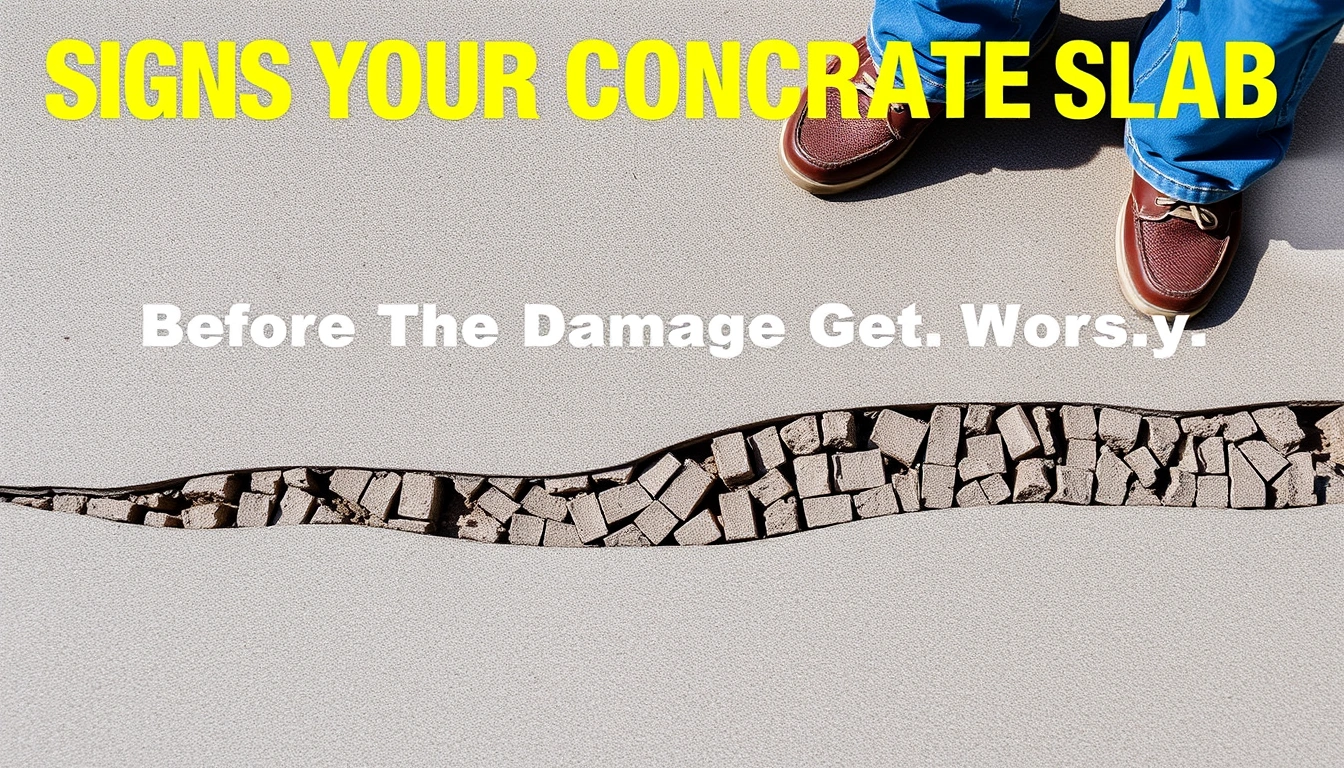
Check for movement, not the crack shape by itself. A slab that needs leveling usually leaves a trail of small clues, and the most reliable ones are measurable.
Here is the sequence I would use before calling anyone:
- Check the slope with a 4-foot level or straightedge. Place it across the suspect area in at least three directions. Verify whether the bubble drifts or the straightedge leaves daylight under one end. A floor that tips more than about 1/4 inch over 4 feet is worth investigating; a sudden change in slope is more concerning than a gentle pitch.
- Measure height differences at cracks and joints. Use a ruler or tape to compare both sides of a crack, control joint, or seam. Verify the offset in inches or millimeters. If one side sits higher by 1/8 inch or more, that is no longer just a surface crack. If the edge feels sharp underfoot, the problem is already affecting use.
- Look for gaps at fixed points. Check baseboards, door casings, garage door bottoms, steps, and thresholds. Verify whether a gap has appeared where none existed before. A 1/4-inch opening at a door frame, for example, often points to movement that is not confined to the slab surface.
- Map drainage after rain or a hose test. Watch where water sits for 10 to 15 minutes. Verify whether it drains away from the slab or collects in the low spot. Puddling can be a useful sign of settlement, especially when it follows rain and matches a low spot.
- Mark cracks and gaps with dates. Draw two pencil lines across a crack or place a dated piece of tape nearby. Recheck after 30 days. Verify whether the line has separated or the gap has changed. If it grows, the slab is still moving.
- Check nearby finishes and trim. Inspect tile, drywall corners, brick veneer, and cabinet toe kicks if the slab is inside. Verify whether one defect lines up with another. A cracked tile above a sinking slab is stronger evidence than the tile alone.
- Listen for hollow spots or shifting edges. Tap the slab with a hard object and note changes in sound, especially at edges and around cracks. Verify whether the sound changes near the suspect area. A hollow sound can indicate voids under the slab, which often lead to more settlement.
- Photograph the same spot from the same angle. Take a photo with a ruler or coin for scale, then repeat later. Verify whether the geometry changes over time. A picture does not replace measurement, but it helps you show a contractor what has happened.
What points to trouble is not one symptom by itself, but a cluster: a measurable slope, a visible offset, and a pattern that gets worse. A crack that has been stable for years is one thing. A crack that now has a 1/4-inch step, plus standing water, plus a door that sticks, is another. That math stops working fast.
For a homeowner, these checks are simple enough to do in under an hour. If the slab is attached to the structure, though, I would not rely on one visual pass. Movement can show up first in trim or drainage, not in the middle of the concrete.
What kind of damage gets worse if you wait?
Three directions, really: the slab itself, the structure around it, and the water management around it. That is why leveling is not only about making the floor look smooth again.
A sinking slab can make cracks longer and wider because the concrete is no longer carrying load evenly. It can also stress anything tied to it. In a garage, that can mean a door that rubs or fails to seal well. In a house, it can mean tile cracking at a line you keep patching and re-patching. In commercial spaces, it can become a trip hazard or interfere with doors and equipment.
The water issue matters just as much. A low spot that holds water after a 5-minute rain may not seem dramatic, but standing water speeds up surface wear, stains concrete, and can work its way into seams, expansion joints, and nearby materials. In colder climates, water that sits in a depression can freeze and force the crack wider. In wet or expansive-soil regions, chronic moisture around the slab can contribute to more movement.
I would not treat all cracking the same, and a professional should evaluate the slab if you are unsure. A random hairline crack in a garage slab is often normal concrete behavior. A crack that opens at one end, has a height change, and lines up with a sagging corner is telling you the slab has moved. That is the kind of sign that should make you stop assuming it will “settle itself.” For more on concrete cracking and repair, see the Portland Cement Association and the American Concrete Institute.
Cost starts to matter here, too. Small slab leveling jobs are usually less disruptive than replacement, but the price depends on access, slab thickness, how much lift is needed, and whether the cause is empty voids, poor compaction, or ongoing drainage problems. A contractor may quote one section only, or may tell you that drainage correction comes first. That is not upselling if the slab is still being washed out from underneath.
When should I stop guessing and call someone?
Stop guessing when the slab keeps moving, the movement is tied to the structure, or the cause looks like more than a simple low spot. Those are the situations where leveling alone may be the wrong first move.
A gap has grown since the last time you checked: That means active movement — pause cosmetic repairs and get an evaluation before the next wet season or freeze cycle.
One side of a crack is higher by 1/8 inch or more: That means differential movement, not a surface defect — leveling may help, but you need someone to assess whether the slab is still supported.
Water pools in the same place after each rain: That means drainage is wrong, and leveling without fixing runoff may be temporary — address grading, downspouts, or surface drainage first.
Doors, windows, or cabinets nearby have started sticking: That means the movement may be affecting the structure above or beside the slab — do not treat it as only a floor issue, and consult a professional. See the U.S. Department of Energy guidance on building movement and moisture-related issues.
You see repeated cracking in the same area after patching: That means the underlying support has not stabilized — patching alone will keep failing.
The slab is near a utility trench, washout area, or visible soil void: That means the subgrade may be failing — call for a professional assessment before more concrete shifts.
The slab is part of a load-bearing area, ramp, or accessible route: That means trip risk and code-related slope issues matter — you want a contractor who understands local requirements, not a guess-and-fill repair.
A qualified concrete leveling contractor will usually inspect slab thickness, drainage, soil conditions, crack pattern, and whether the slab is still suitable for lifting or if replacement is the better call. If they talk only about filling holes and not about why the slab moved, I would be cautious. Frankly, that’s a red flag.
What the repair process usually looks like
Diagnosis comes first, not drilling. A good leveling job is about getting the slab back to a stable plane, then keeping it there long enough to matter.
The main approaches are mudjacking, polyurethane foam injection, or replacement. Mudjacking uses a cementitious slurry pumped beneath the slab. Polyurethane foam uses an expanding material injected through smaller holes. Replacement is the last resort when the slab is broken, badly undermined, or too damaged to lift.
A typical job follows this order:
- Inspect and map the movement. The contractor checks slope, cracks, joints, and drainage. Verify that they explain why the slab moved, not just where.
- Confirm the slab is liftable. They look for severe breakage, thin sections, or structural attachment. Verify that they tell you if leveling is not appropriate.
- Plan the lift points. Holes are laid out where material can fill voids evenly. Verify that the pattern matches the slab size and problem area, not a random guess.
- Prepare the area. Loose debris, caulk, or fragile nearby material may need protection. Verify that adjacent finishes are not being ignored.
- Inject material in controlled increments. Small lifts reduce the chance of over-raising one section. Verify that the slab is being watched continuously as it moves.
- Check level and edges repeatedly. The goal is a consistent plane, not simply “higher than before.” Verify with a straightedge or laser where appropriate.
- Patch the holes and clean up. The surface should be sealed neatly, with no obvious voids or crumbling edges. Verify the patch is flush and the slab no longer rocks, dips, or drains the wrong way.
The most common sign of a bad job is overcorrection: the slab ends up higher than the surrounding surface, or one edge is left out of plane. Another bad sign is lifting a slab that still has an underlying drainage problem and pretending the issue is solved. A third is a repair that leaves visible voids, unfilled drill holes, or fresh cracking nearby. Ugly work is one thing; failed work is worse.
Timing varies by slab size and access, but many residential leveling jobs are measured in hours rather than days, while drying or cure time can still affect when the area is fully usable. Ask that directly. A contractor should be able to tell you whether the slab can be walked on, driven on, or put back into service the same day or after a delay.
What mistakes do people make before calling?
People usually wait too long, misread the symptoms, or patch the surface instead of the cause. Those mistakes cost more later.
-
They ignore a small height difference. The consequence is that the gap widens and the surrounding concrete starts to stress. Measure it now, then document whether it changes over 2 to 4 weeks.
-
They caulk or patch a moving crack first. The consequence is that the crack opens again and the patch fails. The better call is to stabilize the slab before any cosmetic repair.
-
They assume all slabs can be leveled. The consequence is paying for a lift on a slab that should be replaced. Ask whether the slab is sound, thick enough, and still supported underneath.
-
They fix the slab but not the drainage. The consequence is repeat settlement, especially where downspouts dump near the edge or soil